Iran began developing liquid-fuel ballistic missiles in the late 1980s, but many of these systems relied on rocket engine technologies dating back to the 1950s Soviet Union. These older propulsion systems were considered one of the main technical limitations affecting the performance and readiness of earlier Iranian missile designs.
To address these challenges, Iran acquired Hwasong-10 missiles from North Korea through bilateral cooperation. The missile featured a more modern propulsion system using unsymmetrical dimethylhydrazine fuel, commonly referred to as “devil’s venom,” with nitrogen tetroxide serving as the oxidiser.
Although highly toxic, these propellants have been widely used since the 1960s in Soviet missile systems such as the R-27 and R-29 submarine-launched ballistic missiles. The fuel and oxidiser are stored in specially sealed tanks that allow the missile to remain ready for launch for several years without the need for refuelling procedures.
This storage method significantly reduces preparation time before launch. According to available information, the missile can be prepared for firing in approximately 12 minutes.
Iran later developed the Khorramshahr missile based on the Hwasong-10 platform, retaining the same propulsion concept. The system’s design enables pre-launch procedures to be completed within only a few minutes.
The Khorramshahr missile is slightly shorter than missiles derived from the Shahab-3 but features a larger diameter. Its first test launch reportedly took place in January 2017, only a few months after tests of the North Korean prototype, although the exact dates remain uncertain.
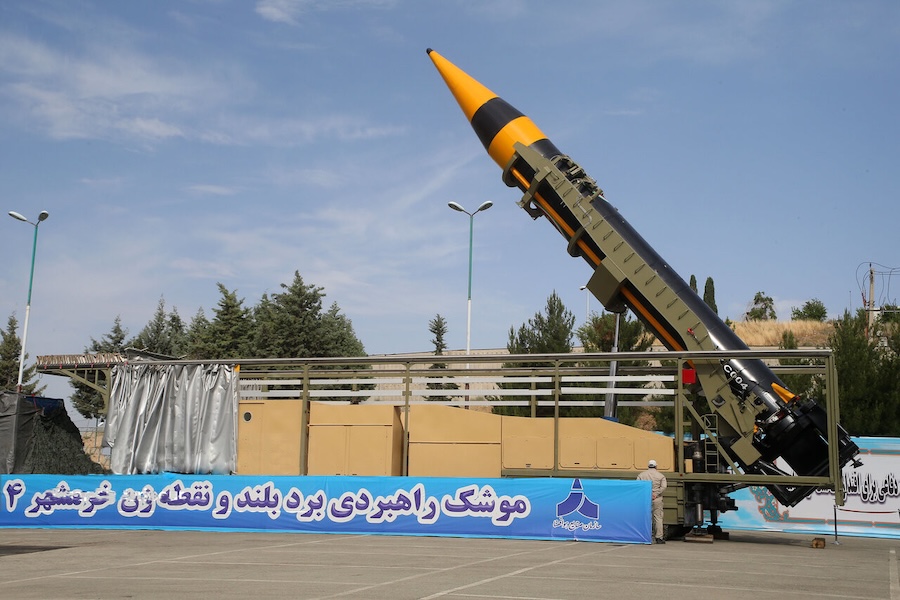
The most recent known version, Khorramshahr-4, was officially revealed in May 2023. This suggests that several earlier versions, designated Khorramshahr-1, 2 and 3, may have been developed between 2017 and 2023, although reliable public information about these variants remains limited.
Available technical data indicates that the Khorramshahr-4 missile measures approximately 13 metres in length and has a diameter of about 1.5 metres. Its estimated launch mass is around 25,000 kilograms.
The missile’s maximum range is reported to reach about 2,000 kilometres while carrying a heavier warhead than earlier Iranian systems. The payload is estimated to weigh approximately 1,500 kilograms.
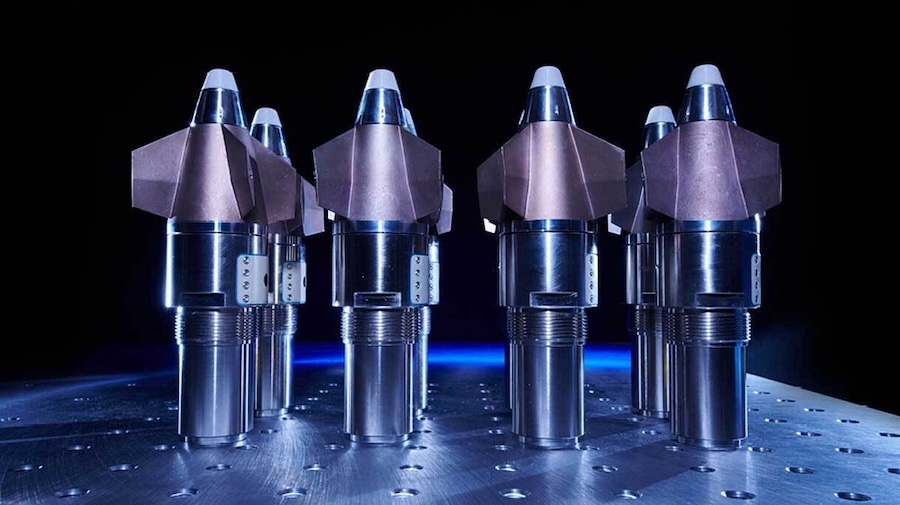
The system reportedly uses an advanced navigation architecture and features a separating warhead designed to manoeuvre outside the atmosphere. This capability is achieved using an independent rocket engine equipped with a movable nozzle.
Official information also indicates that the warhead is fitted with a terminal guidance system. The system may use either radar or optical correlation methods to compare images of the target area with stored reference data.
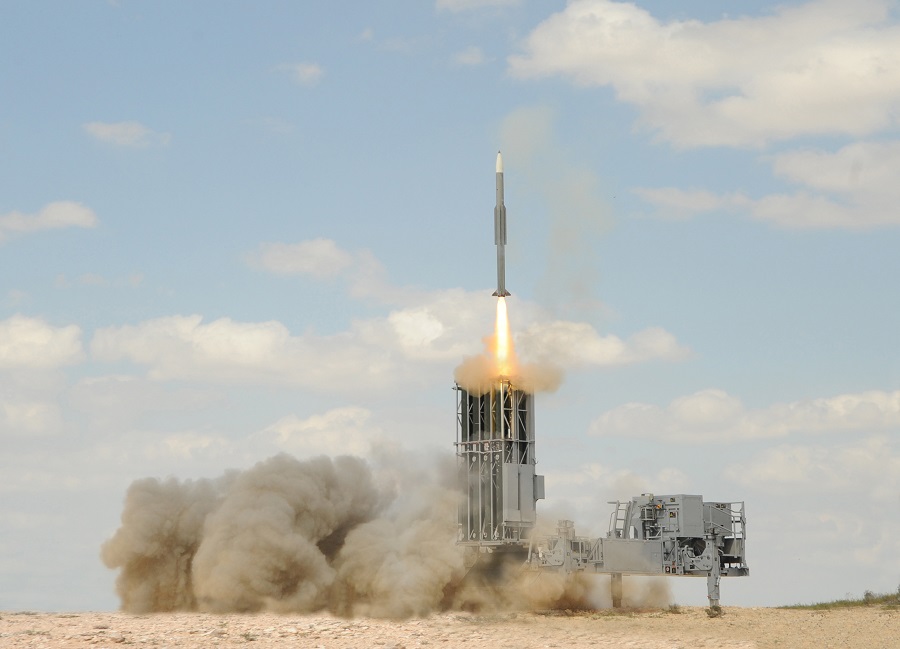
The missile is launched from a transporter platform mounted on a trailer. Before launch, the rocket is raised into a vertical position.
Iran first used Khorramshahr-4 missiles during the twelve-day war in June. Since then, the system has reportedly been used on a wider scale.