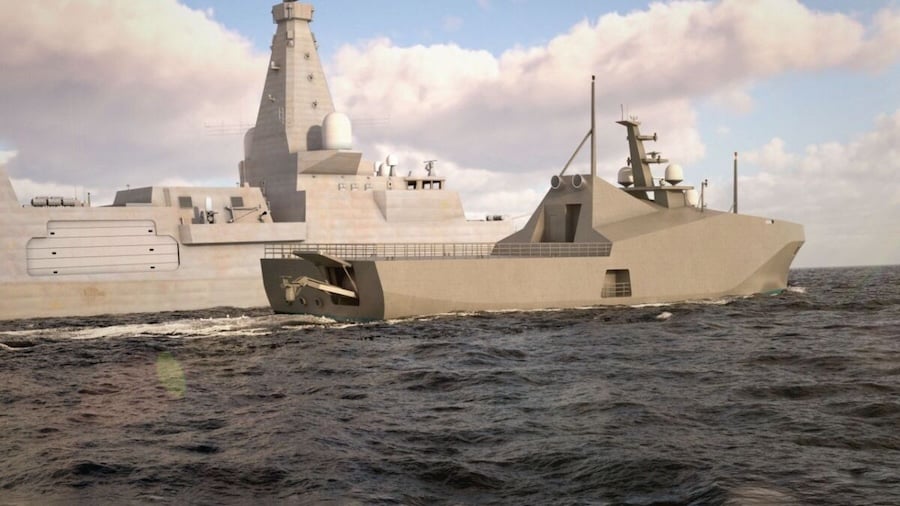
The vessel is designed to operate from a forward base inside the Arctic Circle and keep watch for submarines alongside frigates and other anti-submarine units. It is fitted with a Thales UK towed sonar and secure military communications, with deck space and payload capacity for other equipment to be added or swapped as needs change.
Kongsberg adapted one of its existing Arctic hull designs, adding dynamic positioning, remote control and autonomous systems. The company said its uncrewed vessel technology had already received approvals from classification society DNV and the Norwegian Maritime Authority.
“Atlantic security is an absolute priority, and we believe that the Arctic Hunter USV offers a robust and practical response to the growing need for additional submarine detection capability,” said Lisa Edvardsen Haugan, chief executive of Kongsberg Maritime. “For more than 50 years, Kongsberg Maritime has designed vessels to operate in demanding Arctic waters.”
Kongsberg’s plan is to use commercial shipyards to build the vessels and defence contractors to install the military systems. It is working with Balaena Maritime on plans to deliver vessels from the partner’s Birkenhead yard, aiming to have them ready for military fit-out and operational deployment by the end of the decade.
Kongsberg said it planned to sign technology agreements with Thales UK and Balaena Maritime at the Atlantic Future Forum in Oslo. The company said the agreements would expand industrial cooperation between Britain and Norway and support skilled jobs.
The Type 92 proposal supports the Lunna House agreement, under which Britain and Norway are to lead NATO efforts to deploy autonomous systems in the High North. Kongsberg said the vessel could also be used by other NATO members and countries in the Joint Expeditionary Force.