

The updated roadmap sets out Leonardo’s medium-term objectives as the company continues its transformation into an integrated multinational “One Company”. Over the past three years, the group has expanded its capabilities through portfolio rationalisation, new product development, international partnerships, joint ventures, selective mergers and acquisitions, and increased digitalisation and production capacity.
Chief Executive Officer and General Manager Roberto Cingolani said the company had already surpassed the objectives of its previous industrial strategy. “We have successfully met all the targets set out in our first Industrial Plan, exceeding all expectations. We now have platforms across every domain: land, space, naval and air, and we have invested heavily in digital technologies, AI and cybersecurity. Today we benefit from a competitive advantage that few others possess, enabling us to develop products and solutions capable of addressing future threats,” he said.
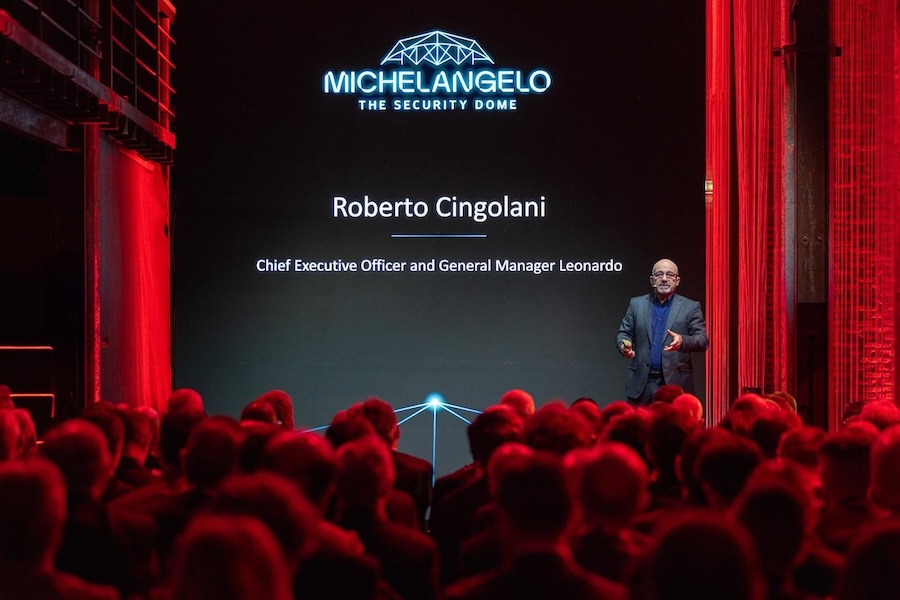
Cingolani added that the updated strategy aims to further reinforce Leonardo’s role in global security through advanced technologies and integrated defence systems. “The new Industrial Plan defines the Group’s trajectory through 2030, with the aim of further strengthening our role as a high-tech player in global security. Today, Leonardo presents itself to the market as a unique industrial player, reinforced by the recent launch of the Michelangelo Dome, tangible application of the Group’s multidomain vision that will contribute to the development of sovereign and interoperable capabilities. An integrated and open defence architecture designed to address a security environment in which threats are increasingly hybrid and require new, fully interconnected solutions,” he explained.
The company said the updated plan reflects a rapidly evolving global security landscape in which threats such as hypersonic missiles, drones, ballistic weapons and cyber attacks are increasing operational complexity. These developments mean that security challenges now extend beyond traditional defence to sectors including infrastructure, transport, agriculture, financial services and energy.
Leonardo estimates that global security spending could rise from around 0.4 trillion US dollars annually in 2020 to more than 1 trillion US dollars per year by 2030. At the same time, the economic impact of cybercrime is projected to increase from around 1 trillion dollars annually in 2020 to as much as 1 trillion dollars per month by 2030.
A central component of the strategy is the Michelangelo Dome, described as a multi-domain architecture designed to integrate capabilities across air, land, sea, space and cyber environments. The platform uses artificial intelligence, high-performance computing, cloud technologies and data fusion to create what the company describes as a dynamic protective system capable of addressing complex threats.
The architecture includes a central module known as MC5, which connects operational domains and allows integration with other systems, including those from third-party providers. Leonardo says the system can track, intercept and neutralise threats ranging from ballistic and hypersonic weapons to drone swarms and low-altitude targets.
The Michelangelo Dome is expected to generate around €21 billion in new business opportunities over the next decade. Leonardo estimates that approximately €6 billion of these opportunities will be realised between 2026 and 2030, with an additional €15 billion projected between 2031 and 2035.
Under the industrial strategy, the company plans to further develop technologies such as cybersecurity, high-performance computing, artificial intelligence and data analytics as core components of its future growth. These technologies are also expected to support the development of dual-use solutions addressing areas such as environmental monitoring and precision agriculture.
Leonardo’s workforce is also expected to expand significantly under the new plan. After growing from 51,400 employees in 2023 to 62,700 in 2025, the company aims to reach 67,300 staff by 2026 and approximately 75,500 by 2030.
The group plans to recruit an additional 28,000 employees between 2026 and 2030 following 20,000 hires during the previous three years. More than half of these new hires are expected to be under 30 years old, with a strong focus on STEM expertise and increased female participation.
The updated strategy also integrates a sustainability plan aimed at strengthening operational resilience and supporting long-term competitiveness. Leonardo said the initiative will focus on decarbonisation, resource efficiency, supply chain resilience and the development of technologies that contribute to climate adaptation and societal resilience.
Across its business divisions, Leonardo expects continued growth in orders, revenue and profitability in areas including defence electronics, helicopters, aircraft, cyber security and space systems. The company also plans to expand its role in European defence cooperation and advanced multinational programmes such as the Global Combat Air Programme.