

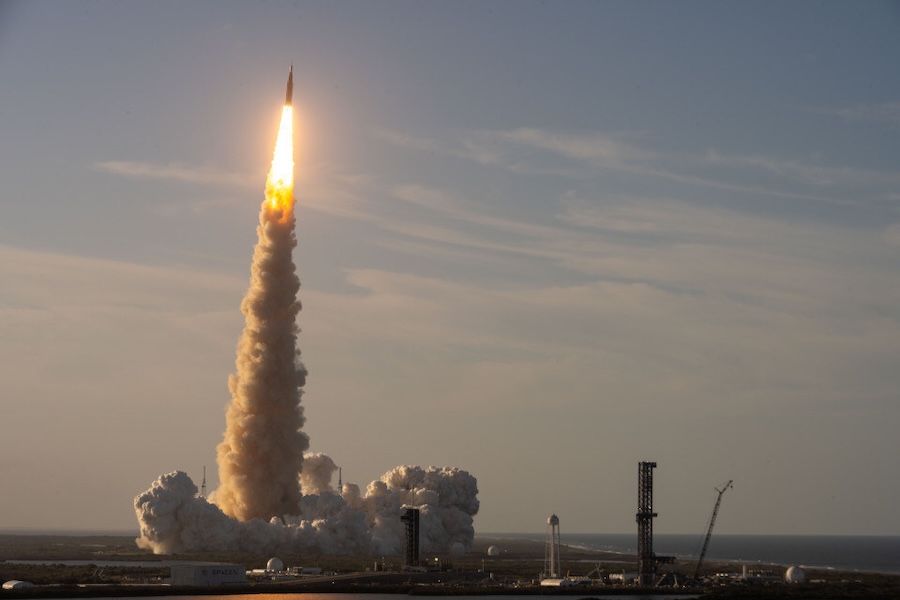
The spacecraft is carrying four astronauts, including NASA crew members Reid Wiseman, Victor Glover and Christina Koch, along with Canadian Space Agency astronaut Jeremy Hansen. During the 10-day mission, the crew will complete two Earth orbits before traveling nearly 5,000 miles beyond the far side of the Moon and almost 250,000 miles from Earth.
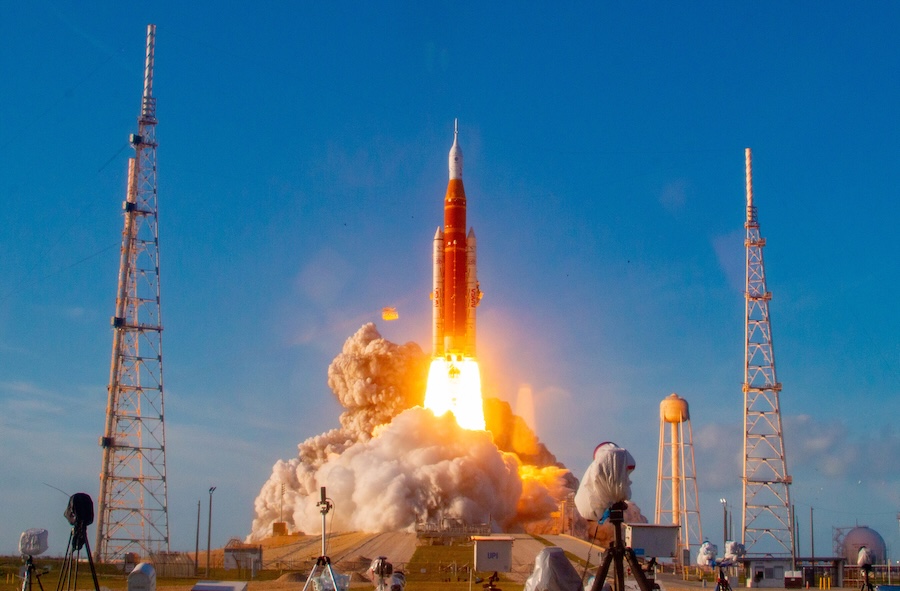
“Today’s launch is just the beginning of this mission, where we look forward to testing the Orion systems and proving it will be capable of transporting crews to the lunar surface and return them home,” said Robert Lightfoot, president of Lockheed Martin Space. “This historic moment marks a renewed journey to the Moon and a critical step toward future crewed landings.”
The Orion spacecraft used for the mission, named Integrity by its crew, includes new systems designed to support human spaceflight in deep space. These include environmental control and life support systems, updated flight displays and controls, and a fully operational launch abort system.
Additional onboard capabilities include audio communications and an experimental laser communication system for contact with mission control in Houston. The spacecraft is also equipped with an exercise machine, potable water, a galley, and a waste management and hygiene system intended for extended missions.
During the mission, the crew will conduct a series of system tests and demonstrations to verify Orion’s readiness for deep space operations. These activities include proximity maneuvering and observations of the lunar far side, generating data on spacecraft performance and human health.
The mission will follow a free-return trajectory around the Moon before returning to Earth. This path is designed to allow the spacecraft to naturally return toward Earth after passing the Moon.
After completing the mission, Orion is scheduled to re-enter Earth’s atmosphere at speeds reaching 30 times the speed of sound. The spacecraft will then decelerate and splash down in the Pacific Ocean off the coast of San Diego, California.
“Our team has poured years of precision, problem solving and passion into building Orion and seeing it on its way to taking astronauts around the Moon in this test flight is incredible,” said Kirk Shireman, vice president and Orion program manager at Lockheed Martin Space. “We are excited for this mission to prepare for future crewed flights, seeing humans go farther than we’ve gone before and proving the Moon is once again within our reach.”