

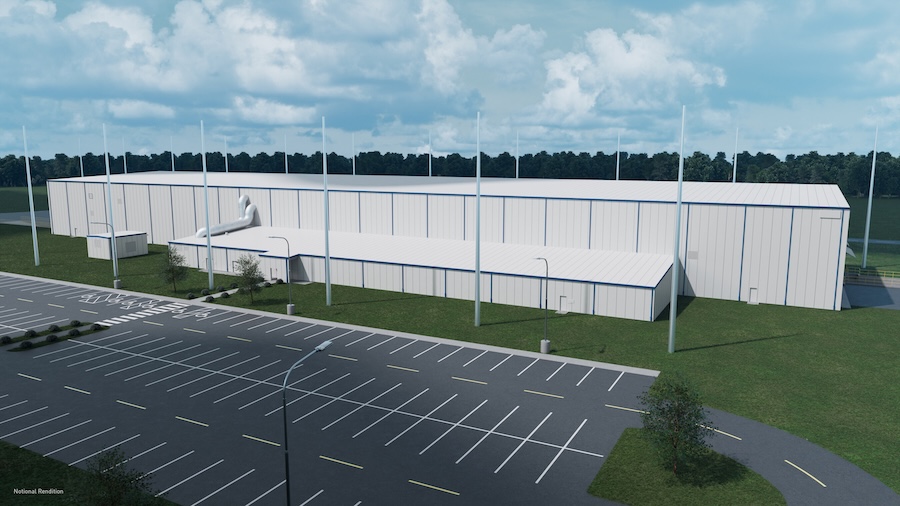
The building is described as a key part of efforts to deliver the NGI system to the Missile Defense Agency with greater speed and reliability, supporting work on a system designed to counter evolving ballistic missile threats to the United States. “We’re building out nearly 100,000 square feet of manufacturing and production spaces in Courtland dedicated to the NGI programme,” said Johnathon Caldwell, vice president and general manager of Strategic and Missile Defense Systems at Lockheed Martin.
Caldwell said the facility marks a major investment in scaling production. “The new Missile Assembly Building represents a major investment in our ability to produce the NGI at scale and meet the government’s need for rapid delivery,” he said.
Lockheed Martin says the building has been designed for efficiency, drawing on methods from high-reliability programmes such as the Terminal High Altitude Area Defense system. It adds that the NGI itself has been designed for producibility, helped by a digital twin approach intended to lower risk from design through to sustainment.
The company says decades of experience are being applied to the NGI production strategy by combining established manufacturing techniques with advanced digital engineering. It describes NGI as “born digital”, using modelling and simulation to design, test and validate the system.
Caldwell said this approach is intended not only to boost performance but to support faster and more reliable manufacturing. “This capability was designed for performance, but more importantly, it was also designed for manufacturability, reliability and speed,” he said. “As the backbone to a multilayered integrated national defence system, producing NGI at speed is paramount to the mission.”

The Courtland site currently employs nearly 500 people across Army, Navy and Missile Defense Agency programmes. Lockheed Martin says about 100 of those staff will work in the new facility once it becomes fully operational.
“The next generation of our nation’s defence systems will include critical capabilities built in Courtland, Alabama, by hardworking men and women who will bring their skill, ingenuity and pride to protecting our country,” said U.S. Representative Dale Strong. He added that the facility will “speed up production, create good-paying jobs and help drive economic growth in the community”, noting that “projects like this show that Courtland’s best days are still ahead.”
Lockheed Martin says its site in Troy, Alabama, will also support NGI work by handling hardware integration and large-scale manufacturing. It says the two campuses form the core of its contribution to national missile defence and long-term industrial readiness.