

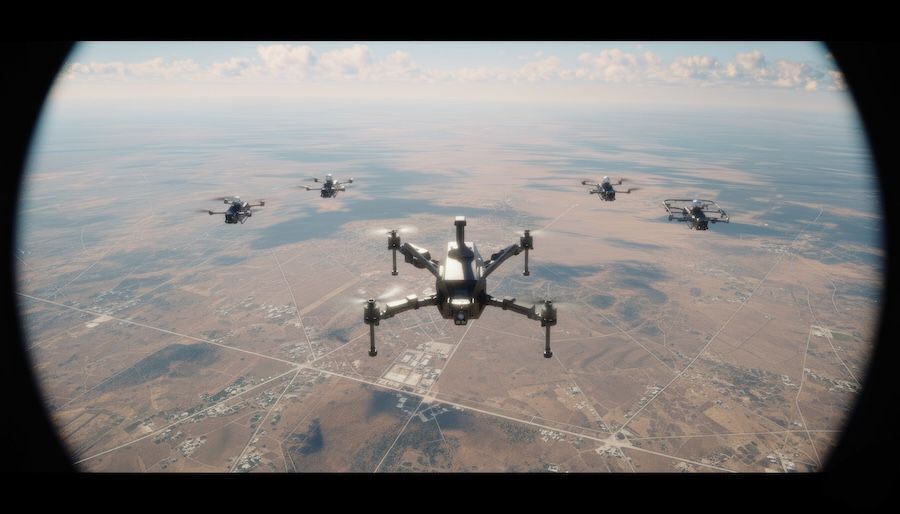
In November, the companies demonstrated an integrated multi-class MDCX workstation in support of a marsupial drone mission. During the demonstration, a larger unmanned aerial system deployed a smaller class 1 drone to carry out a close-range task.
Previously, control of the smaller drone would be transferred from the operator of the larger system to a separate operator using lower-level controls. With the planned integration of XTEND’s operating system into the multi-class MDCX platform, a single operator is able to conduct both missions.
The demonstration showed a reduction in overall manpower requirements for complex missions by removing the need for handovers to lower-tier operators. It also improved situational awareness across the entire mission space.
XTEND provides combat-proven drone command and control solutions used by armed forces worldwide, including capabilities designed to operate when GPS signals are denied or radio frequency links are jammed. The operating system allows new operators to conduct missions at near expert-level proficiency, reducing training time while increasing operational effectiveness and decision-making quality.
Lockheed Martin Skunk Works and XTEND are now focusing on applying these techniques to joint all-domain command and control missions and decision loops. Skunk Works said it remains committed to piloted and drone teaming to optimise operational flexibility, shorten data-to-decision timelines and enhance pilot safety.