


The flight demonstration confirmed the live exchange of targeting data between two upgraded Sniper pods while also transmitting that information to a ground station. This capability allows air and ground forces to operate from a common, continuously updated tactical picture, supporting coordinated action and effectively reducing the time from detection to engagement to seconds.
Lockheed Martin said the demonstration supports modern operations where decision advantage depends on how quickly and accurately trusted data can be shared across platforms. The Sniper Networked Targeting Pod enables the rapid exchange of reliable targeting information that enhances situational awareness, improves precision, and supports simultaneous execution across multiple mission partners.
At the core of the capability is the pod’s ability to network through mobile ad hoc network radios and secure datalinks, allowing platforms to share sensor data directly and automatically re-establish connectivity if links are disrupted. By networking targeting data across air, ground, and maritime domains, the system reduces latency, improves target tracking, and supports informed decision-making in real time.
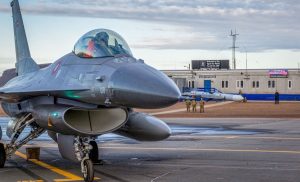
The Sniper Networked Targeting Pod builds on the combat-proven Sniper Advanced Targeting Pod, evolving the widely used electro-optical and infrared sensor into a networked node without requiring aircraft modifications. Lockheed Martin described the flight as a foundational step toward future networked targeting operations, where precision, speed, and connectivity converge to meet the demands of increasingly complex and contested battlespaces.