

According to the company, uncrewed aerial systems increasingly approach not only from above but also from terrain, ditches, flanks and rear sectors. These threats can appear at very short distances, leaving minimal reaction time and challenging conventional mobile air-defence and unit-level counter-UAS solutions.
SCILT has been conceived specifically to address this immediate close-in envelope. It is intended to serve as a dedicated final protective layer for individual vehicles, bridging the gap between large-scale mobile air defence systems and passive vehicle protection.
The system is designed to counter small drones, including FPV drones, kamikaze drones and loitering munitions. It operates in close and very close-range engagements and is intended to defeat both single drones and multiple simultaneous threats within the immediate hazard zone.
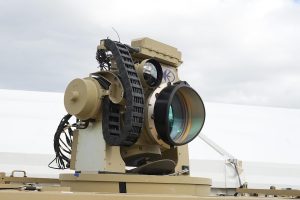
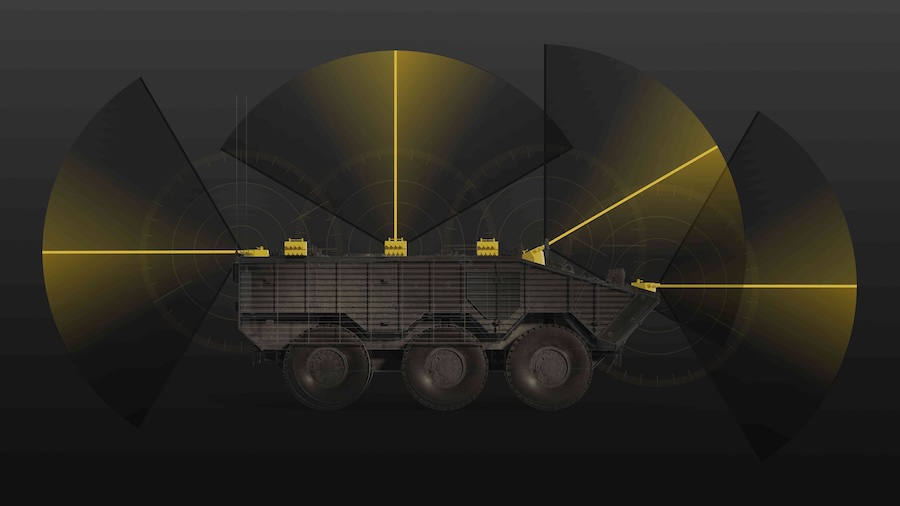
SCILT combines effector modules, sensors and operating logic directly on the vehicle to enable defence against drones approaching from lateral and frontal directions as well as at low angles. Sensor kits may include electro-optical and other close-range surveillance sensors to support detection and operator decision-making.
The system provides close and very close-range protection and features a sector-based configuration that allows individual directions to be activated or deactivated depending on formation and movement. It includes three staged alert levels: detection alert, approach alert and trigger alert.
In its initial version, SCILT deliberately operates with a man-in-the-loop architecture. Further automation is planned as technology, procedures and approval processes evolve.
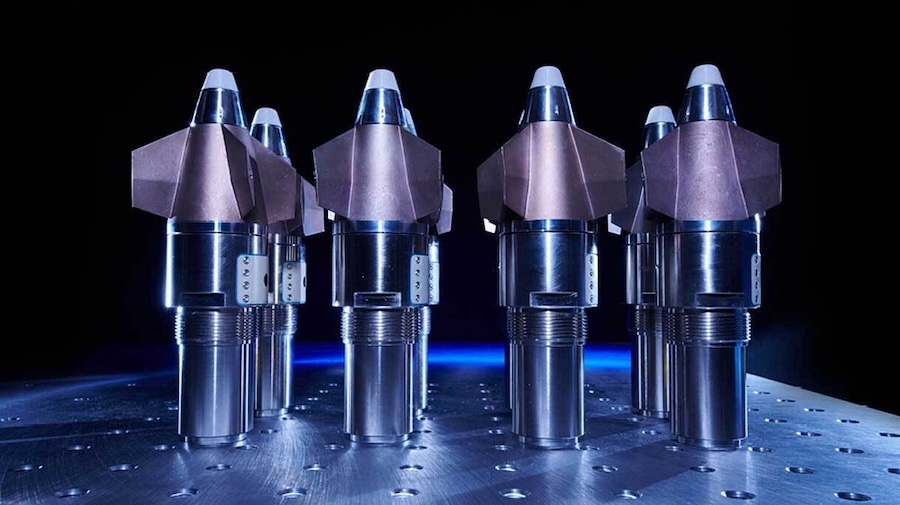
Effector modules use commercially available standard shotgun-calibre ammunition, ranging from rubber projectiles to hardened-core, tungsten-carbide fragment and armour-piercing variants. This range is intended to enable controlled hazard areas and scalable effects depending on operational requirements, while supporting cost-effective deployment against both individual and multiple simultaneous threats.
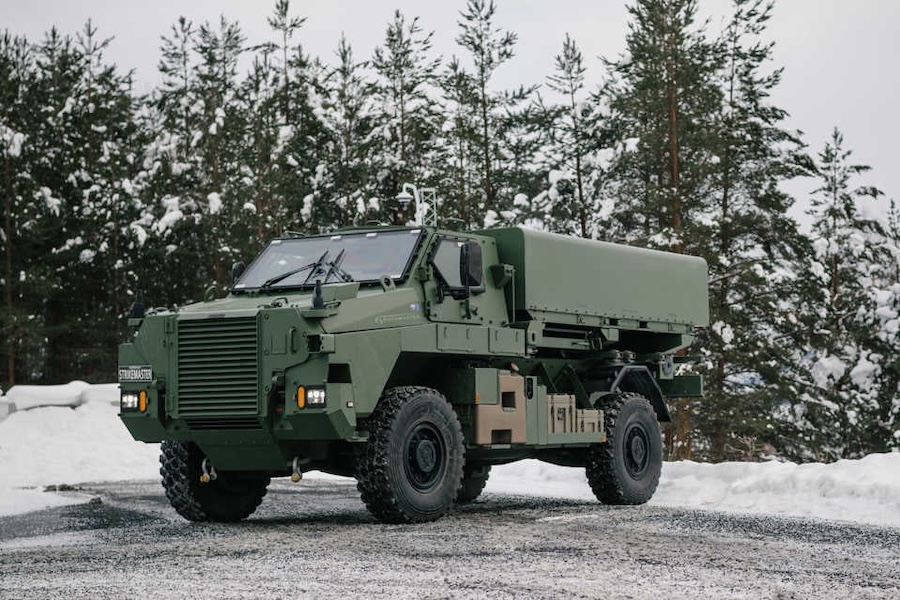
SCILT is controlled via a vehicle data bus and can be integrated into existing vehicle architectures. Where such interfaces are not available, it can function as a self-contained package with its own close-range surveillance and control chain, and remote control units may be installed at multiple positions inside the vehicle.
Development of the system has been ongoing for approximately one and a half years. During this period, Mehler Protection conducted 48 test campaigns covering external and terminal ballistics, temperature behaviour, trigger reliability testing and fragment-density measurements to determine the optimal effective range.
The first version of SCILT is planned to be available from summer 2026 as an effector package with sensor kits and control units suitable for integration into different vehicle configurations. The system builds on Mehler Protection’s established platform protection portfolio across land, air and sea domains.
The company supplies protection solutions for helicopters, land vehicles and naval systems and serves as a main supplier of protection systems for almost all naval platforms currently under construction for the German Navy. As part of the Mehler Systems Group, Mehler Protection draws on more than four decades of experience in developing and manufacturing customised ballistic protection solutions for law enforcement, military and special forces.