
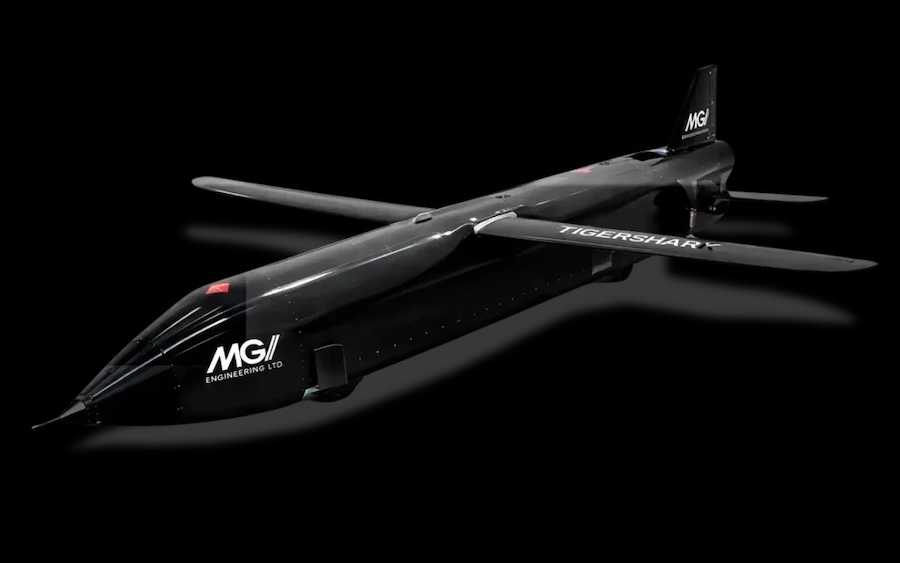
TigerShark is designed to operate at speeds of up to 750 km/h, carry a payload of 300 kg and strike targets at distances exceeding 1,000 km. The platform is also capable of operating in GNSS-denied environments, reflecting requirements for modern high-intensity operations.
The system combines MGI’s expertise in rapid prototyping and advanced systems engineering with Auterion’s open software ecosystem. The companies said this integration enables a software-defined architecture supporting rapid deployment, continuous upgrades and interoperability across mission profiles.
“The successful launch of TigerShark is a defining moment for MGI. This platform exemplifies our approach to engineering excellence—rapid, agile, and mission-focused. Partnering with Auterion has allowed us to integrate world-class autonomous capabilities into a system designed from the ground up for flexibility and future growth. Together, we are delivering a solution that meets today’s needs while anticipating tomorrow’s challenges,” said Mike Gascoyne, Chief Executive Officer of MGI Engineering.
Auterion said the collaboration demonstrates the role of partnerships in advancing autonomous systems. The company highlighted the importance of combining platform design with open software architecture.
“TigerShark marks a breakthrough moment for the development of European autonomous systems. By combining MGI’s innovative platform design with Auterion’s open and secure software stack, we are enabling a new class of autonomous systems that can evolve at the pace of software. This partnership highlights how collaboration can drive meaningful advancements in capability, speed, and interoperability for end users,” said James East, UK General Manager at Auterion.
The TigerShark platform is designed for a wide range of applications, including defence, security and complex autonomous missions. Its open systems approach enables compatibility with third-party payloads, sensors and software, offering operational flexibility.
MGI said the launch marks the beginning of a broader roadmap for continued collaboration with Auterion. The companies plan to expand autonomous capabilities and develop further systems aimed at delivering operational advantages through innovation.