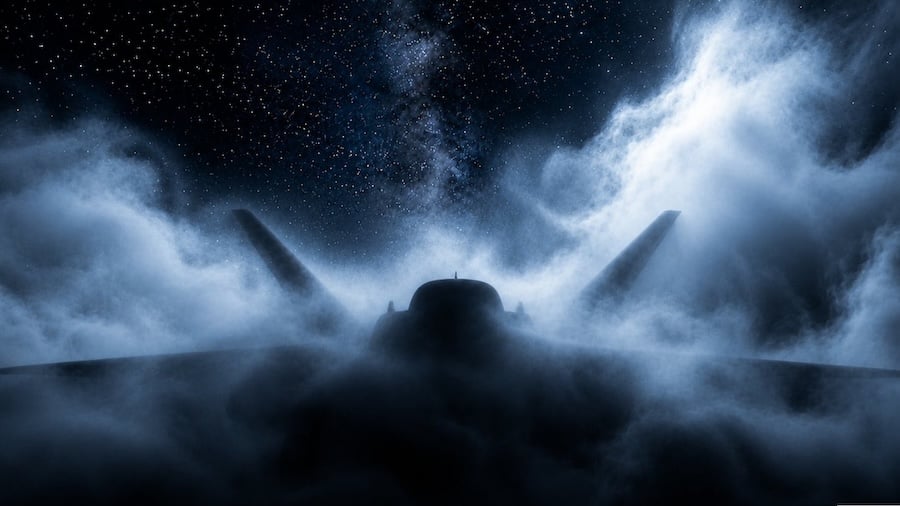
The Fractal can carry up to 2,000 pounds of experimental equipment inside the aircraft or on external mounts. Researchers can swap that equipment quickly between tests, allowing them to use the same aircraft for different experiments.
“The X-70 Fractal gives NASA a crewed, high-performance platform to test advanced flight-control, maneuverability, and other cutting-edge technologies in real flight,” Isaacman said. “Its modular design and ability to rapidly swap internal and external payloads will keep our teams flying, learning, and moving quickly from one experiment to the next.”
The aircraft has a takeoff weight of 10,000 pounds and is designed to cruise at Mach 0.75 and reach up to 45,000 feet. NASA says its operating range is designed to exceed 1,500 nautical miles, or about 1,726 miles.
🚨 BREAKING: Introducing X-70 Fractal, @NASA’s newest experimental aircraft!
This crewed, modular aircraft will allow the agency to rapidly swap out internal & external payloads to help keep pushing the frontiers of aviation technology! @nasaadmin
Details: https://t.co/uSF1VRgdQE
— NASA Aeronautics (@NASAaero) November 5, 2026
The Fractal joins a line of U.S. experimental aircraft that includes the Bell X-1, which broke the sound barrier in 1947, and the X-15, which was built for hypersonic research. NASA’s current X-plane work also includes the X-59 quiet supersonic demonstrator.
“For decades, NASA Aeronautics has used X-planes to develop technologies that advance aviation,” said Laurie Grindle, director of the Aeronautics Division within NASA’s Research and Technology Mission Directorate. “It’s exciting to bring on another X-plane to accelerate and drive aeronautics research.”