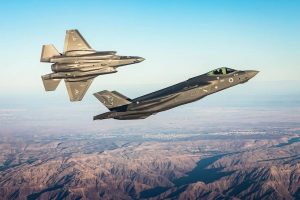


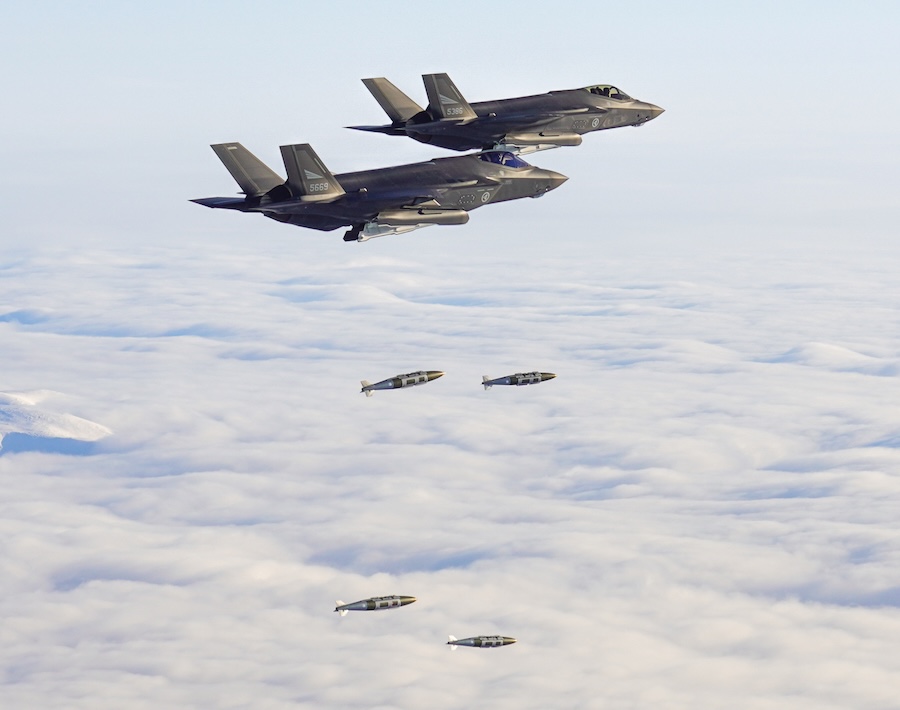
The activity was designed to demonstrate the aircraft’s capability to employ heavy precision weapons during operational scenarios. According to NATO, the exercise simulated both close-air support missions and long-range strike operations.
The training was conducted in the challenging operational environment of the High North. These conditions are often characterised by harsh weather, low visibility and demanding terrain.
NATO said the exercise showed how the F-35A’s advanced sensors, targeting systems and precision weapons are being integrated into Alliance operations. The capability is intended to strengthen deterrence and improve operational readiness across northern Europe and the Arctic approaches.
Norway recently completed the delivery of all 52 F-35A aircraft planned for its fleet. With the final deliveries concluded, the country became the first F-35 partner nation to complete its full acquisition programme.
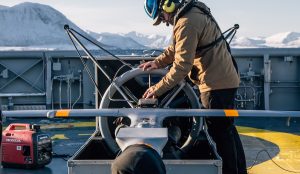
The GBU-31 bomb used in the exercise is part of the Joint Direct Attack Munition family. It belongs to the 2,000-pound class of precision weapons.
JDAM is created by attaching a guidance tail kit to standard unguided bombs. This modification converts conventional free-fall bombs into guided munitions capable of striking targets with greater accuracy.
Live-fire precision from above 💥
🇳🇴 @Forsvaret_no F-35s practise dropping Joint Direct Attack Munition (JDAM) GBU-31 bombs during an exercise in Norway pic.twitter.com/zHvZERovKQ— NATO Air Command (@NATO_AIRCOM) March 9, 2026
Official United States reports describe JDAM as combining an inertial navigation system with GPS guidance. This technology allows aircraft to deliver accurate strikes even when weather conditions limit visibility.
Such capability is particularly important in Norway’s operational environment. Cloud cover, poor visibility and severe weather can complicate air operations and reduce the effectiveness of systems that rely on visual tracking or laser designation.
By integrating JDAM with the F-35A’s advanced targeting and sensor systems, the aircraft can maintain precision strike capability in these conditions. The exercise therefore illustrated how NATO forces are adapting their capabilities for operations in northern and Arctic regions.