

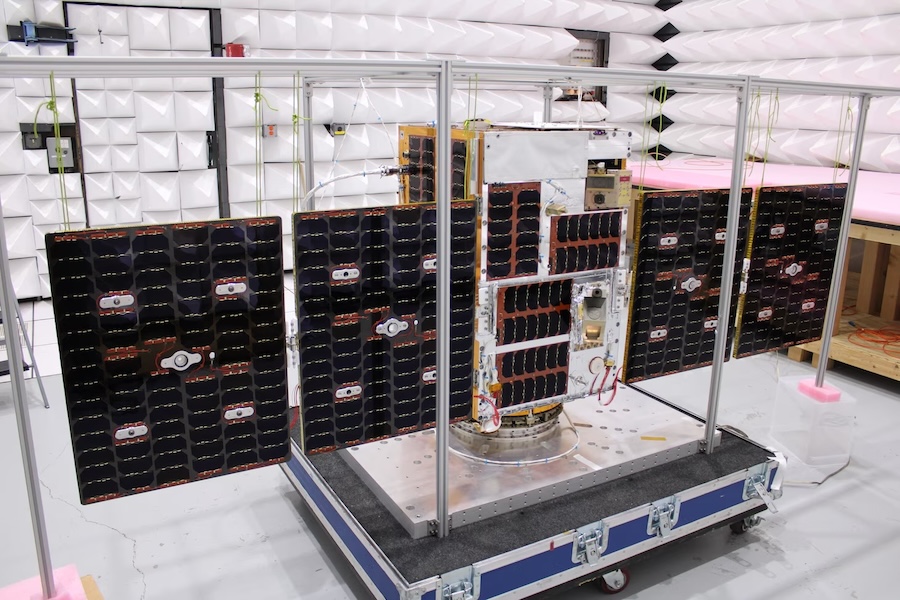
The mission is part of the Department of War’s Space Test Program. Officials said it aims to advance U.S. space-based capabilities and support national security objectives.
The payloads include the Lasersheet Anomaly Resolution and Debris Observation instrument, the Global Navigation Satellite System Orbiting Situational Awareness Sensor and the Gadolinium Aluminum Gallium Garnet Radiation Instrument. These systems are designed to improve understanding of the space environment and test new technologies.
The STPSat-7 spacecraft was launched as part of the STP-S29A mission. The program supports research and development efforts with potential military applications.
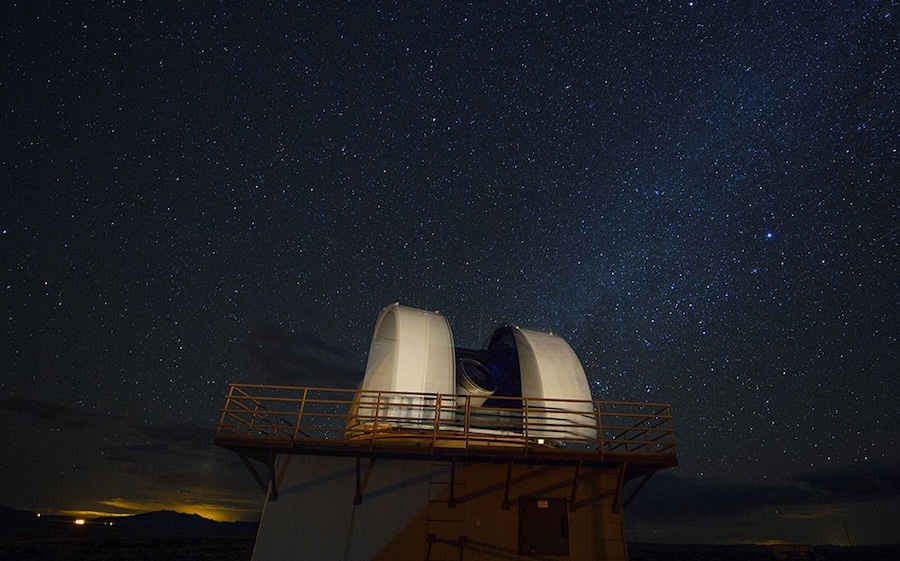
One of the primary payloads, LARADO, focuses on tracking orbital debris. Officials said it will detect and analyse small debris that cannot be observed from ground-based systems.
Andrew Nicholas, principal investigator for LARADO, said the system addresses a growing challenge. “LARADO is the next step in ensuring situational awareness in space,” he said.
“The instrument will detect and characterize small orbital debris that cannot be observed from the ground,” Nicholas added. “This is vital to understanding the space environment and will provide essential data to update orbital debris models.”
Another payload, GOSAS, is designed to improve navigation and communication systems. It will study the orbital environment affecting global navigation satellite systems.
Scott Budzien, principal investigator for GOSAS, said accurate space weather data is critical. “The GOSAS is a CubeSat-compatible, programmable dual GPS receiver designed to characterize the orbital GNSS environment and produce high quality ionospheric space weather products,” he said.
“Understanding and predicting space weather is critical for ensuring the accuracy of GPS and the integrity of military communications,” Budzien added. The system builds on earlier experiments conducted on the International Space Station.
The third payload, GARI-1C, focuses on radiation detection technologies. It is intended to support future space-based defence applications.
Lee Mitchell, principal investigator for GARI-1C, said the system advances sensor capabilities. “GARI-1C is designed to space-qualify new gamma-ray detector technology for space-based defense applications,” he said.
“This detector technology offers improved energy resolution, lower power consumption and reduced size compared to similar systems, which is key to developing more advanced and efficient sensors for detecting threats from orbit,” Mitchell added.
Officials said the Space Test Program enables testing of new technologies in orbit. The initiative has supported defence research missions since its establishment in 1966.
Brian Shimek, system program manager for the Space Test Program, highlighted the mission’s importance. “The success of this mission, achieved through a powerful collaboration with the DoW’s Space Test Program, highlights how cutting-edge research and development are fundamental to preserving America’s strategic edge in space,” he said.
The U.S. Naval Research Laboratory said the mission supports continued innovation across multiple scientific fields. Officials added that advancing space capabilities remains critical for protecting assets and maintaining operational advantage.


![B-2 Spirit stealth bombers fly 36-hour mission to strike underground IRGC command site in Iran [VIDEO]](https://defence-industry.eu/wp-content/uploads/2026/04/b-2-spirit-stealth-bombers-fly-36-hour-mission-to-strike-underground-irgc-command-site-in-iran-video.jpeg)