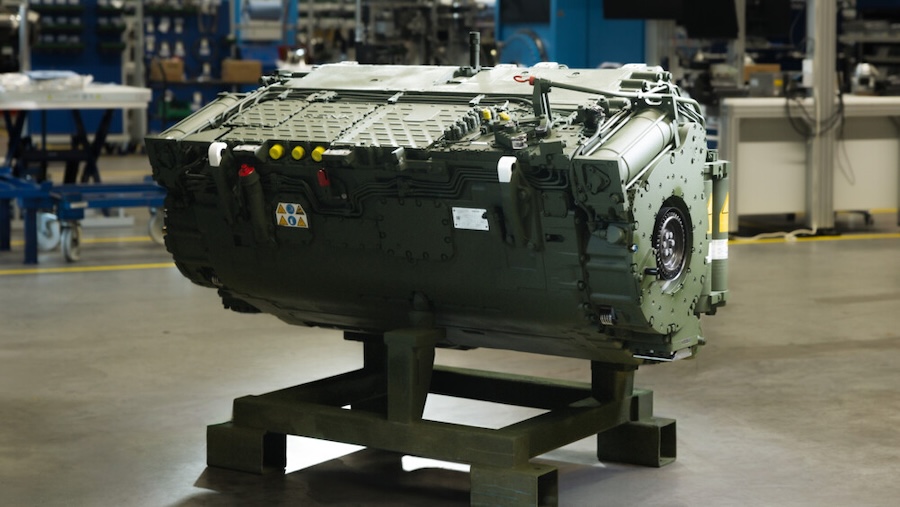


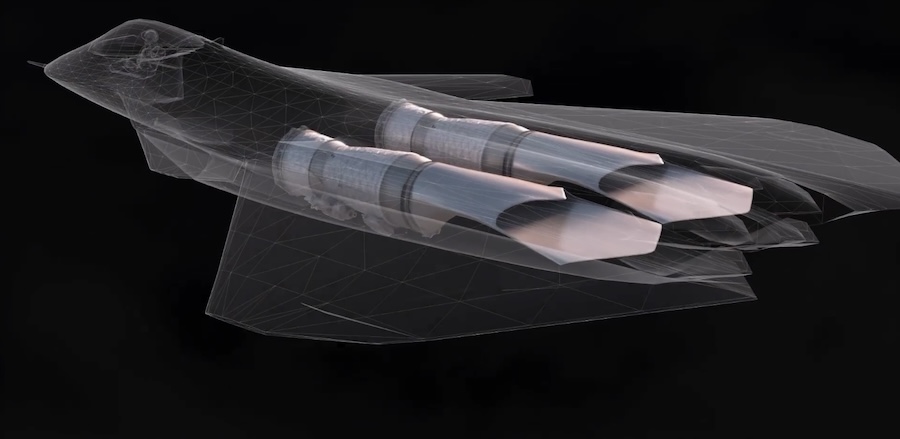
The XA103 engine is intended to power the crewed Next Generation Air Dominance (NGAD) fighter currently being designed by Boeing for the U.S. Air Force. Pratt & Whitney is competing with General Electric for the contract to provide the aircraft’s propulsion system.
The computer-generated aircraft shown in the video differs from previously revealed visualizations of the Boeing F-47. The concept depicts a twin-engine, single-seat tailless aircraft with trapezoidal wings and a small forward canard surface.
Other features also differ from earlier F-47 imagery. The outline of the wing and the shape of the forward fuselage appear different, while the wings show no dihedral and the geometry of the pilot’s canopy also varies.
The video quickly drew attention from aviation experts and enthusiasts because it may provide clues about the appearance of the U.S. Air Force’s future sixth-generation fighter. However, the final design of the aircraft remains strictly classified.
The Boeing F-47 is expected to replace the F-22 Raptor in U.S. Air Force service as part of the NGAD program. So far, only a single official graphic of the aircraft has been released, and it reveals only a fragment of the overall design.
Pentagon officials and Boeing have also noted that early graphics should not be treated as precise representations of the aircraft’s final appearance. As a result, it remains uncertain whether the aircraft shown in Pratt & Whitney’s promotional material reflects the actual configuration of the future fighter.
Technical details of the F-47 remain largely undisclosed. Unofficial reports suggest the aircraft could exceed speeds of Mach 2 and have an operational range of more than 1,000 nautical miles, which would represent up to a quarter greater range than current U.S. fighter aircraft.
Visual concepts of the aircraft also show the possible use of canard control surfaces. While such features may improve maneuverability, they could also raise questions about maintaining the aircraft’s stealth characteristics.
According to current plans, Boeing aims to conduct the first flight of the F-47 as early as 2028. Estimates also indicate that a single aircraft could cost up to three times more than an F-35 fighter, highlighting the scale and ambition of the next-generation program.