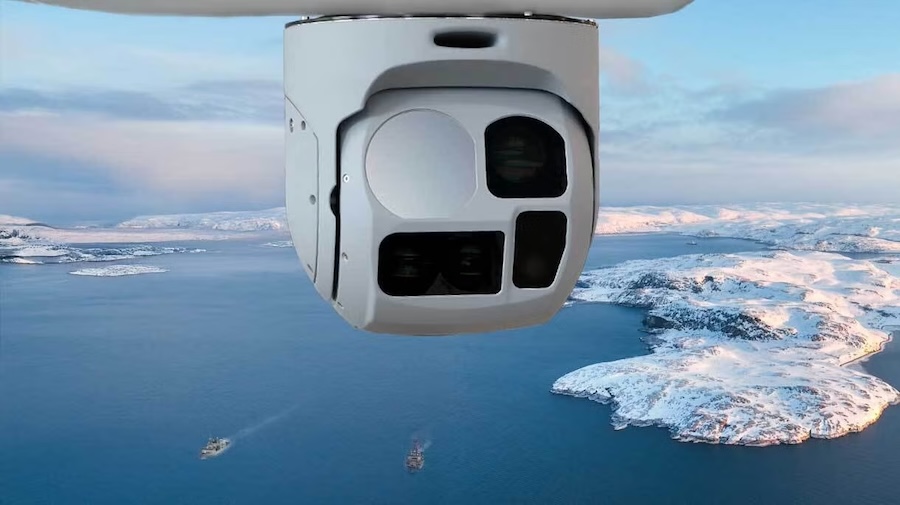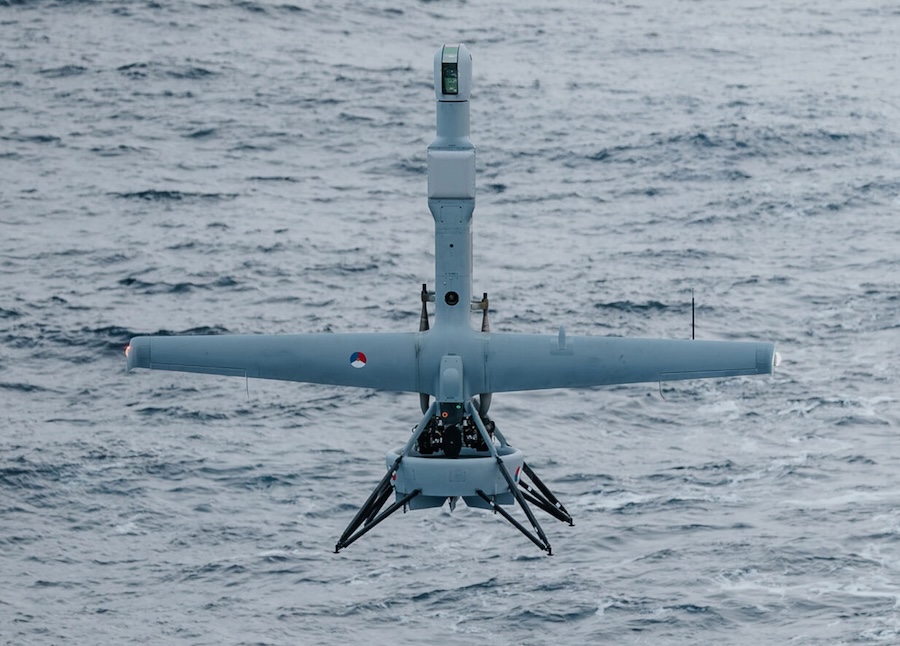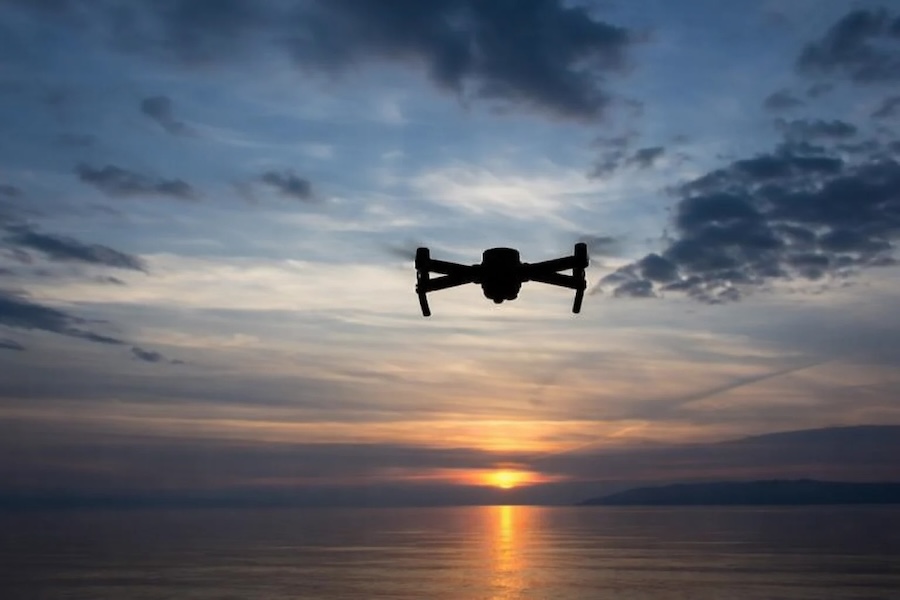

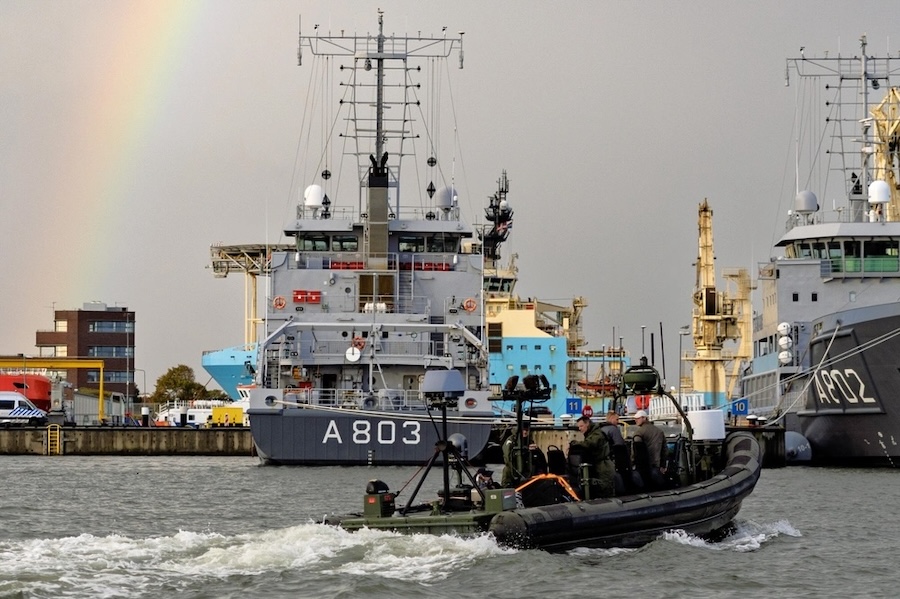
Designed for passive operation, the system uses artificial intelligence to fuse multiple independent sensors to detect and identify class 1 drones, which are small, numerous and difficult to track. When fully operational, it is intended to protect maritime special forces from distant incoming drones without revealing their position.
The project supports the U.S. Department of War’s priority to accelerate drone development under “Unleashing U.S. Military Drone Dominance,” which aims to “power a technological leapfrog, arming our combat units with a variety of low-cost drones made by America’s world-leading engineers and AI experts.” NATO Allied Special Operations Forces Command sponsored Bold Machina with technical support from the NATO Center for Maritime Research and Experimentation.
“For us, it’s a question of survival,” said a Ukrainian special operations forces colonel studying at NPS. “So, we’re more than motivated to create the most efficient and effective weapons and counter-weapons to use against enemies as soon as possible and as cheaply as possible.”
The system was developed during a 90-day sprint by U.S. Navy Lt. Cmdr. Max Leutermann and Swedish Armed Forces Maj. Patrik Liljegard, responding to a NATO design challenge focused on protecting exposed special operations craft. “NATO required us to create a system that was passive so that operators who were on a small boat wouldn’t give off any sort of detectable signatures or emissions,” said Leutermann.
Testing at NPS’ Joint Interagency Field Experimentation exercise allowed the team to refine the prototype under demanding conditions before deployment to Bold Machina. “After we built a mockup, we took it to JIFX to test and prove its functionality,” Leutermann said. “Our goal was to detect drones.”
During Bold Machina, the system was assembled and completed at sea with support from multinational industry partners and successfully detected multiple drone types in real time. “In the end, we showcased a system that integrated sensors from multiple companies into one display that operators can use,” said Leutermann. “That capability didn’t exist before.”
NATO said Bold Machina aims to transform lessons from current conflicts into future maritime special operations capabilities, with the collaboration leading to further joint studies. “The war in Ukraine has made one point unmistakable: defense innovation must move much faster,” said Aleksandar Matovski of NPS. “NPS is uniquely positioned to accelerate these efforts.”