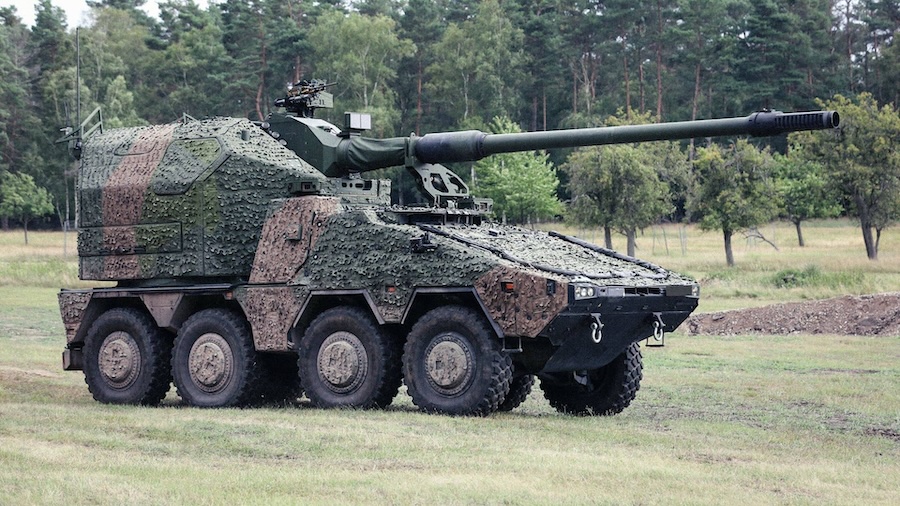
General Dynamics European Land Systems is the prime contractor for the Luchs 2, which is due to be delivered to the Bundeswehr from 2029 onwards. The contract with Rheinmetall was signed in Kaiserslautern at the beginning of February 2026.
Rheinmetall will support the reconnaissance capabilities, combat effectiveness and training of the German Army’s Intelligence and Reconnaissance Corps. “We are grateful for the trust that GDELS and the Bundeswehr have placed in our products and capabilities”, said Timo Haas, Head of the Digital Systems Division.
“The Luchs 2 contract package is a significant success for our Bremen site and our colleagues in Rome”, Haas added. “At the same time, it sends a strong signal in favour of European defence cooperation”.
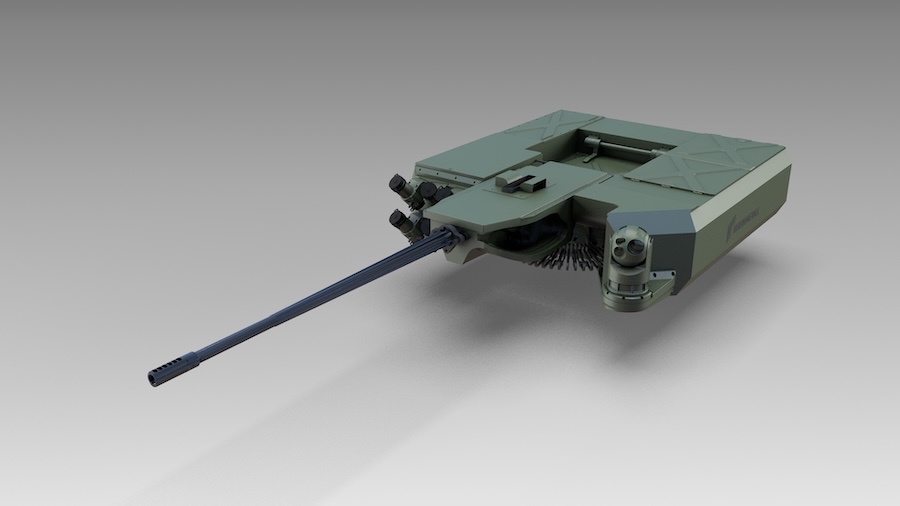
The largest share of the contract will be carried out by Rheinmetall Electronics GmbH in Bremen, with 274 CT-025 turrets to be delivered by 2031. This marks the first major order for the newly developed, modular, unmanned turret system, with a modified version tailored to the Bundeswehr’s requirements.
The CT-025 is designed as a technological base platform for different mission profiles and combines operational capability with adaptability to operational and logistical needs. It features stabilised vision systems and digital networking, enabling precise engagement of ground and air targets, including drones.
A fully digitalised fire control system with inertial weapon stabilisation, a ballistic computer and GVA/NGVA-compatible interfaces ensures accuracy even when the vehicle is moving. The Bundeswehr configuration includes a turret hatch with additional ballistic protection, adapted ammunition supply to meet weight limits and an optimised height profile for compatibility with other platforms.
The turret’s open modular architecture allows full integration into the Rheinmetall Battlesuite digital framework. This enables rapid integration of features such as AI-supported target tracking and mission-specific software upgrades without hardware changes.
The Luchs 2 will be equipped with the Oerlikon KBA 25 mm automatic cannon, manufactured by Rheinmetall Italia S.p.A. in Rome. Produced more than 6,000 times, it is Rheinmetall’s most widely manufactured weapon in the NATO standard calibre of 25 mm x 137.
With three firing modes, dual belt feed and a range of up to 2,500 metres, the weapon provides versatile firepower. It can penetrate the armour of most modern armoured personnel carriers and, with a firing rate of 600 rounds per minute and new 25 mm x 137 proximity fuse ammunition, offers protection against drones.
The dual belt feeder allows two ammunition types to be loaded and rapidly switched, making the system suitable for a wide range of targets. Its low recoil permits installation on heavy tracked vehicles, light armoured 4×4 reconnaissance vehicles, manned and unmanned turrets, anti-aircraft mounts and naval platforms.
Rheinmetall Electronics will also supply six combat simulation training devices for vehicle-based reconnaissance troops, known as AGFS. The reference system is scheduled for delivery in mid-2028 and will later be upgraded to match the standard of the remaining five systems.
The AGFS simulator recreates battlefield conditions by replicating vehicle logic, sensor technology and ballistics in line with the ‘train as you fight’ concept. It is designed for networking with other AGFS or compatible systems and is based on the same technological platform as simulators developed for the Puma infantry fighting vehicle, the heavy weapon carrier and the Schakal wheeled infantry fighting vehicle.
In addition, Rheinmetall will integrate the AGDUS live simulation system into the future vehicle fleet. The laser-based training system enables realistic exercises, from firing drills to large-scale operations at the combat training centre, using original display and control elements proven in the Puma and Lynx programmes.