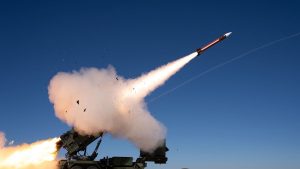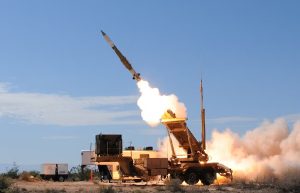
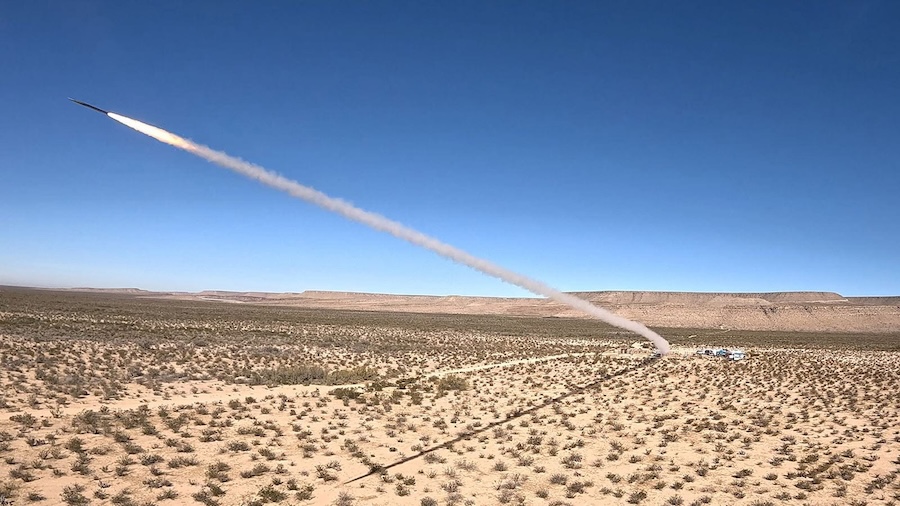
The trial marked another successful ballistic test for the NGSRI program and was funded by Raytheon to demonstrate technical maturity and gather critical data ahead of a planned flight test demonstration. The company said the results support continued progress toward meeting U.S. Army requirements and schedule milestones.
“Raytheon’s investment in NGSRI demonstrates the company’s strong partnership with the U.S. Army and our commitment to equipping service members with this advanced capability,” said Tom Laliberty, president of Land and Air Defense Systems at Raytheon. “We continue to prioritize rapid learning and testing to ensure the Army receives a cost-effective and technologically superior interceptor.”
In 2025, Raytheon worked with Northrop Grumman to complete multiple successful tests of Highly Loaded Grain solid rocket motors, a propellant technology that provides longer burn time and higher energy output than conventional motors. Raytheon said this technology extends the range of its NGSRI offering and supports improved performance against aerial threats.
NGSRI is the U.S. Army’s new short-range missile and is designed to fly faster and perform better than existing interceptors, with the ability to be launched from vehicles or shoulder-mounted systems. Raytheon said the design draws on more than 60 years of air defense experience and uses modular system architecture and automated manufacturing to speed development and production.