

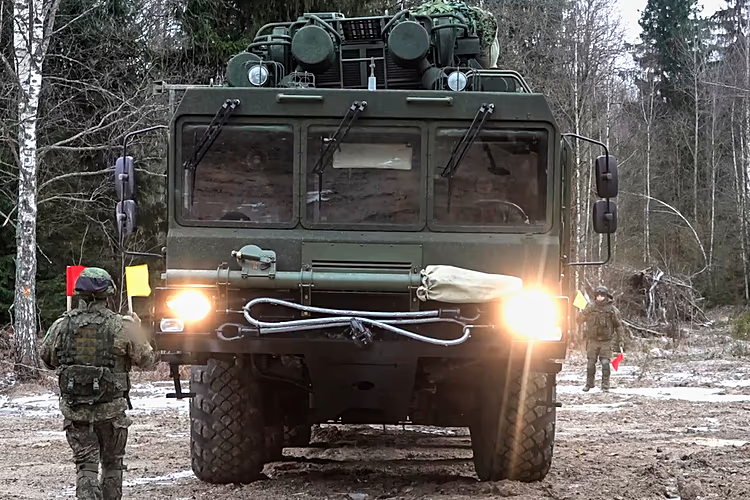
Russian President Vladimir Putin had previously said the Oreshnik would enter combat duty before the end of the year, speaking at a meeting with senior military officers. He warned that Moscow would seek to expand its gains in Ukraine if Kyiv and its Western allies rejected Russia’s demands in peace talks.
The deployment comes as U.S.-led efforts to end the war in Ukraine reach a critical phase, with U.S. President Donald Trump hosting Ukrainian President Volodymyr Zelenskyy at his Florida resort on Sunday. Trump said Kyiv and Moscow were “closer than ever before” to a peace settlement, while also noting that negotiations could still collapse.
Russia and Ukraine remain divided on core issues, including troop withdrawals and the future of the Russian-occupied Zaporizhzhia nuclear power plant, one of the world’s 10 largest. Putin has sought to project strength as Ukrainian forces struggle against Russia’s larger army.
Russia first tested a conventionally armed version of the Oreshnik, named after the hazelnut tree, in November 2024, striking a Ukrainian factory. Putin has said the missile’s multiple warheads travel at speeds of up to Mach 10, are impossible to intercept and that several used together could be as destructive as a nuclear strike.
The Belarusian Defence Ministry said the missile has a range of up to 5,000 kilometres, while Russian state media claimed it could reach targets in Poland and NATO headquarters in Brussels within minutes. Intermediate-range missiles were banned under a Cold War-era treaty abandoned by Washington and Moscow in 2019, and Russia has already deployed tactical nuclear weapons in Belarus, which is now covered by Russia’s revised nuclear doctrine.