According to reporting by CBC News, the proposed facility would house mission-critical and classified data within Canadian borders. Saab described the plan as a “unique advantage” in its effort to influence Canada’s ongoing review of its fighter procurement.
A spokesperson for Saab confirmed the intended role of the facility. “The purpose-built Saab data centre will host all work on the fighter mission system,” said Sierra Fullerton in a statement.
Fullerton added that the facility would support Canadian operational independence. “Gripen data will also be housed here, securely within Canadian borders.”
“With the fighter mission system, communications and technical data all hosted in Canada, Gripen exceeds all industrial, security and controlled goods requirements,” she said. “With Gripen the Royal Canadian Air Force will have full, independent control over aircraft, software and sensitive data.”
The proposal comes as the Canadian government continues to review its purchase of F-35 aircraft, which has been under contract since January 2023. While no formal decision has been announced, additional parts procurement for the jets has been authorised beyond the initial order.
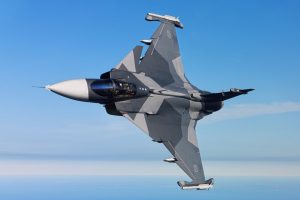
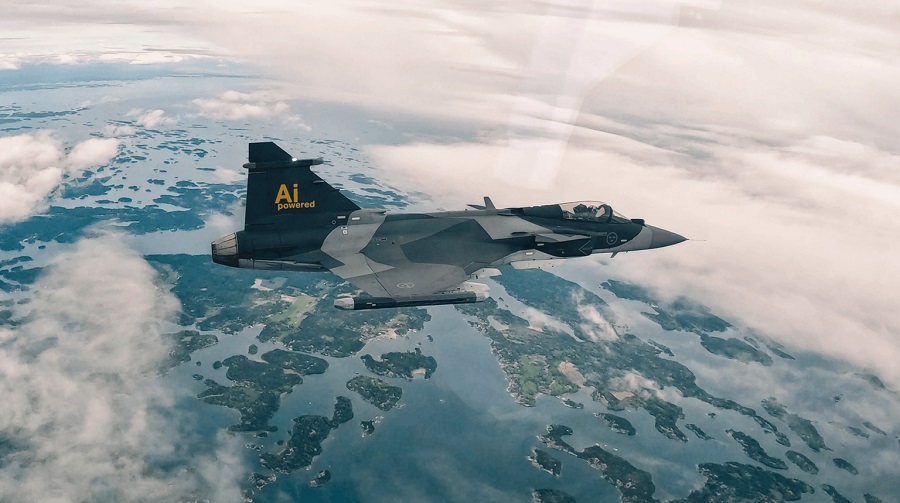
Saab’s offer includes a broader package of 72 Gripen E/F aircraft and six GlobalEye airborne early warning platforms. The company has also proposed assembling the aircraft in Canada to support domestic industry.
Data sovereignty has emerged as a key issue in the debate. Saab representatives argue that domestic control over sensitive operational data would enhance national security.
Jussi Halmetoja, a test pilot and adviser to Saab, outlined the concept. “What it really gives you is sovereignty — your indigenous capability to take the data that you collect, and to own it,” he said.
He added that the approach would limit external access to sensitive information. “You can take the data that you collect, analyze it in your nation without anyone interfering.”
Concerns over data management in the F-35 programme have been raised previously. The system collects extensive operational and technical data, including mission profiles and electronic signatures.
Chauncey McIntosh, a senior executive at Lockheed Martin, said the company has addressed such concerns. “As part of our government contracts, we deliver all system infrastructure and data required for all F-35 customers to operate and sustain their aircraft independently and according to their sovereign requirements and operational needs,” he said.
Analysts say the issue of sovereignty is influenced by broader geopolitical considerations. Canada’s long-standing defence relationship with the United States remains central, but evolving political dynamics have added complexity.
Daniel Araya, a fellow at the Centre for International Governance Innovation, highlighted the challenge. “But for the moment, we look at the U.S. leadership when we ask ourselves, do we trust that?” he said.
He added that maintaining autonomy requires broader strategic planning. “But if we wanna maintain our sovereignty in the face of the United States moving in directions that we’re very uncomfortable with — something that may outlive the Trump administration — then we need to think about having our own autonomy at the energy level, the infrastructure level, the software level and the data level.”
The debate also reflects the growing importance of data in defence systems. Increasing reliance on data-driven technologies, including artificial intelligence, has amplified concerns about ownership and control.
Araya said dependence on foreign systems could have wider implications. “If we depend on the United States, its data trail, its software, its broader security stack, then in a sense we become dependent upon the United States more broadly, not just for security, but for everything else that data facilitates, and that data feeds into,” he said.
Source: CBC News.