

One of the strikes appears to have hit the radar system for a U.S. THAAD missile battery located at Muwaffaq Salti Air Base in Jordan. Satellite imagery taken on Monday shows the radar site was apparently destroyed during the first days of US and Israeli strikes on Iran.
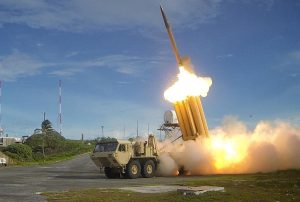
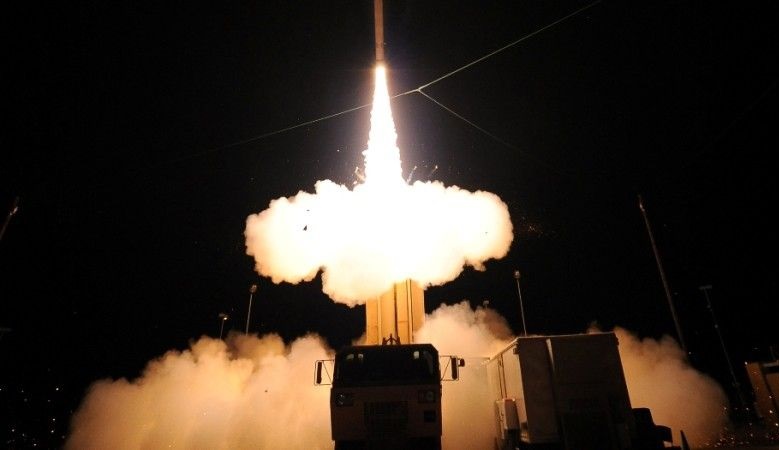
The radar involved is the AN/TPY-2 transportable radar used with the THAAD missile defense system. The radar is manufactured by Raytheon and, according to a 2025 Missile Defense Agency budget, costs nearly half a billion dollars.
The imagery shows two craters measuring about 13 feet in diameter near the radar site. The damage suggests multiple attempts may have been made to hit the system, which is distributed across five trailers roughly 40 feet long.
The radar and the THAAD battery had reportedly been deployed at Muwaffaq Salti Air Base since at least mid-February. The base, located more than 500 miles from Iran, had previously hosted significant US activity, including more than 50 fighter jets along with drones and transport aircraft visible in satellite images before the conflict began.
Additional satellite analysis identified damage at two military installations in the United Arab Emirates. Buildings associated with THAAD radar systems were struck at sites near Ruwais and Sader between February 28 and March 1.
At least three buildings were damaged at the installation near Ruwais and four at the site in Sader. Structures believed to house radar equipment for THAAD batteries were among those hit.
CNN determined the locations hosted THAAD batteries and radar systems through analysis of historical satellite imagery. The review showed the presence of radar components at the Sader site as early as 2016 and at Ruwais in 2018.
It remains unclear whether the affected facilities were operated by the U.S. military or belonged to the UAE’s own THAAD systems. High-resolution imagery was not immediately available to confirm whether radar equipment was present when the strikes occurred.
Experts say damage to the radar does not render the THAAD system completely unusable, but it significantly reduces operational capability. The radar plays a central role in detecting threats and guiding interceptor missiles.
N.R. Jenzen-Jones, a munitions specialist and director of Armament Research Services, said the loss of such a radar would have serious operational consequences. He told CNN: “The AN-TPY/2 radar is essentially the heart of the THAAD battery, enabling the launch of interceptor missiles and contributing to a networked air defense picture.”
He added that the equipment is difficult and costly to replace. Jenzen-Jones said: “It also happens to be an incredibly expensive piece of kit. The loss of even a single radar of this type would be an operationally significant event. It is probable that a replacement unit would have to be redeployed from elsewhere, which will take time and effort.”
Satellite imagery from Airbus Defence and Space appears to show a AN/TPY-2 Forward Based X-band Transportable Radar, the primary radar for the U.S. Army’s Terminal High Altitude Area Defense (THAAD) System, having been damaged and possibly destroyed by an Iranian drone or missile… pic.twitter.com/NqKN6K2YW2
— OSINTdefender (@sentdefender) March 5, 2026
He also noted that the THAAD system typically operates alongside other missile defense systems. Jenzen-Jones said: “However, it also needs to be layered with other (anti-ballistic missile) and air defenses, such as Patriot, to ensure good coverage against different kinds of threats and to provide some measure of protection to the battery itself.”
CNN previously reported that Iranian strikes targeted US bases and facilities across the Arabian Peninsula. These attacks appear to have focused on communications, radar and intelligence infrastructure.
Satellite imagery also indicates damage to a U.S.-made early-warning radar system in Qatar at Umm Dahal. The images were analyzed by Sam Lair, a research associate at the James Martin Center for Nonproliferation Studies.
A Pentagon spokesperson declined to comment on the status of specific systems in the region. The spokesperson said: “Due to operations security, we are not going to comment on the status of specific capabilities in the region.”
Meanwhile, residents in the UAE reported increased fighter jet activity in recent days. French Foreign Minister Jean-Noël Barrot said France has deployed Rafale fighter jets to patrol the skies over the UAE in order to protect its military bases.
According to the UAE, the number of missiles launched at its territory has declined significantly since the start of the conflict. The country reported seven missiles fired on Thursday compared with 137 on the first day of the war.
Drone attacks, however, continue to occur frequently. The UAE, which hosts U.S. forces at Al Dhafra Air Base, has reported being targeted by 1,072 drones and 196 ballistic missiles since the conflict began.
Source: CNN.