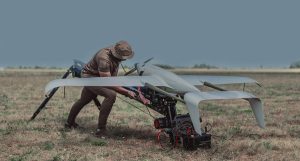


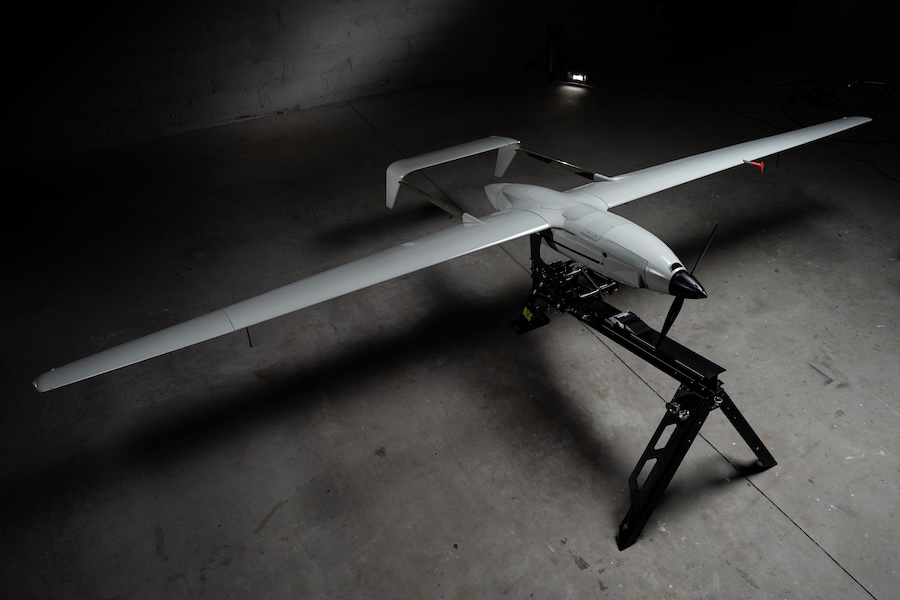
To enable the use of hydrogen, Skyeton engineers developed a new Raybird airframe architecture designed to integrate the fuel cell system while balancing space and weight. The company said the redesigned structure has also been optimised for mass production of the new UAV variant.
The Raybird UAS is used for long-range reconnaissance, with the hydrogen-electric propulsion intended to improve operational efficiency while offering environmental benefits for defence and civilian use. The standard mass-produced Raybird with an internal combustion engine can fly for more than 28 hours, while the hybrid version currently remains airborne for about 12 hours as of January 2026.
Roman Knyazhenko, CEO of Skyeton, said: “We have converted two years of laboratory testing into a new aircraft concept: it is the same class and weight, but a completely redesigned concept based on electric propulsion.” He added: “Hydrogen fuel is a solution that allows us to combine all the advantages of an electric motor – high reliability, power, and ease of maintenance – with the long-duration continuous flight that is a hallmark of our UAV.”
According to the company, the hydrogen-electric Raybird has a negligible thermal signature, operates at higher altitudes, and is significantly quieter than its internal combustion counterpart. During research and development, engineers also ensured the hybrid power plant performs across the same temperature range of -35°C to +55°C as the conventional version.
Skyeton said solutions were implemented to address hydrogen permeability, operator ergonomics, and logistics, including options for pre-filled tank replacement or on-site hydrogen generation. The company is now working to extend flight endurance to 20 hours, while the hybrid Raybird prepares for codification to enable wider adoption by the Armed Forces of Ukraine units.