

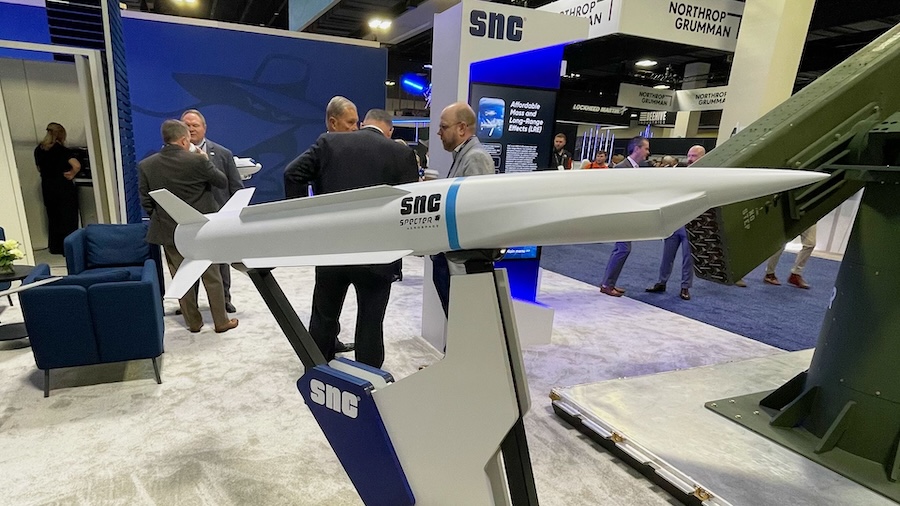
The collaboration combines Specter Aerospace’s experience in ramjet and scramjet propulsion, vehicle design, and avionics with SNC’s capabilities in mission integration, air vehicle development, and air defense systems. The partners aim to develop a supersonic aerial effects product line designed to address evolving operational requirements.
Jon Piatt, executive vice president of SNC’s IAS business area, said the initiative seeks to balance performance and cost as defense threats continue to evolve. He stated: “Despite significant advancements in air defense technology, many systems are prohibitively expensive, while others struggle to consistently address emerging threats from hypersonic missiles or drone swarms.”
Piatt added that the partnership is intended to support wider operational deployment. He said: “Together with Specter Aerospace, we are combining affordability with advanced propulsion and scalable manufacturing to create a solution that allows for widespread deployment without compromising on range, reliability or performance.”
Felipe Gomez del Campo, CEO of Specter Aerospace, said current security challenges require faster and more affordable deployment of advanced munitions. He said: “Today’s national security challenges demand that munitions be deployed quickly with increased range and significantly improved affordability.”
He added that the collaboration aims to accelerate development and operational fielding of the technology. Gomez del Campo said: “This makes us all the more excited to partner with SNC to rapidly demonstrate and field these capabilities, leveraging their scale and mission systems integration expertise.”
According to the companies, the jointly developed systems are designed to provide greater range than current competing systems while maintaining reliability in demanding environments. The program also focuses on low cost per round and scalable manufacturing to support wider deployment.
SNC and Specter Aerospace said air vehicle and engine development and testing are already underway. Initial flight testing of the system is scheduled for the third quarter of 2026.