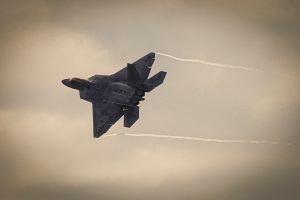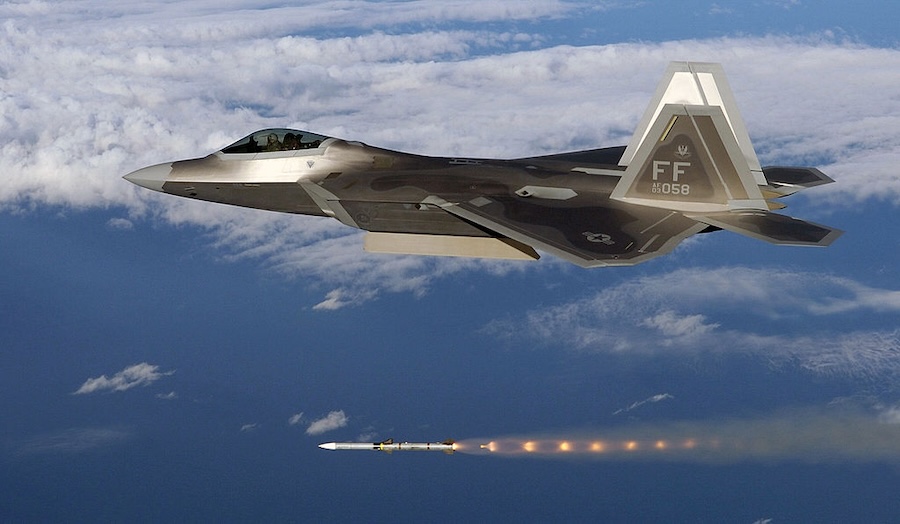

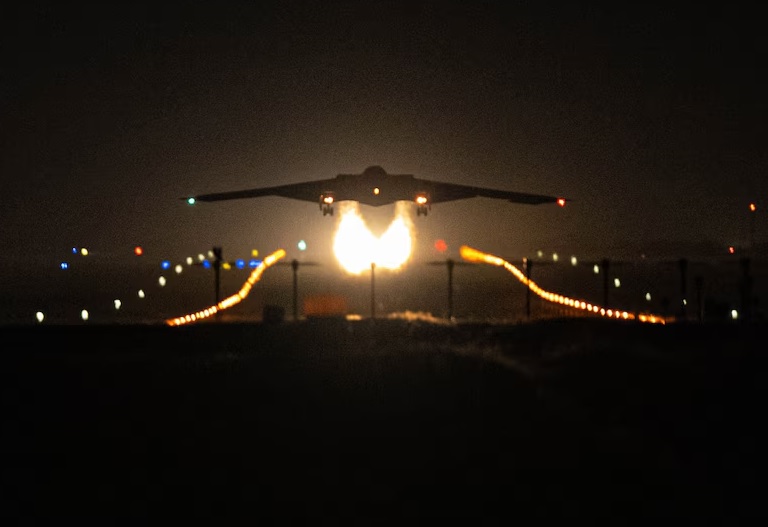
Operation Midnight Hammer employed 125 aircraft, including B-2 Spirit bombers, refueling tankers, and a mix of F-35 Lightning IIs, F-22 Raptors, F-15s, and F-16 Fighting Falcons. Six months later, many of the same platforms supported Operation Absolute Resolve, which resulted in the capture of Venezuela’s former president Nicolás Maduro and his wife, according to the Air & Space Forces Magazine report.
“Operation Midnight Hammer, Absolute Resolve—that is a definition of readiness,” said Director of Staff Lt. Gen. Scott L. Pleus on Jan. 29 at the Airpower Forum hosted by AFA’s Mitchell Institute for Aerospace Studies. “We do things in the United States Air Force that no other country can do.”
Officials said the scale and complexity of those missions will shape future investment, training, and planning decisions across the service. They noted that earlier plans to procure 100 B-2 bombers and as many as 400 B-1s were sharply reduced after the Cold War, limiting today’s force structure.
Lt. Gen. Jason R. Armagost said the challenge goes beyond the number of future B-21 Raiders, currently capped at 100 aircraft. He stressed the central role of aerial refueling, saying, “The first thing I worry about when something like a Midnight Hammer starts to take shape is what does the tanker force looking like, what’s the position of it, and how do we posture in the world to actually do this.”
Midnight Hammer required a 36-hour roundtrip flight by seven B-2s from Whiteman Air Force Base in Missouri to Iran and back, covering more than 12,000 nautical miles. That mission depended on a vast tanker bridge, even as today’s tanker fleet numbers about 500 aircraft, roughly 375 of them KC-135 Stratotankers averaging more than 63 years old.
Maj. Claire Randolph, chief of Weapons and Tactics at Air Forces Central and a planner for the operation, said the tanker issue is a constant concern. “I worry a lot about the tankers,” she said, adding, “I think—because it’s not sexy, it’s not a weapon, and it’s not a fighter and it’s not a bomber—the tankers are often really left out in this conversation.”
Randolph said tanker shortages could become a decisive constraint in future conflicts. “If I were writing our request list for procuring things,” she said, “probably the first 100 things on the list would be tankers.”
The Air Force is continuing to acquire KC-46 Pegasus tankers and last year opted to buy more of them instead of pursuing an interim “bridge tanker.” At the same time, it is exploring concepts for a Next-Generation Air Refueling System, potentially including uncrewed aircraft, though officials say current platforms such as the Navy’s MQ-25 would fall well short of Air Force requirements.
Munitions capability emerged as another major lesson from Midnight Hammer, particularly for attacking hardened and deeply buried targets. During the mission, seven B-2s dropped 14 GBU-57 Massive Ordnance Penetrators, weapons designed to explode roughly 200 feet underground, even as public records suggest only a limited number were ever purchased.
“Munitions for ‘hard, deeply buried targets are critical,’” Randolph said. “If our adversaries are learning anything from our operations, they’re starting to put more things underground, and the Earth is a pretty difficult thing to penetrate.”
Officials also highlighted a lack of options between short-range bombs and long-range standoff missiles for striking mobile surface targets. “We don’t have a lot of things that fit in well there, which is a huge problem,” Randolph said, pointing to the gap between JDAMs, small-diameter bombs, and weapons such as the AGM-158 Joint Air-to-Surface Standoff Missile.
Armagost said a broader mix of penetrating and standoff weapons would strengthen deterrence and operational flexibility. “You have to have proof you can gain access to hold any target at risk, keep it at risk, and then carry out orders that provide options that can happen from standoff and can happen from penetrating,” he said, adding, “But in combination, those things are incredibly powerful.”
Source: Air & Space Forces Magazine.