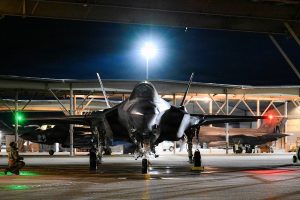


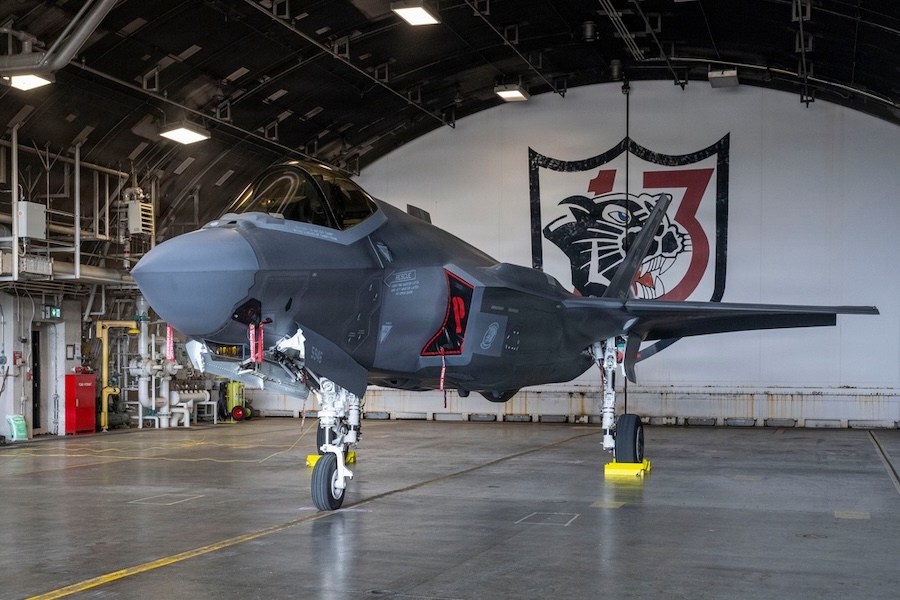
The arrival supports Department of the Air Force modernization efforts and underscores U.S. defense commitments in the Indo-Pacific region. Officials said the move reflects a sustained focus on strengthening deterrence and maintaining regional stability alongside allies.
“Bringing the F-35 to Misawa underscores our long-standing commitment to Japan and the region,” said U.S. Air Force Col. Paul Davidson, 35th Fighter Wing commander. “It strengthens our ability to respond quickly and operate seamlessly with our Japanese partners.”
Col. Jeromy Guinther, commander of the 35th Operations Group, welcomed incoming pilots on behalf of Davidson during the arrival. He emphasized operational readiness and continuity of the squadron’s mission.
“The Wild Weasels stand ready to defeat any threat in our area of responsibility and beyond,” said Guinther. “As you lay the foundation for Misawa’s upgrade to a fighter integration wing, remember your Wild Weasel legacy, stay ready and lethal, and continue to contribute to the Panther’s many generations of excellence. Cave Putorium!”
Misawa’s geographic position makes it a key location for sustaining security in the region. Officials said transitioning to the F-35 will expand combat capability, improve interoperability with allies, and strengthen deterrence.
“The F-35 was tailor made to be a weasel platform,” said Lt. Col. John Widmer, 13th Fighter Squadron commander. “Where legacy platforms performed the Wild Weasel mission with bolted-on sensors or weapons, the F-35 was built from the ground up as a sensor platform with the sensor fusion and quarterback capability we bring to the fight.”
The aircraft is designed to operate in high-threat environments while maintaining survivability. Its integrated avionics, stealth features, and advanced situational awareness systems are intended to reduce risk for U.S. and allied forces.
“As far as transitioning from the F-16 to the F-35, the stealth capability is obviously one of the biggest things,” said Widmer. “The sensor package we bring to the fight allows us to sense the threat and manage the entire spectrum of what the enemy is fielding at us right now. It’s constantly updating, constantly getting upgraded, and as we continue forward, it’s the place I want to be if I need to go to war.”
Airmen at Misawa completed months of preparation ahead of the aircraft’s arrival, including training, infrastructure upgrades, and operational coordination. These efforts were aimed at ensuring the squadron can generate and sustain combat-ready aircraft.
The permanent basing of F-35s in northern Japan is expected to enhance the combined capabilities of the U.S.-Japan alliance. Officials said it ensures the 35th Fighter Wing remains prepared to defend Japan and deter aggression across the Indo-Pacific.