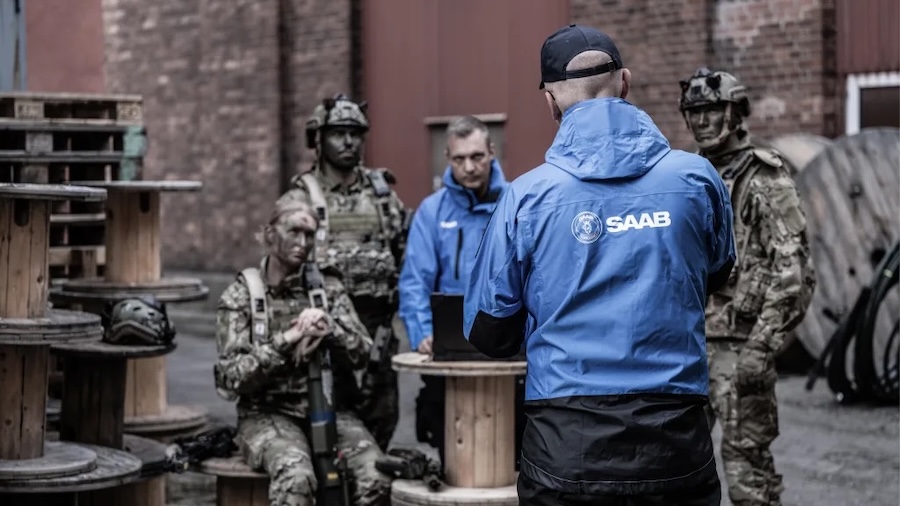
During the exercise, maintenance Airmen also performed air marshal duties by guiding pilots during launch and recovery, conducting last-minute visual inspections and safety checks, and communicating through standardized hand signals. These actions ensured safe and effective operations while maintaining aircraft readiness in conditions designed to replicate operational stress and emerging threats.
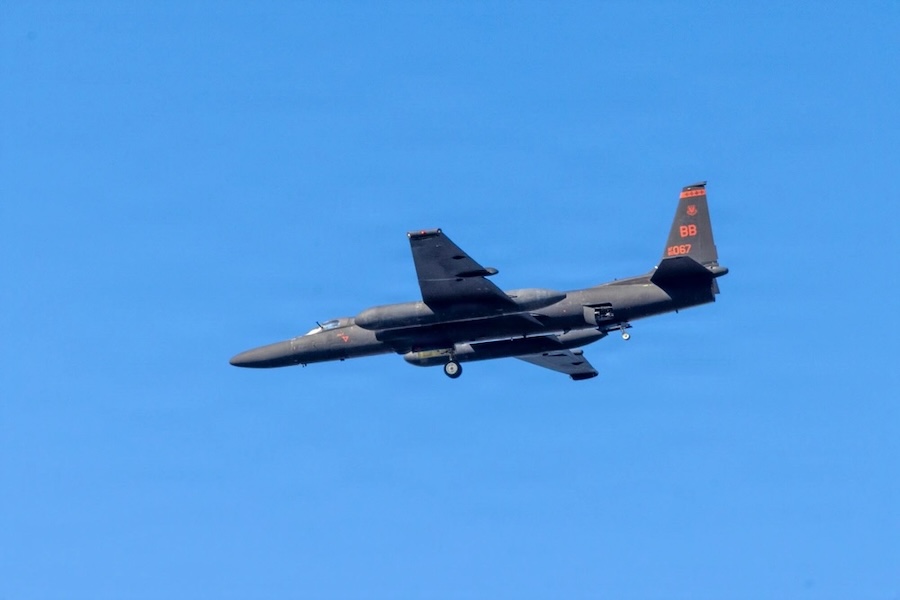
The U-2 Dragon Lady provides high-altitude, all-weather intelligence, surveillance, and reconnaissance in direct support of U.S. and allied forces, operating day or night across all phases of conflict. It delivers critical imagery and signals intelligence during peacetime, low-intensity conflict, and large-scale hostilities, supporting commanders with timely indications and warnings.
The U-2S is a single-seat, single-engine aircraft designed to operate in the near-space environment, routinely flying at altitudes above 70,000 feet while carrying heavy sensor payloads for extended periods. Its long, narrow wings give it glider-like characteristics, enabling unmatched altitude performance and endurance while supporting signals intelligence, imagery intelligence, electronic measurements, and signature intelligence missions.
The aircraft is capable of collecting multi-spectral electro-optic, infrared, and synthetic aperture radar imagery that can be stored onboard or transmitted to ground exploitation centers. In addition, it supports high-resolution, broad-area synoptic coverage through an optical bar camera that produces traditional film products developed and analyzed after landing.
Most intelligence products, excluding wet film, can be transmitted in near real time worldwide through air-to-ground or air-to-satellite data links, rapidly delivering information to combatant commanders. The aircraft’s MASINT capabilities provide insight into recent activity in areas of interest and help detect attempts to conceal or disguise man-made objects.
U-2 pilots wear full pressure suits similar to those used by astronauts due to the extreme operating altitudes, while the aircraft’s bicycle-style landing gear and limited forward visibility require precise control during landing. Each recovery is supported by a second U-2 pilot who chases the aircraft in a high-performance vehicle, providing radio guidance for altitude and runway alignment.
Powered by a lightweight, fuel-efficient General Electric F118-101 engine, the U-2 does not require air refueling for long-duration missions. Upgrades to the Block 10 electrical system introduced advanced fiber-optic technology, reducing electronic noise and improving performance for the newest generation of sensors.
Modernization efforts have also included a complete cockpit redesign with digital color multifunction displays and updated avionics, replacing legacy round-dial gauges that were no longer supportable. Since the mid-1990s, significant investment has ensured the aircraft remains operationally relevant while retaining its unique reconnaissance capabilities.
Originally developed in secrecy and first flown in 1955, the U-2 has provided critical intelligence during major historical events, including the Cuban Missile Crisis, and continues to support operations worldwide. Home-based at Beale Air Force Base under the 9th Reconnaissance Wing, U-2 aircraft rotate globally and also conduct peacetime missions such as disaster relief, search and rescue, and environmental monitoring when tasked.