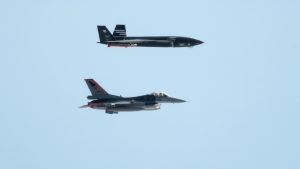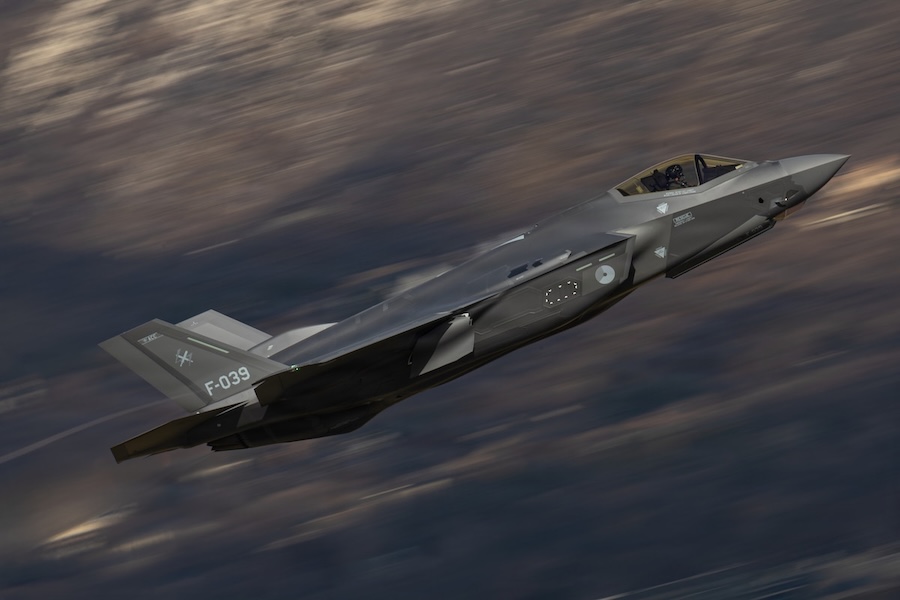


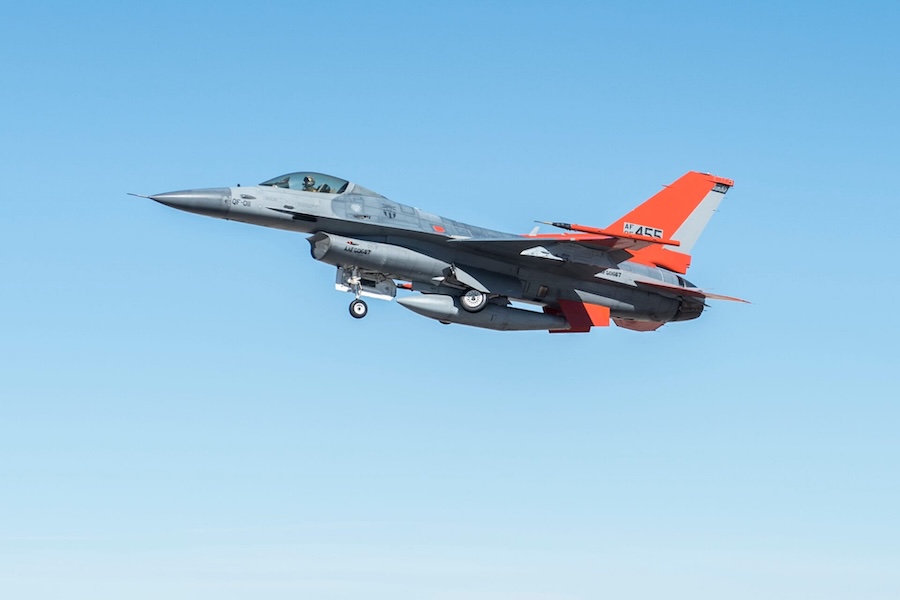
The first unmanned flight of a QF-16 took place on 19 September 2013, and the aircraft replaced the QF-4 Phantom drones, which ended their service in 2016. The QF-16 is commonly called the “Zombie Viper”, a name that reflects the idea of “bringing back to life” old F-16s from the AMARG storage site, where the fighter is informally known as the Viper.
The QF-16 is an optionally piloted, reusable aircraft built from retired F-16s stored at the Davis–Monthan base in Arizona. The conversion process includes an airframe inspection, installation of remote-control systems, sensors to detect incoming missiles and an explosive charge for self-destruction if control is lost.
Its radar and gun are removed and replaced with ballast to maintain proper balance, and the aircraft selected for conversion are usually among the most worn but still retain full manoeuvring performance. This allows supersonic flight and manoeuvres of up to 9G.
Completed QF-16s are transferred to the 82nd Aerial Targets Squadron at Tyndall Air Force Base in Florida and its detachment at Holloman Air Force Base in New Mexico. The aircraft serve as realistic training targets for air defence systems and for testing new air-to-air weapons.
Not every mission ends with the destruction of the QF-16, as most missile tests rely on data showing proximity to the target rather than detonating a warhead. When used for radar calibration or electronic warfare studies, the aircraft can also land safely after the mission.
The standard mode over the test range is remote control by a pilot in a ground-based simulated cockpit, though some mission phases can be flown automatically through pre-programmed manoeuvres. The QF-16 can also be flown conventionally with a pilot on board, which is required for long ferry flights and for integrating into normal civil air traffic.
Each aircraft has an expected service life of about 300 flight hours before being destroyed during training or withdrawn for spare parts recovery. Although individual lifespans are short, the US Air Force still has around 90 QF-16s, with the last expected to be expended by 2035.