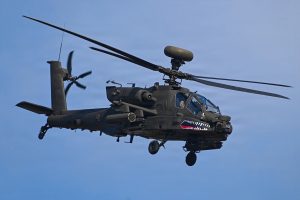


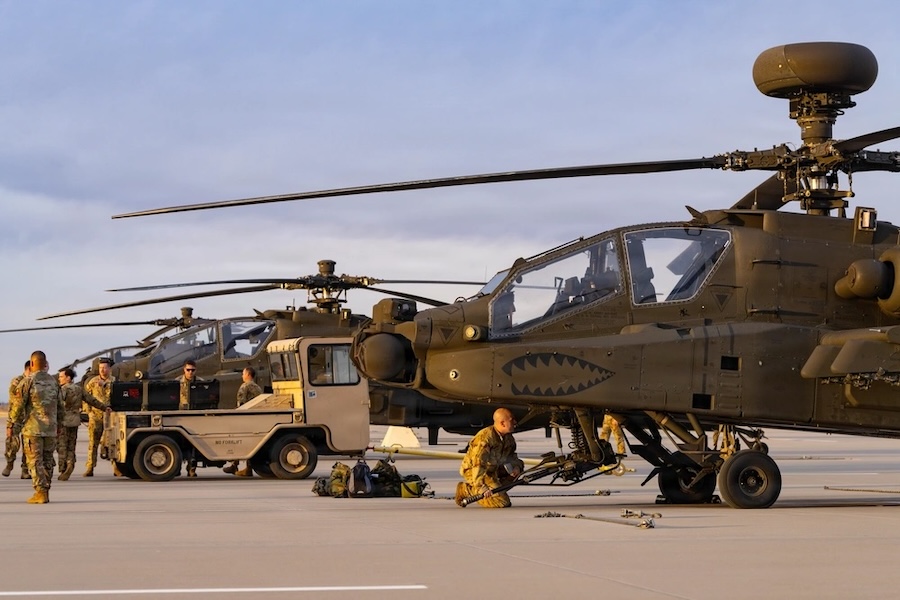
The arrival represents a key step in the 1st Armored Division’s modernization efforts. The brigade is moving from the older AH-64D fleet to the more advanced AH-64E platform.
“Our CAB is transitioning from the oldest fleet of Apaches in the Army to the most modern fleet of Echos coming straight from the factory,” said Lt. Col. Ross “Matt” Ridge, commander of 1-501st Aviation Battalion. “This is a significant leap forward for our aviators, maintainers, and the entire formation.”
The AH-64E is designed for operations in modern combat environments that require integration with unmanned systems and joint forces. Officials said the aircraft enhances the brigade’s ability to operate in complex and evolving conditions.
“The Echo’s ability to link UAS platforms and joint assets between the Air Force and Navy helps us stay abreast of the changes,” Ridge said. “As we look at how we adapt and stay ahead of the adversary, this modern equipment and updated procedures keep us aligned with innovation efforts across the division.”
Pilots transitioning to the AH-64E said the aircraft offers improved performance while maintaining familiar flight characteristics. The new model provides increased power and flexibility compared to earlier variants.
“You don’t feel much difference in how the aircraft handles,” said Chief Warrant Officer 2 Nathaniel Iwata, a pilot with the battalion. “The biggest change is the power and flexibility it gives you. In the Delta, it’s easy to pull more power than the aircraft can handle. In the Echo, the engines give you everything you need in nearly every situation.”
Iwata added that the aircraft’s upgraded digital systems improve operational efficiency. “In real world operations, the Echo is far better at fighting with the crew rather than against them,” he said.
The transition process includes classroom instruction, simulation training and supervised flight operations. Many new pilots are already trained on the AH-64E before joining operational units.
Additional aircraft deliveries are expected throughout the year as the brigade completes its transition. The modernization is intended to enhance the unit’s ability to support multi-domain operations and respond to future threats.