


The Guardrail system first entered service in 1971 in Europe, monitoring Soviet Bloc forces before later supporting operations such as Desert Shield and Desert Storm. Guardrail and ARL-M aircraft also supported Operation Iraqi Freedom, Operation Enduring Freedom and long-standing missions in Korea, while EMARSS joined the fleet in 2013 and deployed globally from 2016.
Over time, the Army modernised the fleet, including the Guardrail Common Sensor upgrade led by Project Director Sensors-Aerial Intelligence, which extended service life by nearly 20 years. These improvements increased the range and speed of signal collection, keeping the systems operationally relevant until divestment.
“In 2022, the Army made a deliberate funding decision to prioritize aerial modernization to focus on deep sensing capabilities, aligning with future Army strategies,” said Julie Isaac, PD SAI. She added, “As the Army shifts its focus from the past 24 years of counterinsurgency operations to align with the Multi-Domain Operations [MDO] fight, legacy systems like the ARL-M, EMARSS, and [GRCS] had to be divested to re-align taxpayer funding to modernized aircraft systems.”
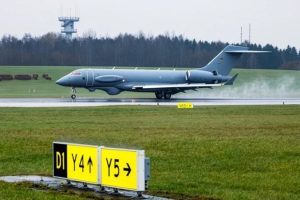
To bridge the gap to the future High Accuracy Detection and Exploitation System, the Army has fielded interim jet-based ISR platforms while refining requirements. “By collaborating with FWPO, PD SAI can evaluate the ISR sensors on the demonstrator platforms to help inform HADES program requirements,” said Eric Hughes, adding that “these aerial ISR bridge systems allow the Army to rapidly innovate and accomplish interim objectives.”








![Auterion conducts first multi-manufacturer hybrid drone swarm strike demonstration [VIDEO]](https://defence-industry.eu/wp-content/uploads/2025/09/Auterion-secures-130-million-to-scale-AI-defence-software-and-transform-drone-warfare.jpg)