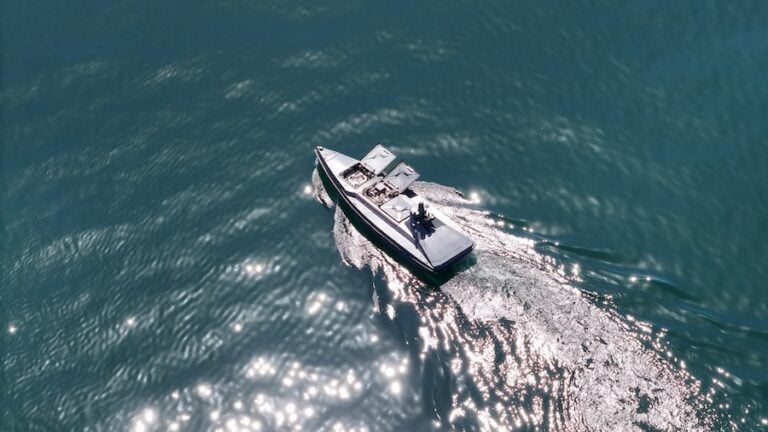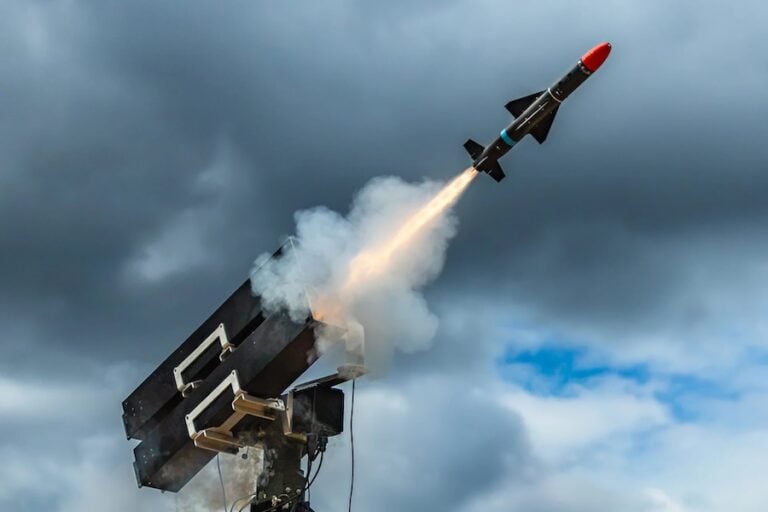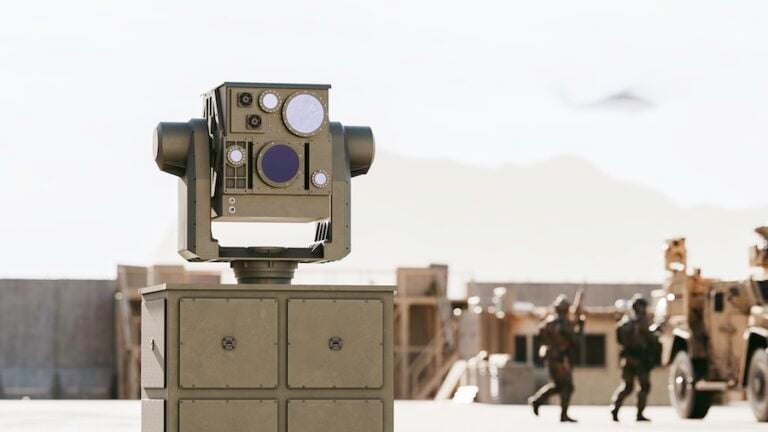
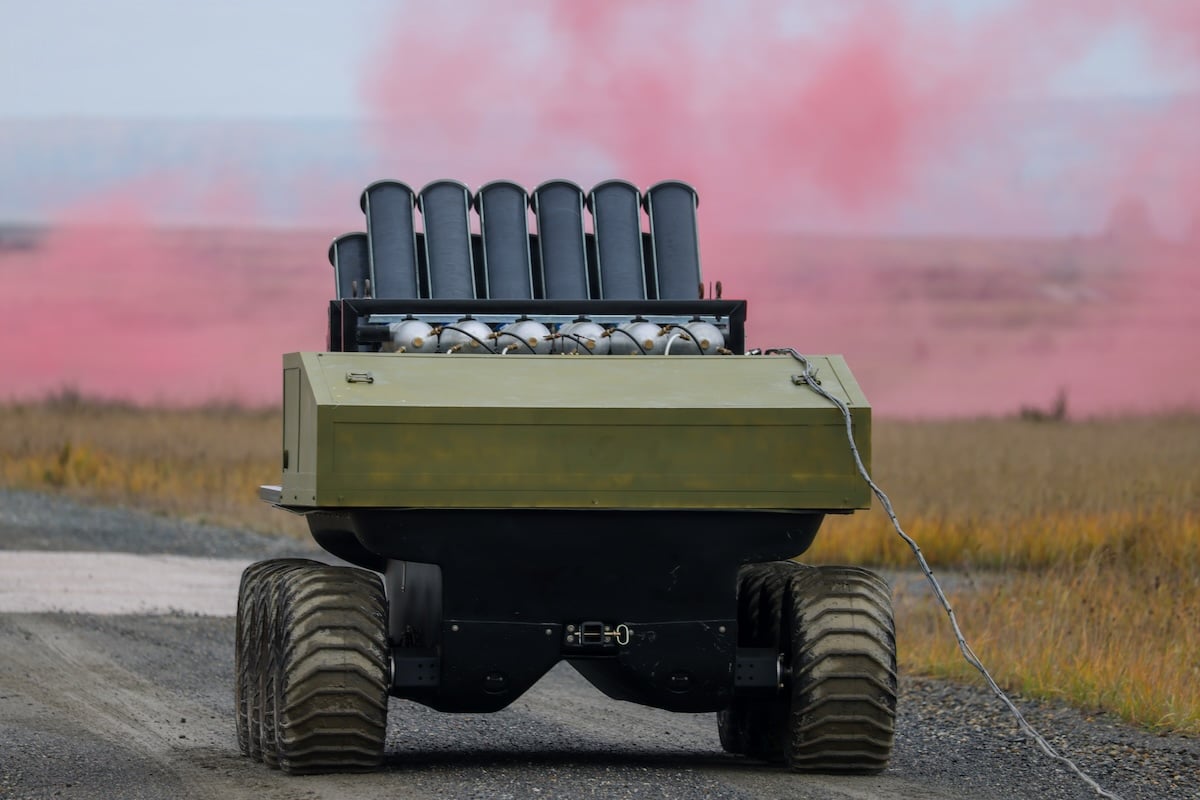
A TRV-150 drone dropped smoke on a target before an HIV3 launcher mounted on a R3NEGADE ground vehicle sent up the drones that carried out the autonomous strike. Soldiers from the 173rd Airborne Brigade conducted a separate strike with a first-person-view drone, flying it using video from an onboard camera.
The Combat Capabilities Development Command’s Armaments Center ran the demonstration with U.S. Army Europe and Africa and the 7th Army Training Command. “We need scalable, cheap, affordable, lethal options for our warfighters,” said Troy Brannon, a strategic adviser at the center who led the event.
A second R3NEGADE carried a Javelin missile on a remotely operated weapon system. The Army also put a TRV-400 aircraft fitted with the developmental FIR3FLY anti-armor capability on static display as part of a system designed to store drones in containers and deploy them remotely.
“The purpose of this effort is to place modular air and ground platforms inside containerized systems so commanders can pre-position capabilities and deploy unmanned assets where they are needed,” said Alex Tomosieski, program manager for the Remote Rapid Response Autonomous Contingency Team. “This gives formations more adaptable options while helping shift risk away from Soldiers.”
The Army is assessing whether pairing commercially available technology with weapons and equipment it already uses could make the systems affordable enough for more units. The demonstration addressed strike and endurance, two elements of the Army’s operational framework, How the Army Fights.
“Engineers can develop the technology, but we need Soldiers involved from the beginning to make sure it works for them,” said Command Sgt. Maj. Thinh Huynh, DEVCOM’s command sergeant major. “It’s important that the people who will actually operate the equipment have a voice in how it’s developed,” said Sgt. Dean Aguirre, a drone operator with the 173rd Airborne Brigade.