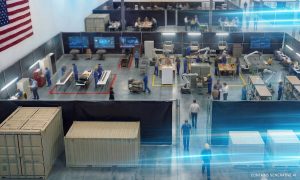


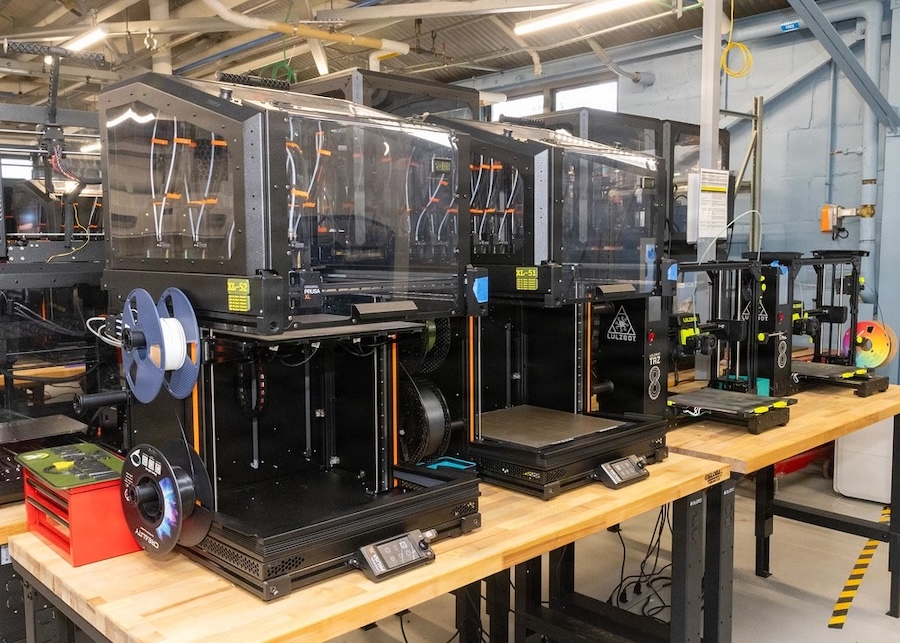
The new makerspace is designed to support engineers at the U.S. Army Combat Capabilities Development Command Armaments Center. It will enhance the Army’s ability to design, prototype and manufacture components for modern military needs.
Additive manufacturing, commonly known as 3D printing, creates objects layer by layer using digital design models. The process supports a wide range of materials, including plastics, metals, ceramics and composites.
Officials said the technology reduces costs and accelerates development timelines. It also enables the production of complex and customized designs that are difficult to achieve through traditional manufacturing.
The facility is operated by the Analysis, Materials, and Prototyping Directorate within the Armaments Center’s Munitions Engineering Technical Center. It is equipped with more than 50 advanced 3D printers.
“The space is here for the Picatinny community to work on prototype design and manufacturing,” said Matthew Clemente. “It serves to add additive manufacturing capacity to the community’s projects.”
The makerspace provides a range of advanced printing technologies and material options. Engineers can use the facility to produce parts and test new designs more efficiently.
AMPD’s mission includes providing manufacturing, engineering analysis, prototyping and reverse engineering expertise. The new facility is intended to strengthen these capabilities.
“We know this space will be a valuable tool for Armaments Center engineers to utilize these technologies and expertise – so we can drive speed and innovation to the battlefield,” said Thomas Fasano.
The opening reflects a broader effort within the U.S. military to expand additive manufacturing capabilities. Similar innovation facilities have been established at other Army and Department of Defense locations.
These include labs at Fort Moore in Georgia and Fort Bragg. Officials said such initiatives support a culture of innovation among soldiers and civilian personnel.
The Army is increasingly using 3D printing to maintain equipment and develop new solutions. The technology allows rapid production of components in both deployed and domestic environments.
Officials said this capability reduces dependence on traditional supply chains. It also improves operational readiness in contested logistics scenarios.
The technology is already being used to produce a range of items, from simple components to complex vehicle parts. The Army said expanding these capabilities will provide a significant operational advantage.