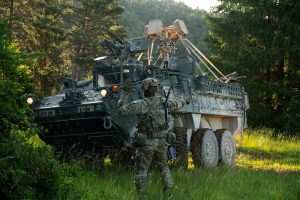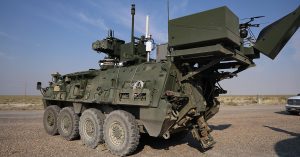



The ICVVA1-30, first presented in 2024, is based on the ICVVA1 but features a remotely operated Samson Pro turret armed with a 30mm XM813 cannon. The vehicle also incorporates a new Double-V Hull DVH-A1 to improve mine protection, alongside a reconfigured interior offering improved ergonomics and more efficient placement of digital equipment.
Training integrated Operational Network connectivity and the Digital Range Training System, enabling crews to track, record and review performance using instrumented systems during offensive and defensive lanes. U.S. Army Capt. Jarid Prahl, assistant operations officer for 2nd Battalion, 3rd Infantry Regiment, said: “We’re only the second infantry brigade to train with the Stryker-mounted 30mm weapon system,” adding, “So it’s also been unique to be on the cusp of the Army’s modernization initiatives, helping to advance the force and change the way we fight in the future.”
The range was led by U.S. Army 1st Lt. Derrick Eng, who coordinated vehicle movement, digital systems and communications to ensure effective use of the new platform. “It’s a complex system that requires tight synchronization,” Eng said, noting that, “Seeing crews qualify and adapt to a brand-new weapons platform while integrating digital tools shows how quickly Soldiers can learn and succeed when given the right resources.”
The fully digitised ICVVA1-30 operates within a networked combat data environment, supported by high-resolution infrared and visible-spectrum sensors, terrain-aware fire control software and multiple situational awareness displays. The U.S. Army plans to field 269 vehicles in this configuration, with leaders stating that early adoption is helping crews build familiarity with increased lethality, data-driven decision-making and future operational requirements.
Source: U.S. Army.