

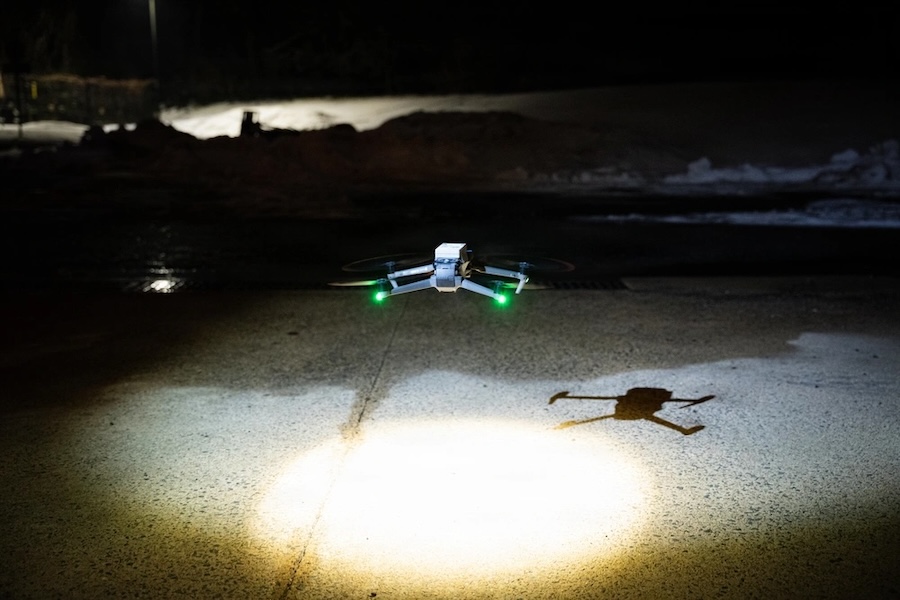
The initiative changes how the Army develops tactics, techniques and procedures by shifting away from traditional multi-year processes. Instead, new drone capabilities are fielded iteratively, allowing real-world experience from soldiers to drive rapid doctrinal updates.
“Drone dominance is a War Department priority,” said Richard Creed, director of the Combined Arms Doctrine Directorate. “Most efforts this past year focused on fielding systems and learning to use them. As operational forces gain expertise, we can better determine what the doctrine should say.”
This approach is reflected in updates across the Army’s doctrinal framework, including revisions to Field Manual 3-0 in March 2025. The updated manual introduces new operational imperatives such as “protect against constant observation” and “make contact with sensors, unmanned systems, or the smallest element possible,” to address persistent drone threats, according to Robert Ault, deputy director of the Combined Arms Doctrine Directorate.
The revised doctrine also incorporates lessons from the Russo-Ukrainian War through new operational scenarios. These updates are intended to ensure that insights from current conflicts inform future training and leadership development.
Army doctrine is developed through a collaborative structure involving multiple organizations. The Combined Arms Doctrine Directorate addresses broad concepts, while Army Centers of Excellence focus on detailed implementation, allowing lessons to flow both top-down and bottom-up.
Creed said the process remains dynamic as new publications are introduced. “When developers create new or updated ATPs [Army Training Publication], these publications prompt us to reexamine broader field manual concepts,” he said.
The Army’s evolving doctrine balances offensive and defensive capabilities in response to drone threats. The Maneuver Center of Excellence is finalizing guidance on the tactical use of small drones, while the Fires Center of Excellence is updating counter-drone techniques to keep pace with changing battlefield conditions.
Officials say the Army’s approach emphasizes continuous adaptation at all levels of doctrine. This includes revising individual soldier tasks and expanding guidance on adversary drone use in foundational manuals such as FM 2-0, Intelligence.
The ongoing updates are intended to ensure that soldiers are guided by relevant and effective doctrine as new technologies are introduced. The Army said this process will help maintain effectiveness and operational advantage in increasingly complex combat environments.