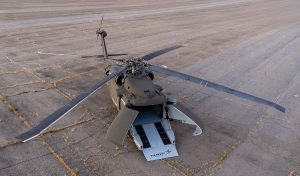


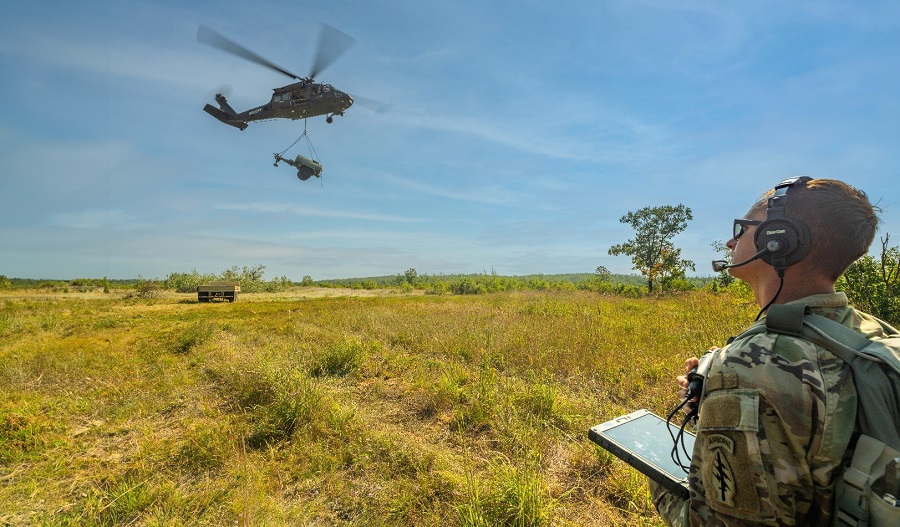
Using a handheld tablet, a U.S. Army National Guard Sergeant First Class became the first soldier to independently command an OPV Black Hawk, directing it on a 70-nautical-mile mission and conducting multiple precision airborne drops. This marked the first full mission execution of the aircraft under the control of an operational warfighter, rather than a trained test pilot or engineer.
During the exercise, the OPV Black Hawk demonstrated internal cargo transport, external sling load operations, and precision parachute drops, as well as a medical evacuation scenario. In one mission, a soldier aboard a Coast Guard boat on Lake Huron directed a full Class 1 resupply operation, followed by precision racetrack-patterned parachute deliveries entirely via tablet.
In a separate exercise, the OPV Black Hawk achieved its first-ever autonomous in-flight hookup of an external 2,900-pound water tank using its hover stability system. Soldiers on the ground secured the load quickly, highlighting the aircraft’s ability to carry out complex resupply operations without pilot input.
Further missions included six autonomous hookups to transport HIMARS launch tubes and a simulated MEDEVAC recovery, where an untrained soldier commanded the aircraft from within to complete a patient transfer at an unimproved landing zone. This was the first autonomous MEDEVAC operation fully controlled by a soldier inside the OPV Black Hawk.
“With lives on the line, Sikorsky’s MATRIX flight autonomy system can transform how military operators perform their missions,” said Rich Benton, vice president and general manager of Sikorsky, a Lockheed Martin company. “An optionally piloted Black Hawk aircraft can reduce pilot workload in a challenging environment or complete a resupply mission without humans on board. In contested logistics situations, a Black Hawk operating as a large drone offers commanders greater resilience and flexibility to get resources to the point of need.”
MATRIX, developed in support of DARPA’s ALIAS programme, allows control of advanced aviation systems once limited to trained pilots, enabling operations in hazardous or low-visibility areas without endangering personnel. Sikorsky continues to develop autonomous capabilities that increase mission reach and resilience, with this first-of-its-kind exercise demonstrating the future of adaptable, unmanned flight.
Source: Lockheed Martin (press release).