

Maj. Gen. James Bartholomees, commanding general of the 25th Infantry Division, said the focus is on extending operational reach. He noted that the division is working to enable forces to “see, sense and strike at distance,” particularly in environments such as the Philippines.
Under its Division Artillery (DIVARTY), the unit has shifted from traditional cannon-based formations to long-range precision fires. This transition has significantly increased its ability to conduct strikes over extended distances.
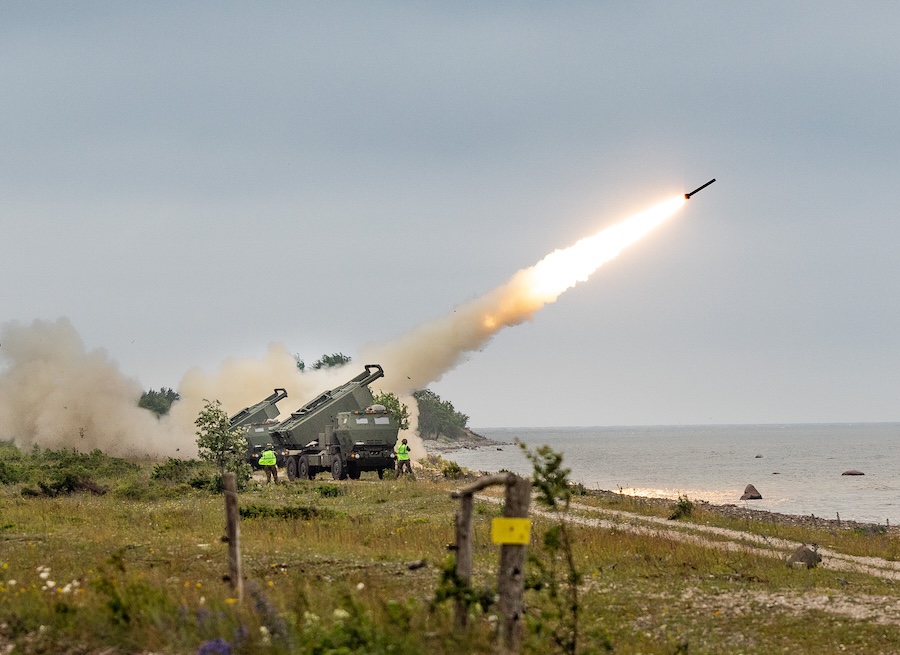
Col. Daniel Von Benken, division artillery commander, described the pace of the transition. “In about 180 days, we went from a towed cannon battalion to a long-range fires battalion with 16 HIMARS weapon systems,” he said.
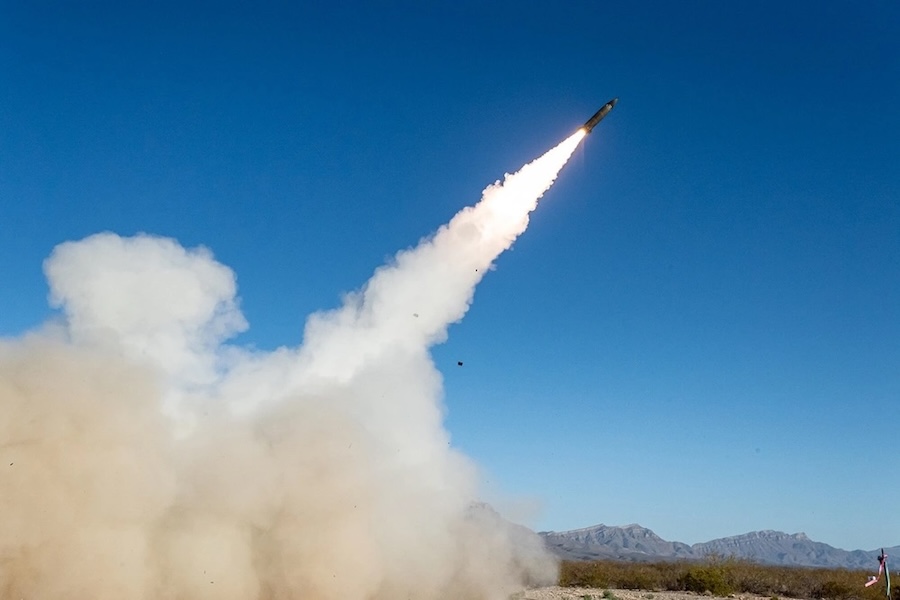
“We can now do the things that we said we needed to do,” Von Benken added. The High Mobility Artillery Rocket System provides a common launcher capable of firing a variety of munitions.
Bartholomees highlighted the flexibility of the system. “The benefit of the HIMARS is its capability — it’s a common launcher system,” he said.
“As we build more munitions over time, it provides a range of options so we can strike at a variety of distances,” Bartholomees added. The system is also being integrated with emerging capabilities such as the Precision Strike Missile.
The transformation has included reorganizing personnel and forming new units to integrate emerging technologies. Soldiers from traditional artillery roles have been reassigned to support capabilities such as loitering munitions and one-way attack drones.
Von Benken described the creation of new formations. “So much like we repurposed a cannon battalion into a HIMARS battalion, we took a lot of our folks and created what’s called a Launched Effects battery,” he said.
“That formation allows us to integrate loitering munitions and one-way attack drones to fill gaps between our capabilities,” he added. These systems are intended to complement long-range fires in contested environments.
“It’s not just about getting a rocket launcher into position,” Von Benken said. “It’s about how we fill those gaps with other types of munitions so the first time we make contact with an enemy force, it’s not a fighter jet.”
Command Sgt. Maj. John Curry emphasized the role of experimentation. “They bring it out to us and we have to teach soldiers how to use it,” he said.
“Those young soldiers are testing it to see does this work for the person who’s actually going to use it,” Curry added. Successful capabilities are then incorporated into training and multinational exercises.
Curry also described how systems are deployed in regional exercises. “We walk them out to the Philippines on our campaign, while we use it in our campaigning exercises,” he said.
“Our multinational partners are seeing what is possible inside of their own footprint,” he added. These efforts support cooperation with regional allies.
Sustainment and forward positioning remain central to operations in the Indo-Pacific. Efforts are focused on improving infrastructure and enabling capabilities to be employed within the region.
“What we’re asking for is the ability to use, procure or build these capabilities in theater,” Curry said. This approach is intended to support distributed operations across large distances.
Von Benken highlighted the importance of integrating sensing capabilities. “As we modernize, strike is important, but the sensing aspect is just as critical,” he said.
“We are building the ability to see and sense at distance to enable those effects,” he added. This includes integrating radar, electronic warfare and intelligence systems.
Bartholomees said flexible funding has supported the rapid pace of change. “Without the flexibility to do what we just described, we would not be able to move to the best technology,” he said.
“The technology is moving so fast that the old system will not work,” Bartholomees added. The division’s efforts reflect broader Army adaptation to evolving operational demands in the Indo-Pacific.

![CENTCOM chief says U.S. forces remain ready after ‘generational’ defeat of Iran despite fragile ceasefire [VIDEO]](https://defence-industry.eu/wp-content/uploads/2026/04/centcom-chief-says-us-forces-remain-ready-after-generational-defeat-of-iran.jpeg)
![Team Lynx details XM30 infantry fighting vehicle concept as U.S. Army program nears key decision [VIDEO]](https://defence-industry.eu/wp-content/uploads/2026/04/team-lynx-details-xm30-infantry-fighting-vehicle-concept.jpeg)