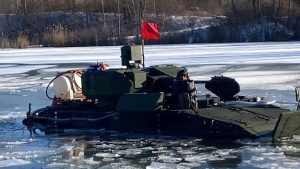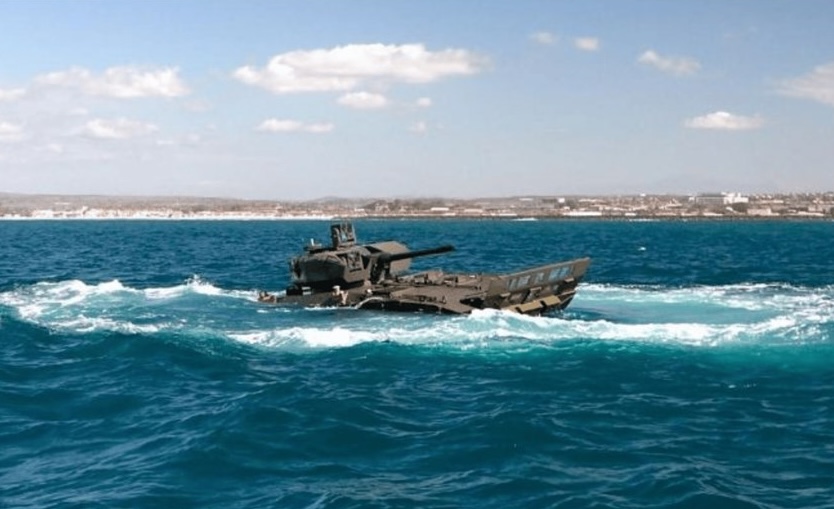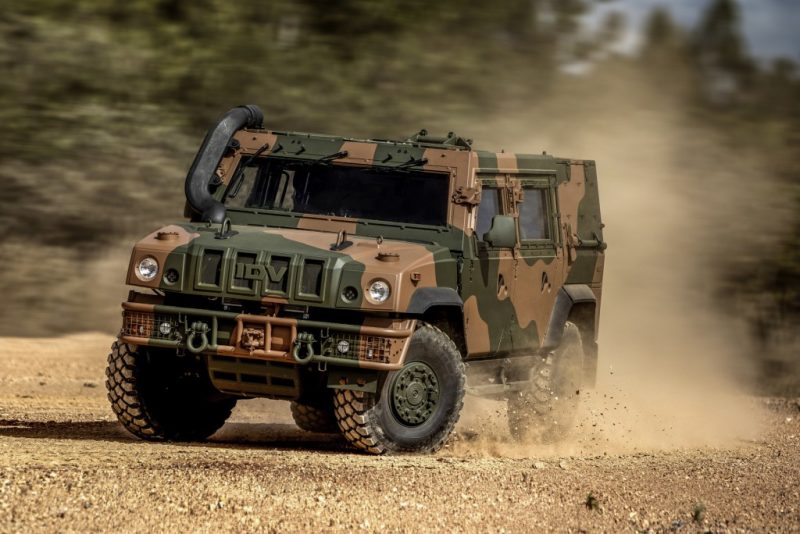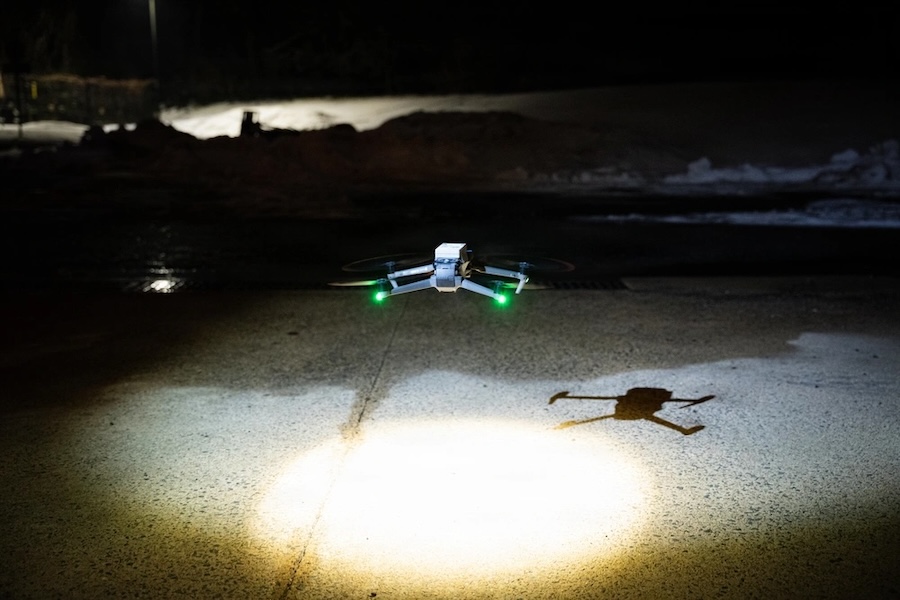
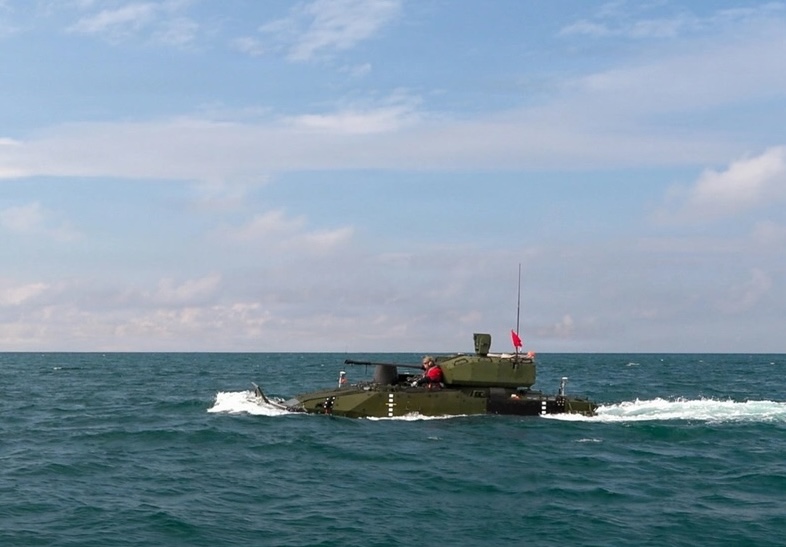
The ARV programme is intended to deliver a new family of vehicles to support mobile reconnaissance and replace the existing Light Armored Vehicle fleet. The Marine Corps said the platform is designed to be mobile, networked, transportable and protected while providing enhanced sensing, communication and combat capabilities.
The ARV-30 variant will include a 30mm medium-calibre cannon, anti-armour capability and modern command-and-control systems. The ARV-C4UAS variant will integrate intelligence, surveillance and reconnaissance systems to operate as a central coordination platform on the battlefield.
“In the future fight, the Marine Air-Ground Task Force [MAGTF C2] must out cycle the fight for information to shape the battlespace and deliver precision fires,” said Col. Chris Stephenson, programme manager for Light Armored Vehicles. “This highly contested environment is drastically more complex, and Mobile Reconnaissance Battalions must have a purpose-built capability such as the ARV that can sense, communicate, and fight by incorporating manned and unmanned systems and sustaining effective sensor webs tied to kill chains.”
The Marine Corps said the ARV will be smaller and lighter than the Amphibious Combat Vehicle 30 variant, enabling rapid deployment and operations across varied terrain. The platform is also intended to support stealthy operations while maintaining lethality.
Officials said the programme is the first major Marine Corps effort to apply new acquisition reform legislation aimed at accelerating capability delivery. The approach allows programme managers to use flexible contracting methods to maintain development speed.
“Building on its initial success, the program is capitalizing on recent legislative flexibilities to extend its non-traditional acquisition strategy,” said Maryann Lawson, product lead for the ARV programme. “By initiating a second Rapid Prototyping phase for pre-production development, the program will utilize stand-alone Other Transaction Authorities (OTAs) to maintain agility and technical momentum. The program was able leverage the competition from the initial phase to substantiate standalone agreements that are carefully curated with the protections of a FAR based acquisition paired with the flexibilities that OTAs bring.”
The Marine Corps said the competitive prototyping phase has helped validate vendor capabilities and reduce programme risk. Officials added that the process encouraged both companies to demonstrate their ability to meet current and future operational requirements.
“The competitive prototyping phase for the ARV provided a firm basis for Textron and GDLS to demonstrate the feasibility of the Marine Corps’ requirements,” said Kim Bowen, deputy programme manager for PM LAV. “By fostering a robust sense of competition, the government was able to thoroughly evaluate each vendor’s capabilities, significantly driving down program risk prior to the pre-production phase. This environment incentivized both vendors to prove their commitment to delivering a solution that not only meets the Marine Corps’ immediate needs but is also designed for future evolution.”
Stephenson said the programme reflects a broader shift toward outcome-focused acquisition strategies. He added that collaboration between the programme office and industry partners has been central to progress.
“I am incredibly proud of the program office team and our industry partners for their efforts behind these awards,” Stephenson said. “This past year has been incredibly dynamic with no shortage of challenges. However, the team embraced the new acquisition guidance that focuses on outcomes and accountability – our measure of success was finding creative solutions that prioritized the delivery of game-changing capability such as ARV to the MAGTF.”
The Marine Corps expects delivery of the vehicles in the fourth quarter of fiscal year 2028. A production decision is planned for the first quarter of fiscal year 2031.