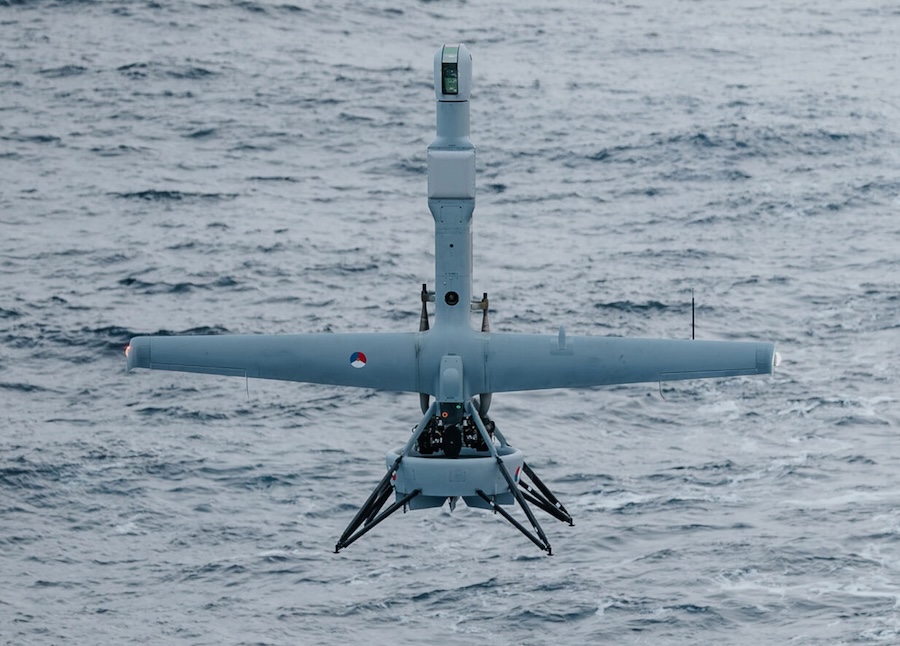
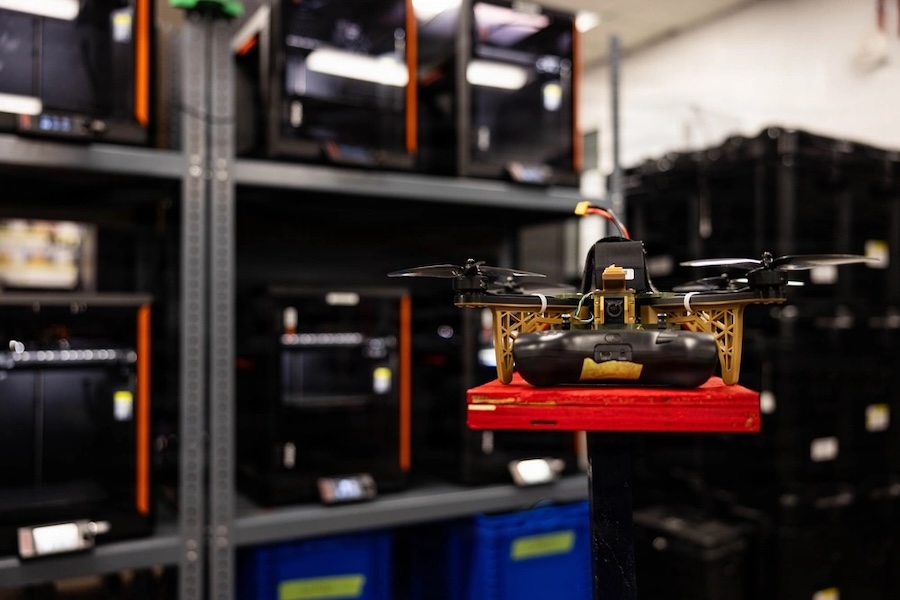
The drone was created by U.S. Marine Corps Sgt. Henry David Volpe, an automotive maintenance technician whose interest in engineering began at a young age. “Both my parents are engineers, so I feel like I’ve always had that encouragement to tinker and experiment with things,” Volpe said. “Programming and designing things were just a natural continuation of my interest and the environment I grew up in.”
After joining the Marine Corps and later working at the II Marine Expeditionary Force Innovation Campus, Volpe was encouraged to apply his experience in robotics and 3D printing to drone development. “I immediately went over to the innovation campus, shook hands with the master sergeant, and said, ‘I want to work over here, I’ve got experience with this,’” said Volpe.
Inspiration for HANX followed a visit to U.S. Army Fort Campbell, where Volpe saw opportunities to reduce cost and increase Marine-led production. “Their drone has some capabilities mine doesn’t, and some very nice cameras with it, but what I saw was a big price tag,” Volpe said. “The [U.S. Army] design and hardware selection was also contracted out to third and fourth parties; making their 3D printed drone an assembly can’t be entirely done by soldiers.”
Working under a 90-day deadline, Volpe led a team that produced multiple iterations of the drone while refining its design and performance. “This was only possible because of the collaboration with the team around me,” said Volpe. “I designed it, but I didn’t work on it alone.”
The most demanding phase involved ensuring all components met NDAA standards to prevent security vulnerabilities. “Anyone can create a cheap drone using cheap non-approved parts; however, finding parts that don’t run the risk of having backdoor software is difficult,” Volpe said. “I was doing a ton of research, finding different manufacturers and then messaging them, trying to get a hold of people and talk with them about what they’re selling, and making sure that it is within NDAA standards.”
After months of review, the team received notification from the Naval Air Systems Command program office that interim flight clearance changes enabled HANX to fly. The approval marked the Marine Corps’ first NDAA- and NAVAIR-approved 3D-printed drone, built entirely by Marines for operational use.