

“This demonstration is an important step toward advancing autonomous capabilities for the fleet,” said Rear Adm. Tony Rossi, Program Executive Officer for Unmanned Aviation and Strike Weapons. “Integrating AI-enabled autonomy across manned and unmanned platforms will be critical as the Navy develops next-generation air wing concepts and prepares for more complex operational environments.”
The effort was led by the Navy’s Aerial Targets and Strike Planning and Execution Systems programme offices, working with industry partners including Shield AI, Kratos and CTSI. Shield AI acted as lead systems integrator and mission autonomy provider, Kratos supplied the aircraft and CTSI delivered the mission planning and pilot-vehicle interface front end.
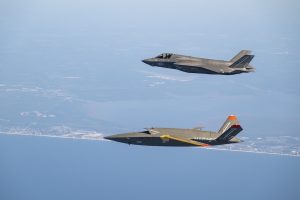
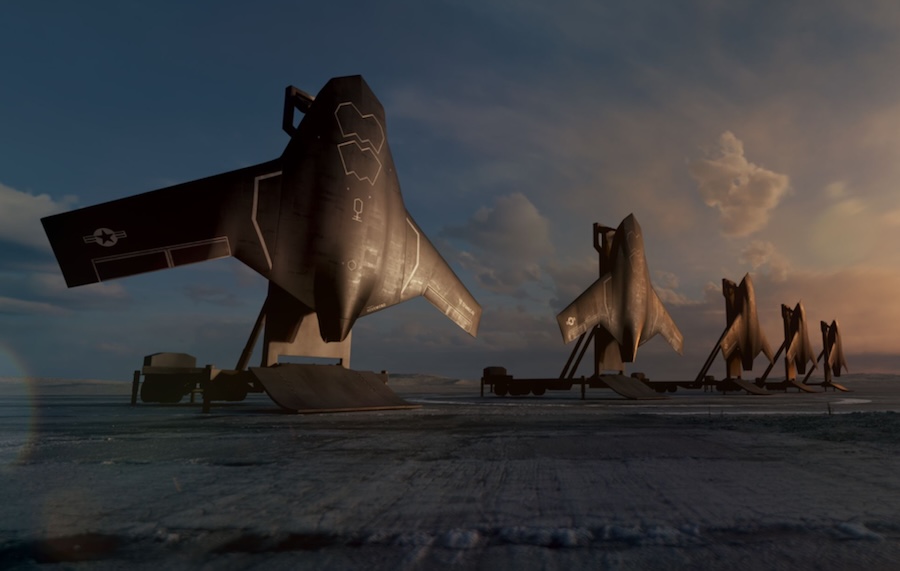
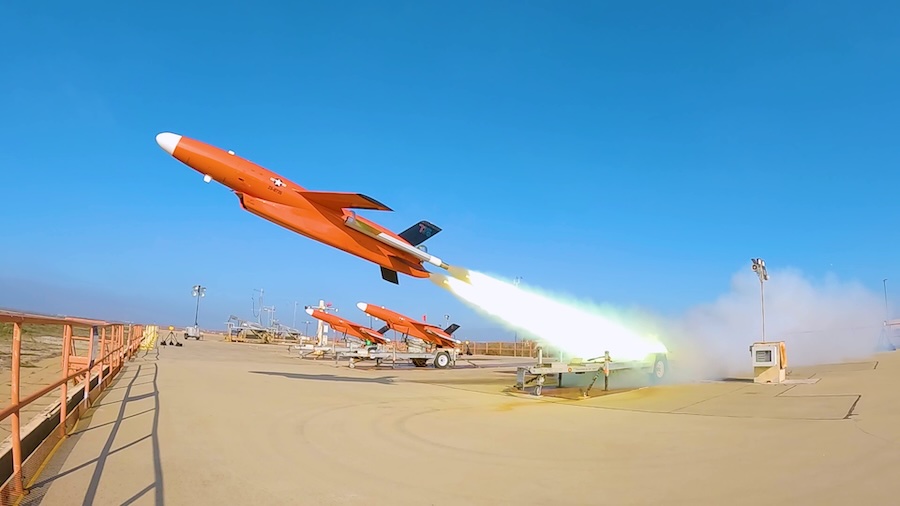
During the demonstration, two BQM-177A subsonic aerial targets flew autonomously using Shield AI’s Hivemind software and were connected to a Live Virtual Constructive environment. This environment included a virtual F/A-18 and two simulated adversary aircraft, allowing real and virtual assets to operate together in a single scenario.
In the scenario, the virtual F/A-18 served as the mission lead and directed the BQM-177As to defend designated combat air patrol locations. When the simulated adversary aircraft attempted to enter those areas and threaten U.S. forces, the autonomously controlled BQM-177As responded in line with their assigned mission tasking.
The event also marked progress in implementing the Navy’s Autonomy Government Reference Architecture interfaces, which are intended to improve interoperability and speed the integration of mission autonomy across future unmanned platforms. “The fact that this is the first time we’re flying a fully autonomous aircraft in execution of a mission beyond the visual range of the remote-control operator is laying the foundation for allowing autonomous mission planning in the future,” said Veronica Wesson, PMA-281 special projects integrated program team lead.
“Being able to accomplish all of this over only a 16-month period using the new agile methods of contracting was a great experience,” Wesson added. The demonstration built on an earlier August event that validated the foundational control laws and basic autonomous behaviours required for autonomous operation of the BQM-177A.
The Navy and Shield AI plan further development and fleet exercises from 2026 onwards, using surrogate platforms such as the BQM-177A to enable rapid and cost-effective testing. Officials said this approach supports faster iteration and validation of autonomous systems under real-world conditions while reducing reliance on operational platforms during early development.