

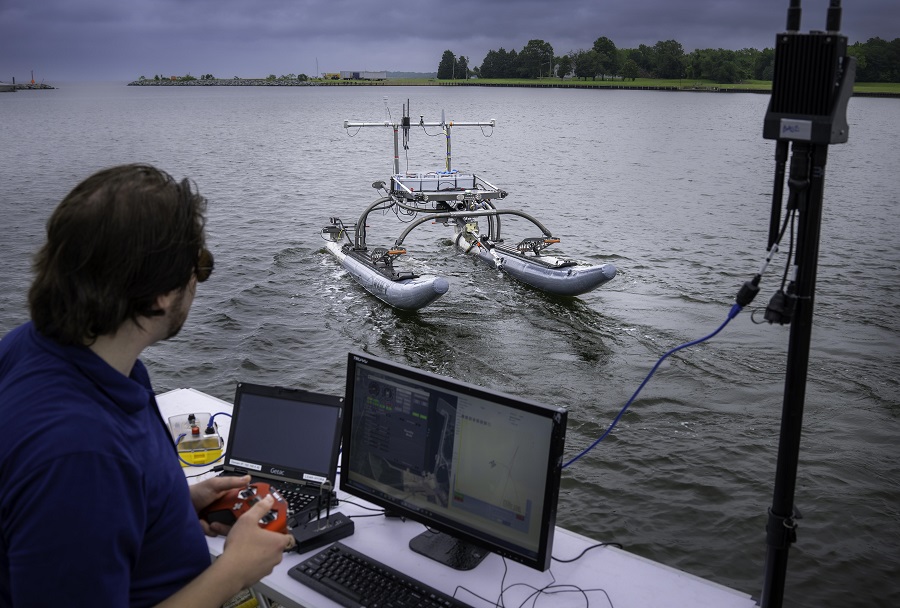
The software determines the best combination of drones, sensors, and formations to meet specific operational goals at sea. “Autonomy is the decisive edge for maritime dominance,” said NAWCAD Commander Rear Adm. Todd Evans. “This technology is critical to enhancing operations across domains and represents a significant step forward for manned-unmanned teaming.”
OCDSS enables the Navy and Marine Corps to make more efficient use of their unmanned systems, reducing planning time and operational costs. By running thousands of simulations, it helps planners identify the most effective mix of vehicles for any given mission.
“OCDSS quickly runs thousands of simulations to predict how different unmanned systems might perform together,” explained NAWCAD Mechanical Engineer Raymond Koehler, the software’s lead developer. “This software gives warfighters faster and more effective decision making – that’s competitive advantage.”
In addition to optimising mission outcomes, the software reduces the need for expensive and time-consuming live testing by providing a reliable virtual environment. This aligns with modern industry practices, where simulation accounts for up to 90% of the development cycle.
The technology was tested successfully at the ANTX Coastal Trident event in August 2024, with a focus on port security operations. Data from the demonstration will support further development and potential future deployments across naval forces.
“OCDSS levels-up how unmanned systems are used in a wide range of missions, and we’re ready to scale this autonomy to operational teams or test programs across the Navy and Marine Corps,” said Koehler.
Koehler received the 2025 Dr. Delores M. Etter Top Scientists and Engineers of the Year Award from the Assistant Secretary of the Navy for his contributions to swarm autonomy. His team also earned recognition from NAWCAD for its collaborative work with the Naval Surface Warfare Center Carderock Division.