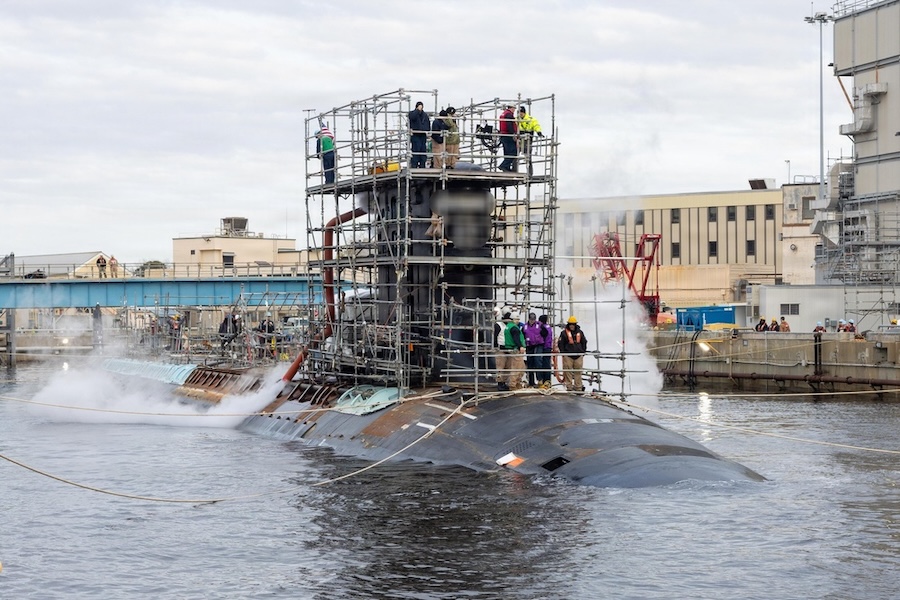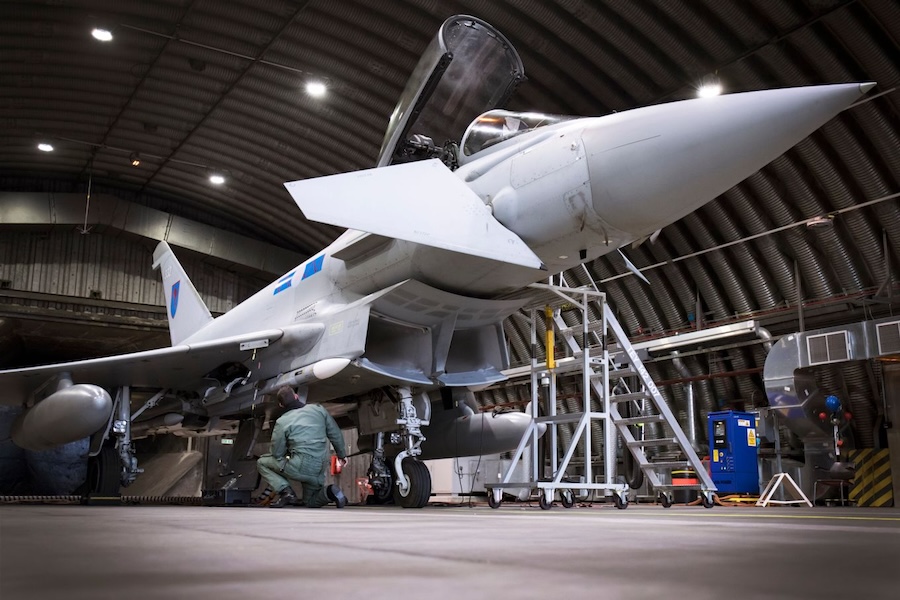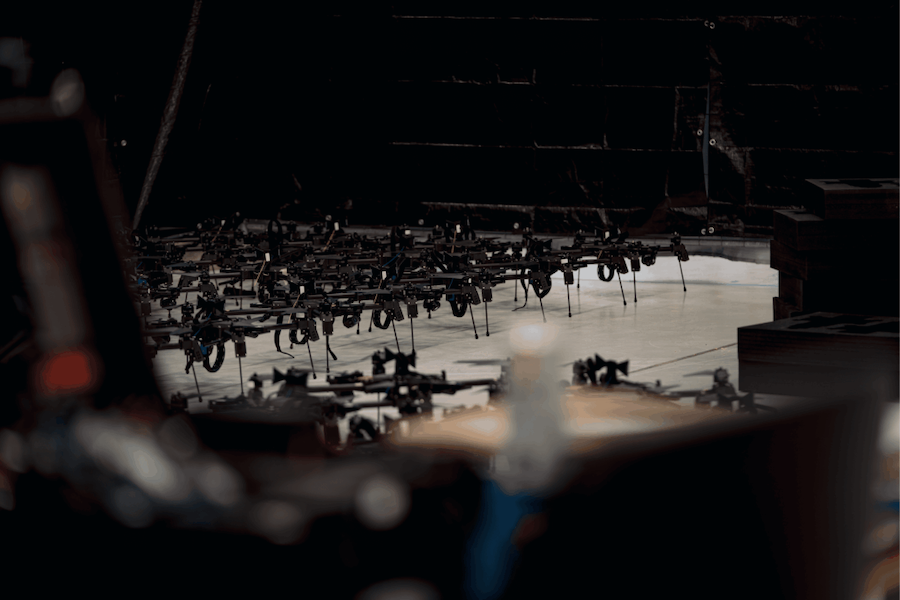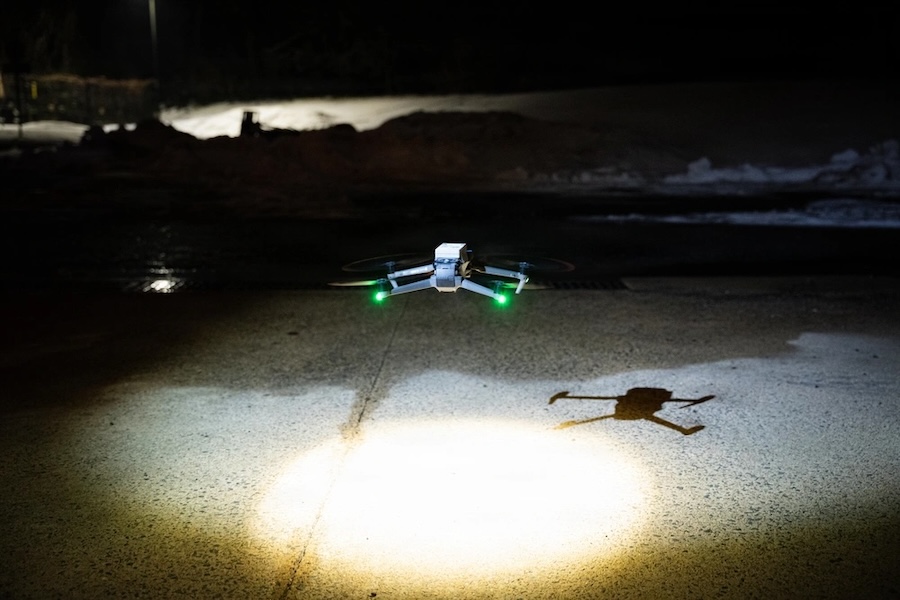


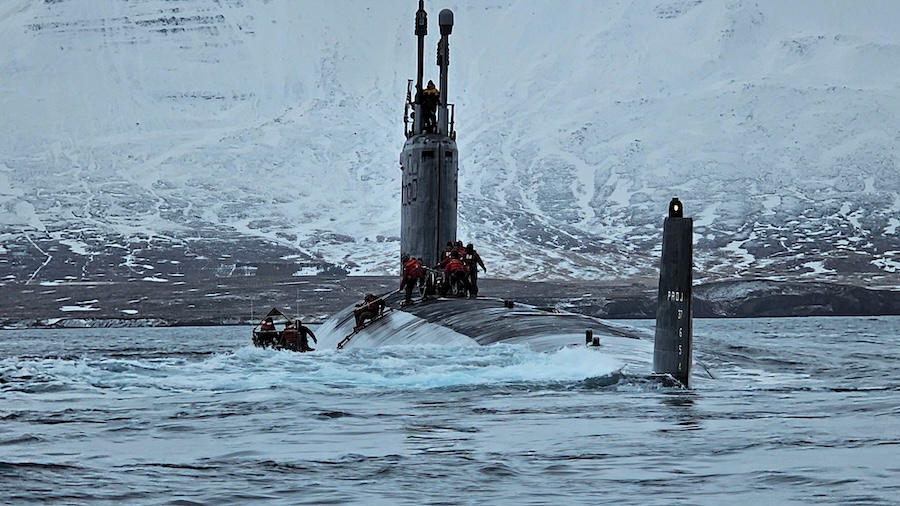
The three-week operation is designed to research, test, and evaluate operational capabilities in the Arctic environment. Personnel from the U.S. Navy, U.S. Marine Corps, and Air National Guard are participating alongside international partners.
Participants also include representatives from the Royal Australian Navy, Royal Canadian Navy, Royal Canadian Air Force, French Navy, Royal Navy of the United Kingdom, the Norwegian Defence Research Institute, and the Japan Agency for Marine-Earth Science and Technology. The multinational effort reflects the growing strategic importance of the Arctic region.
ICE CAMP is conducted every two years in cooperation with the Navy’s Arctic Submarine Laboratory. The activity was recently elevated from an exercise to an operation to better reflect the Navy’s strategic priorities in the region.
The Arctic Submarine Laboratory, a detachment of the Undersea Warfighting Development Center, leads the planning and execution of the mission. The organization serves as the Submarine Force’s center of expertise for Arctic operations.
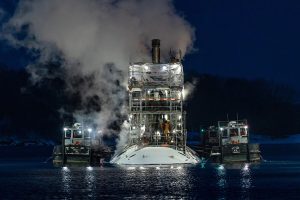
The camp itself is built on a drifting ice floe and serves as a command center for research and operational activities. The site includes shelters, a command center, and infrastructure designed to support a multinational team operating in the extreme Arctic environment.
“The Arctic is a critical region for national security and global stability. Our commitment to a sustained presence and operational readiness here is unwavering,” said Vice Adm. Richard Seif, Commander, Submarine Forces. “ICE CAMP Boarfish allows us to test and refine our capabilities, deepen our interoperability with key allies, and ensure our Submarine Force can project power and defend our nation’s interests in any environment, at any time.”
“Our strength in the Arctic is a testament to the skill and resilience of our sailors and partners,” Seif added. The operation aims to improve readiness and cooperation among allied forces operating in the region.
“Leading this multinational team in such a demanding environment is a privilege,” said Capt. David Nichols, Officer in Tactical Control of this year’s ICE CAMP. “The complexity of establishing a fully functional base on a moving sheet of ice cannot be overstated.”
“The professionalism and dedication of every service member and civilian here is what makes this vital mission possible. We are focused on executing our objectives safely and effectively, further enhancing our collective readiness for Arctic operations,” Nichols added.
The camp takes its name from USS Boarfish (SS 327), a Balao-class submarine commissioned on September 23, 1944. During World War II, the submarine earned a battle star for sinking two Japanese vessels in the South China Sea.
In 1947, Boarfish served as the flagship of Operation Blue Nose, the first exploration beneath the polar ice cap. The mission tested new under-ice sonar technology and demonstrated that extended submarine navigation beneath Arctic ice was possible.
U.S. submarines have been operating beneath Arctic ice for more than six decades. USS Nautilus (SSN 571) conducted the first transit under the polar ice cap in 1958.
USS Skate (SSN 578) later became the first U.S. submarine to surface through Arctic ice at the North Pole in March 1959. Since those early missions, the U.S. Submarine Force has completed 99 under-ice operations.
ICE CAMP Boarfish represents the 100th such evolution. The milestone highlights the long-standing role of submarines in U.S. Arctic operations.
U.S. Submarine Forces carry out the Department of the Navy’s mission from the undersea domain. Submarines provide unique operational, deterrent, and combat capabilities made possible by their ability to operate undetected beneath the ocean’s surface.