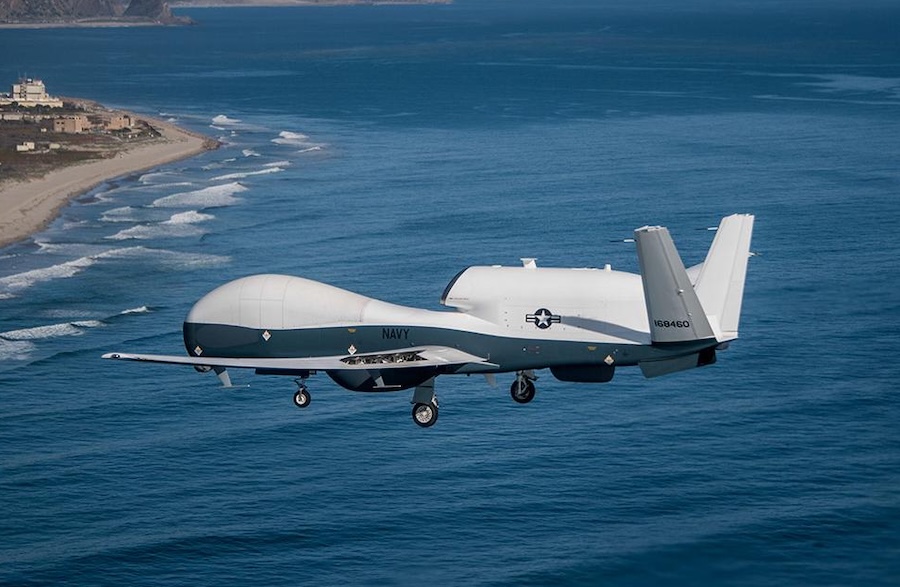
The aircraft, identified as serial number 169804, was observed by online platforms including Flightradar24. Data indicated it transmitted a 7700 squawk code, the international signal for a general emergency, while operating north of Bahrain.
Tracking information suggested the drone descended rapidly during the incident. It reportedly dropped from around 52,000 feet to approximately 12,750 feet within minutes.
The aircraft had been flying a routine high-altitude maritime surveillance mission prior to the event. Its signal later disappeared over the Gulf, though it remains unclear whether this indicates a loss of the aircraft or a limitation in tracking coverage.
Some interpretations of open-source data also suggested a possible deviation toward Iranian airspace before the emergency signal. However, this claim has not been independently verified.
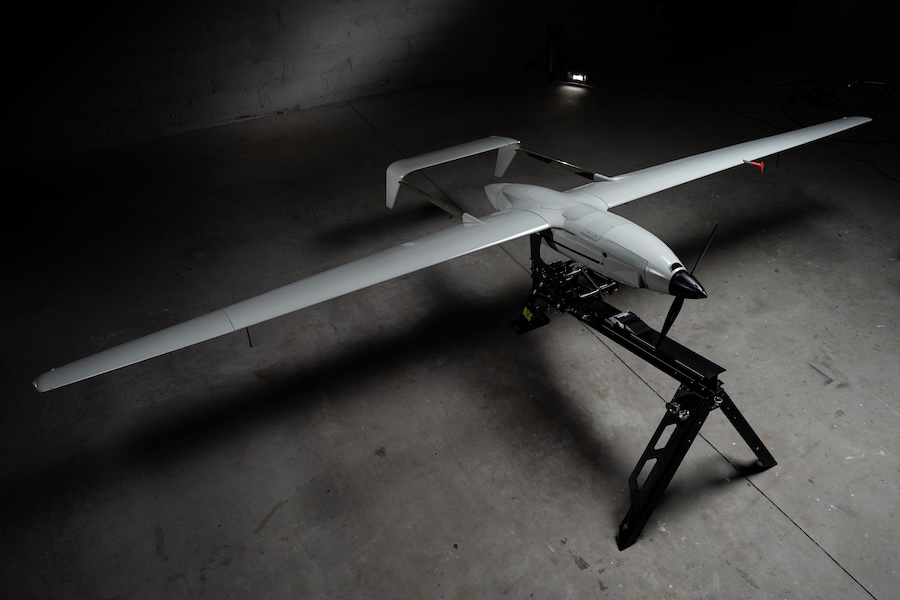
The MQ-4C Triton is developed by Northrop Grumman for maritime intelligence, surveillance and reconnaissance missions. It is designed to provide long-duration monitoring across large ocean areas.
The platform operates at altitudes above 50,000 feet and can remain airborne for more than 24 hours. Its capabilities allow it to collect and integrate data over extended periods to build a comprehensive operational picture.
The Triton forms part of the U.S. Navy’s broader maritime patrol and reconnaissance system. It works alongside P-8A Poseidon aircraft and ground support systems to support persistent ISR operations.
The aircraft is capable of covering long distances, with a range of approximately 7,400 nautical miles. It is powered by a Rolls-Royce AE3007H engine and operated remotely by a ground-based crew.
The reported incident highlights the operational environment in the Persian Gulf. It also underscores the reliance on open-source tracking data when official confirmation is not immediately available.
Source: The Economic Times.