
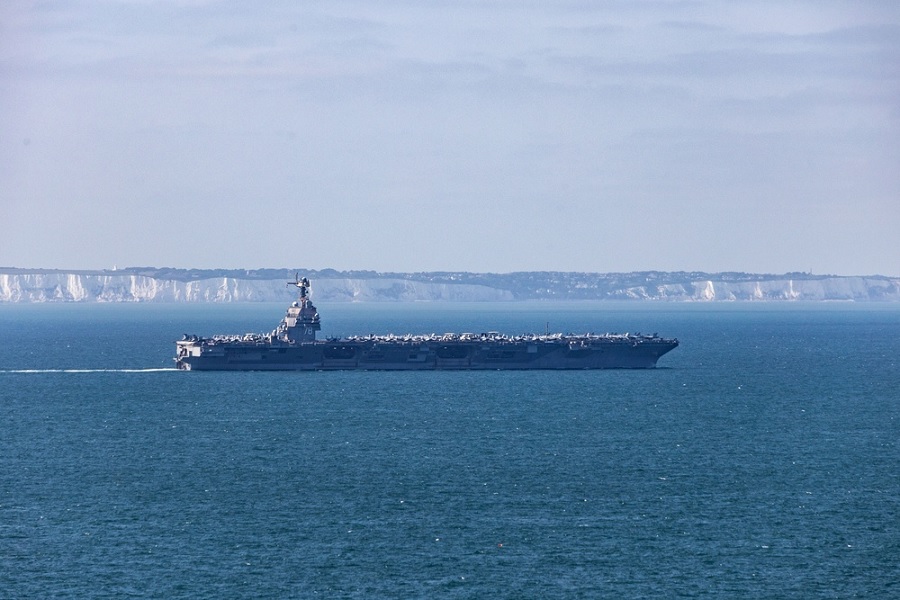
“Gerald R. Ford’s agile transit through the Strait of Dover between England and France is a testament to our power projection capability that supports peace through strength,” said Capt. Dave Skarosi, commanding officer of Gerald R. Ford. “Our skilled navigation team ensures that the world’s largest aircraft carrier brings our capability as a forward-positioned force anytime, anyplace, to defend the Euro-Atlantic region from hostile action.”
The U.S. Navy stated that GRFCSG provides a flexible and scalable maritime force to NATO, reinforcing what it called an ironclad commitment to stability and security in the European theatre. Operations are being conducted in the U.S. European Command area of responsibility.
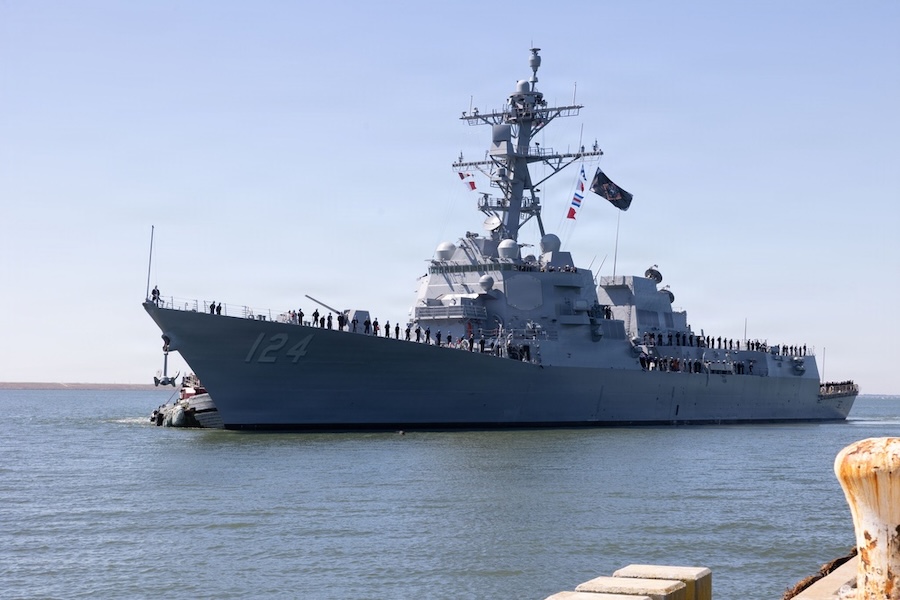
“A free and open maritime domain benefits all nations,” said Capt. Mark Lawrence, commodore of Destroyer Squadron Two, embarked aboard Gerald R. Ford as Sea Combat Commander. “Our collective surface force’s transit into the North Sea demonstrates our resolve to strengthen peace, stability, and deterrence across the European continent.”
The Strait of Dover, historically known as the Dover Narrows, is the narrowest part of the English Channel, separating Great Britain from mainland Europe and marking the boundary between the Atlantic Ocean and the North Sea. Carrier Strike Group Twelve is currently on a scheduled deployment to the U.S. 6th Fleet area of operations, supporting U.S. Naval Forces Europe-Africa in maintaining warfighting effectiveness, readiness, and defence of Allied and partner interests.
For more than 80 years, U.S. Naval Forces Europe-Africa has maintained strategic relationships with Allies and partners, underpinned by shared values aimed at preserving regional security and stability.