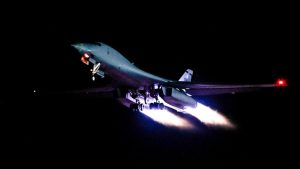
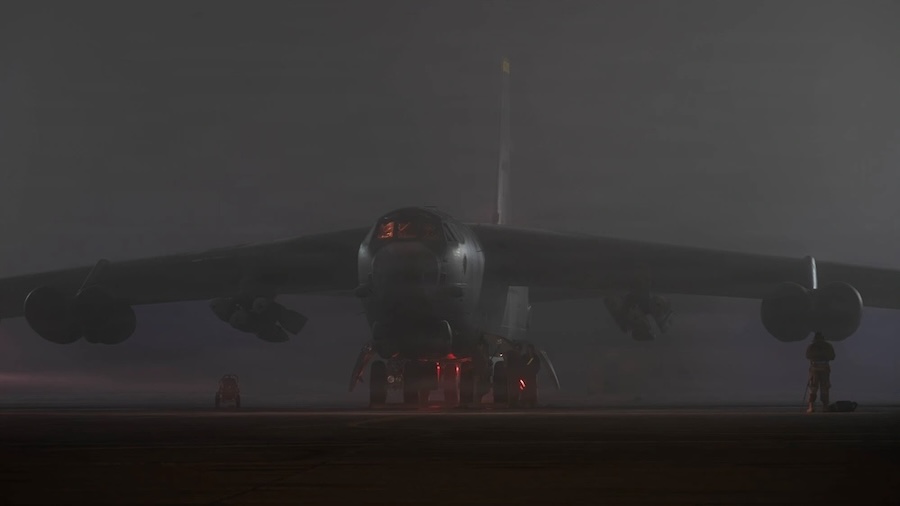
On March 9, three U.S. Air Force B-52H Stratofortress bombers arrived at RAF Fairford. Several days earlier, B-1B Lancer bombers had already been redeployed to the same base.
According to available data, a total of 11 U.S. strategic bombers were present at the British base as of March 9. The group consisted of eight B-1B Lancers and three newly arrived B-52H bombers.
The first B-1B bomber arrived at Fairford on the evening of March 6. Additional aircraft followed in the subsequent days as part of the growing deployment.
The arrival of the bombers followed a change in policy by the British government. London agreed to allow U.S. aircraft to launch direct strikes against Iran from British bases only after an incident involving an Iranian drone.
During the night of March 1–2, an Iranian drone attacked the British air base at Akrotiri in Cyprus. After that event, the United Kingdom permitted U.S. forces to use its bases for operations connected with the campaign against Iran.
Earlier in the operation, U.S. bombers conducted strikes on Iran from bases located in the United States. However, such missions created significant logistical challenges due to the extreme distances involved.
Each mission involving three bombers required between six and nine aerial refueling tankers. Those tankers refueled the aircraft several times during the long flights to the Middle East.
For example, B-1B bombers operating from Ellsworth Air Force Base had to travel at least 10,800 kilometers one way to reach Tehran. Aircraft flying from Dyess Air Force Base faced an even longer route of approximately 11,900 kilometers.
B-52H bombers based at Minot Air Force Base had to fly roughly 10,300 kilometers to reach the Iranian capital. The long distances significantly complicated planning and execution of the missions.
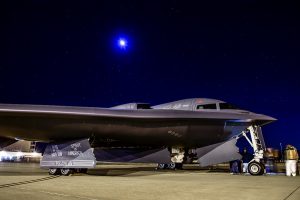
Early strikes in the campaign also involved B-2A Spirit stealth bombers. Those aircraft launched from Whiteman Air Force Base in Missouri and had to fly approximately 11,000 kilometers to reach targets in Iran.
By comparison, the distance from RAF Fairford to Tehran is about 4,500 kilometers. This means the flight path to targets in Iran is reduced by more than half when aircraft operate from the United Kingdom.
The shorter distance allows the United States to increase the tempo of strategic bombing missions. It also reduces the number of aerial refueling tankers required for each operation.
The growing deployment of bombers followed earlier comments from U.S. Secretary of Defense Pete Hegseth. On March 5, he told reporters that strikes against Iran were “about to surge dramatically.”
Hegseth added that the expansion would involve “more squadrons, more defensive capabilities, and more bomber pulses more frequently.” The remarks signaled plans to increase the scale and frequency of operations.
Bombers have already played a major role in the early stages of the campaign. U.S. Central Command commander Adm. Brad Cooper said that B-1, B-52, and B-2 aircraft struck 200 targets during the first 72 hours of operations.
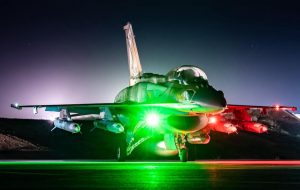
In addition to bombers, the United States has deployed a wide range of other aircraft for Operation Epic Fury. These include fighter aircraft, surveillance platforms, drones, and aerial refueling tankers supporting the operation.
The B-1B Lancer is the fastest bomber in the U.S. Air Force inventory and carries the largest payload. The aircraft can transport up to 75,000 pounds of weapons internally.
With a four-person crew, the B-1B can carry up to 84 500-pound Mk-82 bombs or 24 2,000-pound Mk-84 bombs. It can also carry up to 24 GBU-31 precision-guided weapons.
The B-52 bomber remains a long-range nuclear and conventional strike platform. It is also the Air Force’s primary carrier of long-range standoff cruise missiles.
Its missions include long-range precision strike, close air support, air interdiction, suppression of enemy air defenses, and maritime surveillance. The aircraft continues to serve as a central component of U.S. long-range strike capability.