

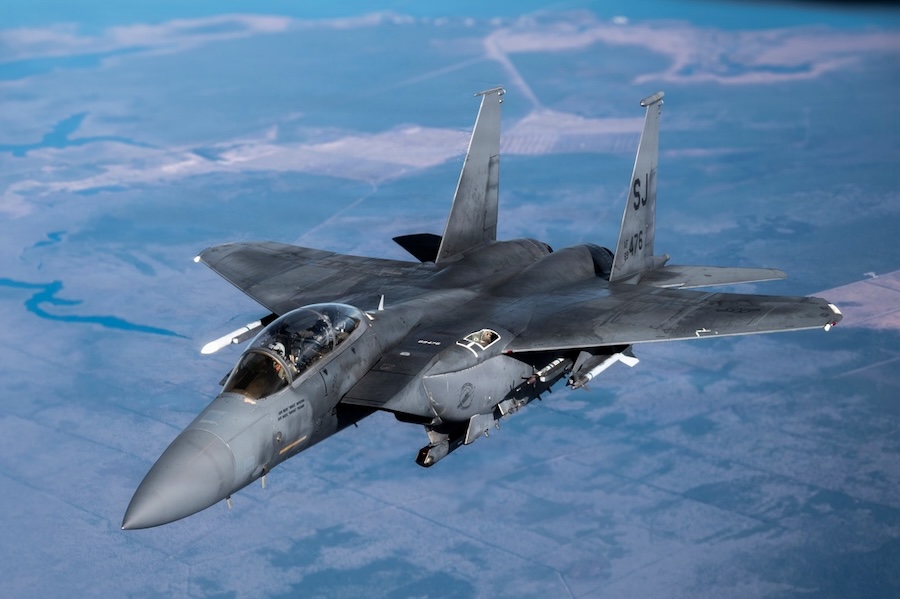
According to open-source intelligence reports tracked by Anadolu, aircraft are primarily stationed at Al-Udeid Air Base in Qatar, Muwaffaq Salti Air Base in Jordan and Prince Sultan Air Base in Saudi Arabia. Carrier air wings 8 and 9 are also deployed aboard the USS Abraham Lincoln and USS Gerald R. Ford aircraft carriers.
Since early January, an estimated 270 C-17 and C-5 logistics flights have supported the buildup, along with Patriot and Terminal High Altitude Area Defense missile systems. About 75 KC-46 and KC-135 strategic transport aircraft are currently deployed to CENTCOM or en route to the region.

The assembled force includes a mix of support and offensive aircraft. Among them are 84 F-18E/F, 36 F-15E, 48 F-16C/CJ/CM and 42 F-35A/C jets, making up nearly 70% of the total, while the remaining aircraft include 18 EA-18G “Growler” electronic warfare planes, 12 A-10C “Thunderbolt” close air support aircraft, 5 E-11A Battlefield Airborne Communications Node aircraft and 6 E3 “Sentry” Airborne Warning and Control System aircraft.
There have been no observed movements of B-2 bombers that were used in Operation Midnight Hammer last June. As the U.S. buildup draws attention, analysts say Israel is advocating for a more aggressive stance against Iran and could be involved in potential strikes.
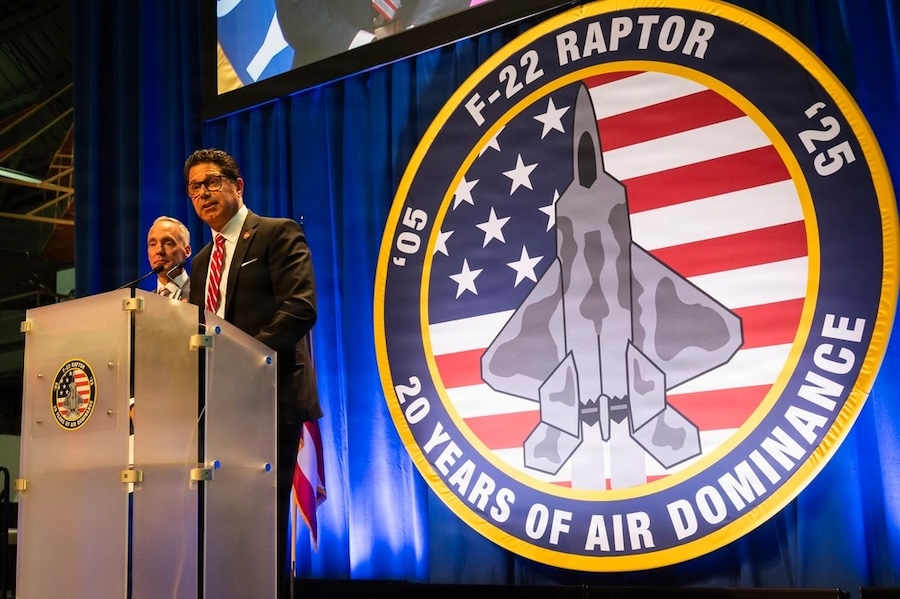
Israel’s air force includes 66 F-15I/C/D, 173 F-16I/C/D and 48 F-35 fighter jets, effectively doubling the airpower that could participate in operations against Iran. On Tuesday, Israel received 12 U.S. F-22 “Raptor” stealth fighters, which its public broadcaster KAN said could be used for “penetrating enemy territory and disabling air defense systems and radar installations.”
An additional six F-22s were later observed departing from Langley Air Force Base in the United States, reportedly heading toward Israel via RAF Lakenheath in the United Kingdom. The White House said Tuesday that President Donald Trump’s approach prioritizes diplomacy but does not exclude military action.
“President Trump’s first option is always diplomacy, but as he has shown, he is willing to use the lethal force of the United States military if necessary,” spokesperson Karoline Leavitt told reporters. She referred to the “overwhelmingly successful” Operation Midnight Hammer in June, which she said destroyed Iran’s nuclear facilities.
“That does not mean that Iran may never try again to establish a nuclear program that could directly threaten the United States, our allies abroad,” she said. She added that preventing such a scenario is what Trump is focused on as indirect talks mediated by Oman are set to resume Thursday in Geneva, where Iran is expected to present a draft proposal.
Source: Anadolu Agency.




![CENTCOM chief says U.S. forces remain ready after ‘generational’ defeat of Iran despite fragile ceasefire [VIDEO]](https://defence-industry.eu/wp-content/uploads/2026/04/centcom-chief-says-us-forces-remain-ready-after-generational-defeat-of-iran.jpeg)
![Team Lynx details XM30 infantry fighting vehicle concept as U.S. Army program nears key decision [VIDEO]](https://defence-industry.eu/wp-content/uploads/2026/04/team-lynx-details-xm30-infantry-fighting-vehicle-concept.jpeg)