

Xi has voiced opposition to the major arms sale, which Beijing views as interference in territory it claims as its own. Regional experts say Washington is expected to delay announcing the sale while Trump focuses on his April bilateral meeting with Xi and preserving the trade truce reached last October.
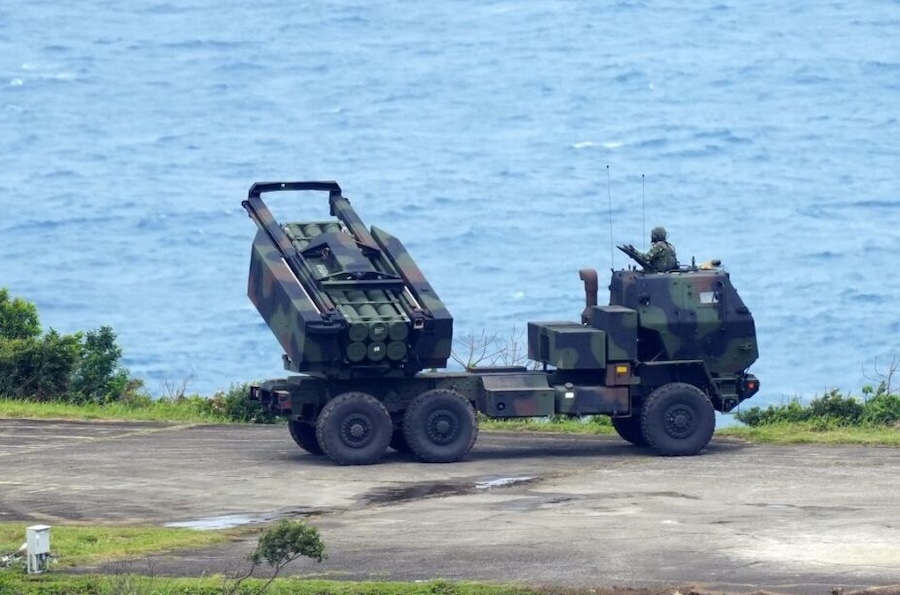
Lyle Goldstein, director of the Asia Program at Defense Priorities, said the package will likely be delayed and announced after Trump’s trip to China. He added that the sale may include fewer advanced weapons, such as High Mobility Artillery Rocket System light multiple rocket launchers and M109 Paladin artillery systems, and feature more F-16 fighter jets.
“For example, it is conceivable that Beijing will ask the U.S. to commit to preventing basing of medium-range missile systems on offshore islands that are closer to the Chinese coast,” he told The Hill on Friday. Goldstein also said he believed the discussion appeared to breach the Six Assurances but argued those principles should not carry weight because they are “outdated and nonsensical — for the most part.”
“Taiwan is not a vital national interest for the U.S., but stable security and trade relations with China are an absolutely vital interest. Inevitably, therefore, the Taiwan issue including arms sales, will be on the agenda of U.S.-China relations,” he said. “A much more serious issue is the 3rd Communique (1982) with China, wherein the U.S. agreed to gradually decrease arms sales to Taiwan.”
Steve Yates, senior research fellow for China and national security policy at the Heritage Foundation, said Taiwan’s arms packages do not have a fixed timeline and have stalled or proceeded in different ways across administrations since the Taiwan Relations Act was passed in 1979. He said timing decisions often reflect other priorities facing the president.
“Packages deemed ready for Presidential sign-off have always been subject to the competition with other matters before the President,” Yates told The Hill on Friday. “Delaying an announcement until after a near-term political or diplomatic priority is common and does not jeopardize the transaction.”

William Yang, senior analyst for northeast Asia at the International Crisis Group, said the situation differs from how past administrations, including Trump’s first term, handled arms sales to Taiwan. While Trump is not abandoning support for Taiwan, Yang said it reflects “the extra level of priority that he gives to stabilizing bilateral relations with China, especially when it comes to trade.”
“Beijing objects most strongly to U.S. arm sales to Taiwan because they are public,” she told The Hill on Friday. “Trump wants Taiwan to take on greater responsibility for its defense and deterrence, which requires more U.S. arms sales (and training, which is not discussed publicly).”
Source: The Hill.





![CENTCOM chief says U.S. forces remain ready after ‘generational’ defeat of Iran despite fragile ceasefire [VIDEO]](https://defence-industry.eu/wp-content/uploads/2026/04/centcom-chief-says-us-forces-remain-ready-after-generational-defeat-of-iran.jpeg)
![Team Lynx details XM30 infantry fighting vehicle concept as U.S. Army program nears key decision [VIDEO]](https://defence-industry.eu/wp-content/uploads/2026/04/team-lynx-details-xm30-infantry-fighting-vehicle-concept.jpeg)