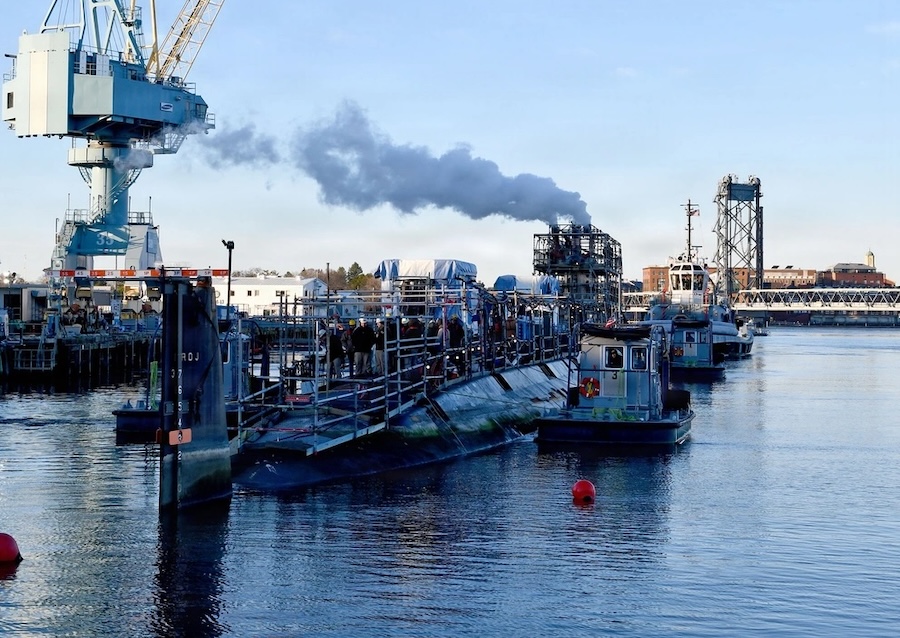



The submarine follows in the legacy of its predecessors, including two battleships that served in both World Wars and Korea, with the most recent being USS Iowa (BB-61), a lead ship of the Iowa-class. Designed for modern undersea warfare, the new Iowa is equipped with Tomahawk cruise missiles, Harpoon anti-ship missiles, and Mk-48 torpedoes via 12 vertical launch cells and four torpedo tubes.
Adm. Daryl Caudle, commander of U.S. Fleet Forces Command, addressed the crew of the fast-attack submarine USS Iowa (SSN 797) as it joined the fleet today.
Watch what he told these world-class warfighters during a commissioning ceremony in Groton, Connecticut. pic.twitter.com/G7fB9JHNg1
— U.S. Fleet Forces (@USFleetForces) April 6, 2025
John Phelan, attending his first commissioning as the 79th Secretary of the Navy, highlighted the changing face of naval warfare. “Where battleships once ruled the seas, it is the silent strength of submarines that provides our Navy with an unmatched strategic advantage,” said Phelan.
The submarine was ordered in 2014, laid down in 2019, christened in 2023, and delivered to the Navy in 2024. Built during the COVID-19 pandemic by General Dynamics Electric Boat and HII Newport News, its construction faced unique challenges, including infrastructure issues and health-related disruptions.
“We did not miss a day during COVID, and that is a testament to our shipbuilders,” said Electric Boat President Mark Rayha, referencing the difficulties endured during the build. Despite obstacles, the submarine was completed on schedule, joining the Navy’s growing fleet of attack submarines.
Phelan also used the occasion to outline the Navy’s broader goals of revitalising the American shipbuilding industry. “This is not just a milestone for USS Iowa, but a critical step forward in strengthening our navy and ensuring America’s global maritime dominance,” he said.
Naval leaders from the United Kingdom and Australia, both AUKUS defence partners, also attended the event. Australia is expected to receive three Virginia-class submarines from the U.S. between 2032 and 2035, with the potential for two more if needed before the jointly developed SSN-AUKUS class enters service.
“Submarines ensure that no adversary can act with impunity, that our allies can rely on our strength and that peace is preserved through our unwavering readiness,” Phelan stated. His comments reflect growing strategic focus on undersea capabilities in light of rising global maritime tensions.
Submarines remain a key priority for U.S. defence planning, especially as the Navy responds to an expanding Chinese naval presence. Both Congress and Navy leadership have continued to support submarine production, even under broader Pentagon budget constraints.