

The contract supports the long-lead production of 37 weapon systems that will form part of the RCH 155 artillery platform. The programme represents a key step in strengthening the Army’s firepower and replacing the AS90 artillery systems that were transferred to Ukraine three years ago.
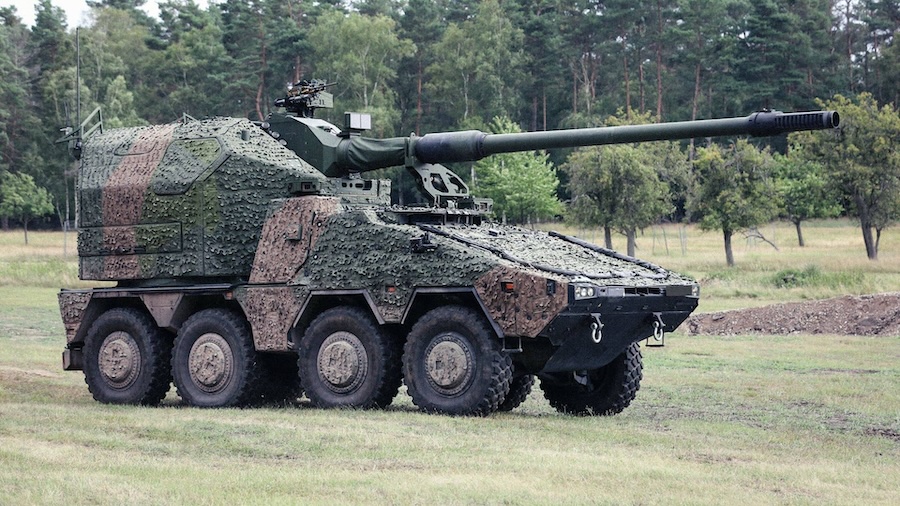
The RCH 155 is designed as the British Army’s long-term Mobile Fires Platform. It combines the Boxer Drive Module with the Artillery Gun Module, which includes both the turret and the main weapon system.
Under the new agreement, the contract specifically covers the procurement of the weapon systems known as the “height adjustable mass”. These components include the barrel, muzzle brake, breech, recoil system and trunnions used to mount the system to the turret.
The announcement also includes a major investment in the United Kingdom’s defence industrial base. Approximately £30 million of the contract value will support the development of Rheinmetall’s large calibre gun barrel manufacturing facility in Telford, commonly referred to as the Gun Hall.
The facility is expected to create around 100 highly skilled jobs, with additional employment opportunities across the wider British defence supply chain. The investment will establish domestic production capability for large gun barrels and provide long-term surge capacity for future requirements.
The contract follows an earlier £52 million agreement signed in December for three RCH 155 Early Capability Demonstrator vehicles. Those vehicles will be used for joint testing by the United Kingdom and Germany as part of a broader defence cooperation framework.
The programme builds on the Trinity House Agreement signed by the UK and Germany in October 2024, which aims to strengthen defence collaboration between the two countries. The RCH 155 project forms a key element of that partnership.
The Boxer-based RCH 155 artillery system is designed for high mobility and rapid deployment. It can fire up to eight rounds per minute at targets up to 70 kilometres away depending on the ammunition used.
The system can also enter action within seconds and be operated by a crew of just two personnel. With a top speed of up to 100 kilometres per hour, the platform is intended to increase survivability by allowing rapid repositioning after firing.
Brigadier Toby Lambert, Head of International, Industry and Prosperity at Army Headquarters, said the contract delivers benefits both for the Army and the wider defence industry. “This contract is really great news – not only for our soldiers, but for the UK’s ever-increasing industrial base.”
He added that the agreement strengthens supply chains and reflects commitments made under the UK-Germany partnership. “It demonstrates a strengthening of our supply chains and delivers on our commitments made in the Trinity House Agreement with our close ally, Germany.”
Lambert also emphasised the broader economic and technological impact of the programme. “The second order impacts of this award are far-reaching: the creation of high-skilled jobs combined with the drive for continued innovation will undoubtedly stimulate further investment in Defence. This demonstrates another key step towards the Army’s continual modernisation programme, preparing our soldiers for the future fight.”