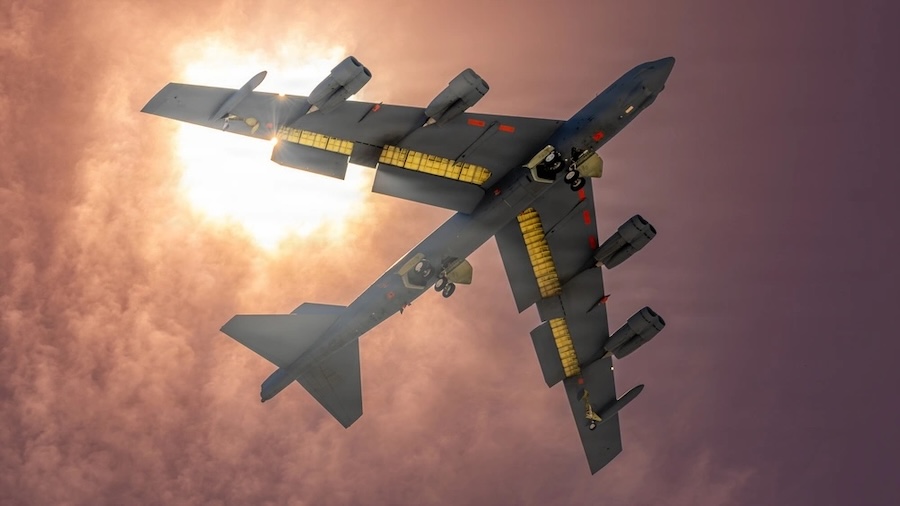
Initially, B-52 aircraft were used to launch stand-off munitions, but recent observations indicate they have transitioned to direct strike roles. The bombers have been seen carrying and deploying guided gravity bombs on targets within Iran.
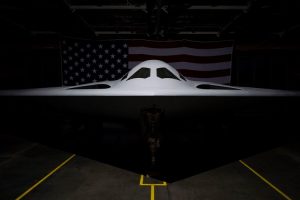
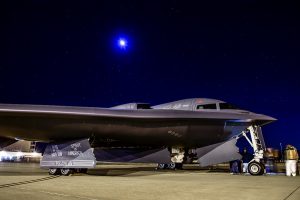
The broader U.S. bomber fleet, including B-2 Spirit stealth bombers, continues to operate in the campaign. Data from flight tracking and air traffic control communications indicate ongoing strike missions by multiple platforms.
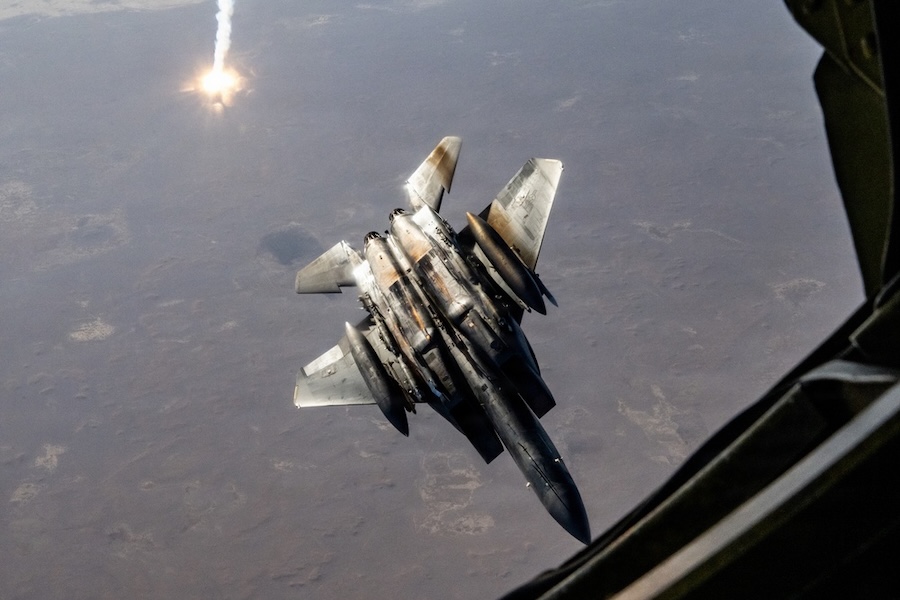
A significant number of bombers are based at RAF Fairford in the United Kingdom, where U.S. forces have deployed B-1 and B-52 aircraft. These assets support a wider force that includes more than 200 U.S. fighter aircraft involved in the operation.
U.S. officials said the evolving role of bombers is linked to targeting requirements. “We’re switching towards more and more dynamic targets servicing mobile targets around the battle space,” said Air Force Gen. Dan Caine, chairman of the Joint Chiefs of Staff, on March 30. “We’ve continued to do the work against Iran’s missile, drone, and naval production facilities.”
Caine added that operational conditions have enabled new mission profiles. “Given the increase in air superiority, we’ve successfully started to conduct the first overland B-52 missions,” he said.
Analysts said bombers provide advantages in payload capacity and endurance. “What the bombers bring to the equation is that they have larger payloads of weapons and longer duration missions, which gives them the ability to maintain a presence in the weapons engagement zone for longer periods of time to respond to dynamic targets that have just been located, such as mobile missile launchers breaking concealment,” said Mark Gunzinger, a former B-52 pilot and director of future concepts and capability assessments at the Mitchell Institute.
He added that bombers can carry a wide range of heavy munitions. “The payloads also give them the capacity to carry multiple weapons that are designed to penetrate hardened and deeply buried facilities and other targets—1,000 pounders, 5,000 pounders, and up, for that matter,” Gunzinger said. “Fighters can carry some penetrating weapons, but they’re limited by their payload capacity.”
The shift toward non-stealth bombers has also been linked to improved air control conditions. “Once you have enough air control, you want to switch over to non-stealth bombers, because they can bring volume,” said Kelly Grieco, a senior fellow at the Stimson Center. “Air control is a spectrum. Sometimes it seems like people think air superiority is like an on-off switch that the United States can flick. It’s not.”
Grieco added that the campaign has progressed gradually. “After a month, the U.S. has reached enough a degree of air superiority that they’re now comfortable sending the B-52s overland,” she said. “It’s been quite methodical how they’re going about trying to gain these higher levels of air control.”
The U.S. military has not disclosed specific details about munitions used in individual strikes. However, observers have reported B-52 aircraft operating from RAF Fairford with visible weapons loads, including JDAMs and other guided munitions.
Officials said the use of bombers complements fighter aircraft operations and enhances strike capacity. The deployment highlights the role of forward operating bases such as RAF Fairford in supporting sustained air operations in the region.
Source: Air & Space Forces Magazine.