

Officials confirmed that the pilot was rescued within hours of the shootdown, while the second crew member, a weapons systems officer, was recovered after nearly two days. The aviator, identified as a colonel, had evaded capture while U.S. forces monitored his location.
The final phase of the rescue operation took place overnight into April 5 local time. U.S. forces conducted a large-scale mission involving dozens of aircraft to extract the servicemember.
“WE GOT HIM!” said Donald Trump in a social media post. “Over the past several hours, the United States Military pulled off one of the most daring Search and Rescue Operations in U.S. History.”
The president said the rescued Airman had been “behind enemy lines in the treacherous mountains of Iran, being hunted down by our enemies, who were getting closer and closer by the hour.” He added that “He sustained injuries, but he will be just fine.”
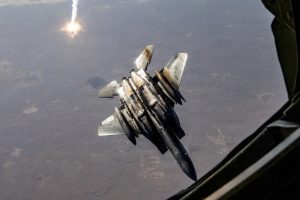
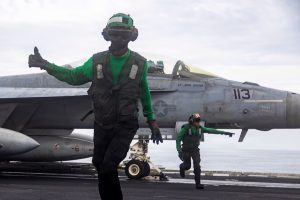
U.S. MQ-9 Reaper drones supported the mission by striking individuals assessed as threats who approached within three kilometers of the isolated aviator. American fighter aircraft also took part in securing the area during the rescue.
Two Lockheed Martin MC-130J aircraft involved in the mission were destroyed on the ground by U.S. forces to prevent their capture. Additional aircraft, including A-10 Thunderbolt II attack planes and rescue helicopters, were engaged during the broader operation.
Earlier in the rescue effort, an Fairchild Republic A-10 Thunderbolt II was damaged by Iranian fire, with the pilot managing to exit Iranian airspace before ejecting safely. At least one rescue helicopter was also hit, though all crews survived.
Officials said a deception effort led by the CIA helped mislead Iranian forces prior to the recovery operation. The agency reportedly spread information suggesting the aviator had already been moved, enabling U.S. forces to locate and extract him.
Despite equipment losses, U.S. officials confirmed that no American personnel were killed during the operation. Three Airmen from two aircraft shot down on April 3 have now been recovered alive.
The mission marked the first combat search and rescue operation of its kind during the ongoing air campaign against Iran. The campaign, now exceeding one month, has involved roughly 20,000 combat sorties by U.S. and allied forces.