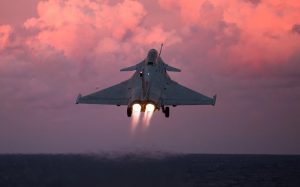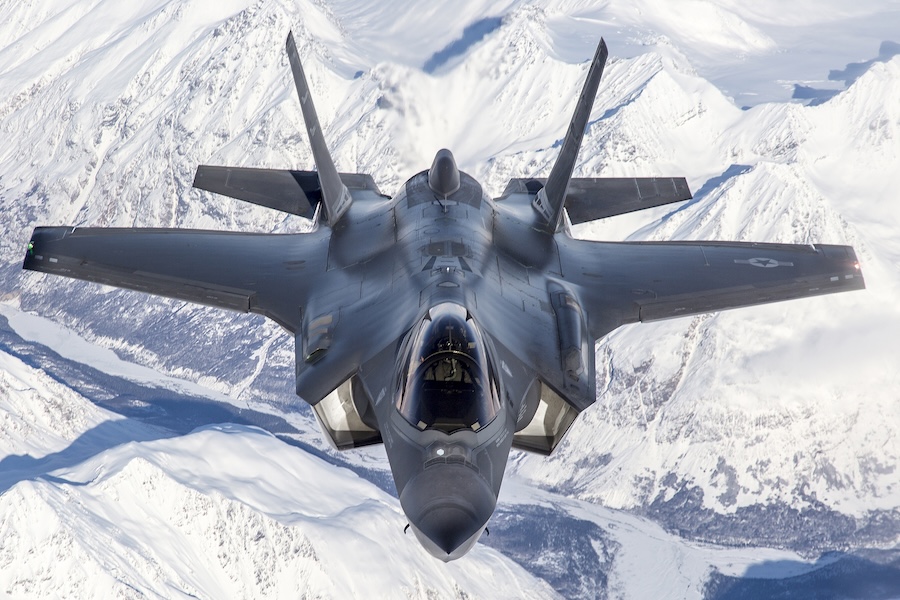
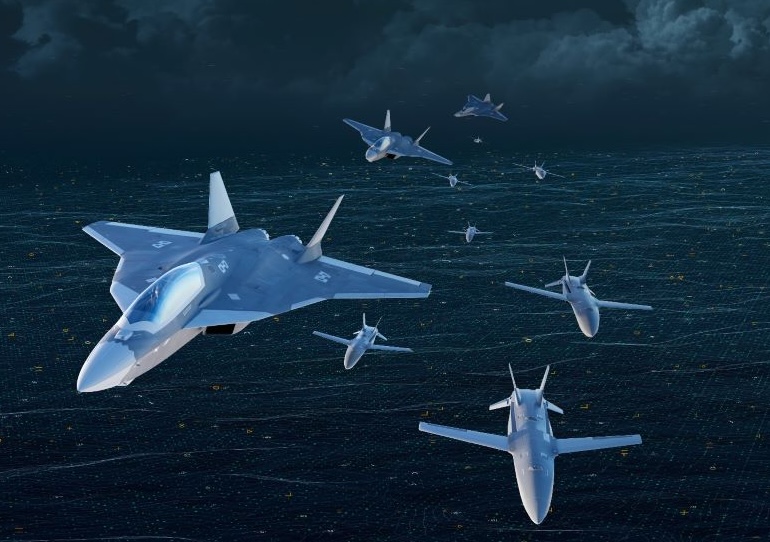
“If mandated by our customers, we would support a two-fighter solution,” Faury said, while adding that disagreements over the fighter should not undermine broader European cooperation on other FCAS elements. Germany and France have been discussing the future of the next-generation fighter for months, amid differences over requirements and industrial capabilities that have raised the prospect of separate national paths.
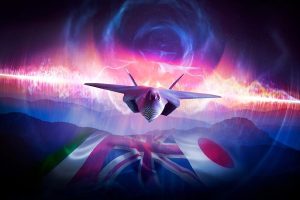
Under such a scenario, France could pursue a national solution, while Germany and Spain might seek alternative partnerships. Potential options mentioned include collaboration with Sweden and Saab or joining the Global Combat Air System programme involving Italy, Japan and the UK, although Faury stressed that any decision rests with governments.
German Chancellor Friedrich Merz recently called for a comprehensive military requirements assessment, saying this had been missing when Germany joined the project with France and Spain. Among the issues to consider, he said, is: “Do we, in 20 years from now, even need a crewed combat aircraft?”
Faury said the remarks reflect broader debate about the transition from crewed to uncrewed systems. “I think a lot of us believe that there will be a point in time, quite far in the future, where the manned capabilities will be, to a large extent, replaced by unmanned,” he said, adding that “the belief at this stage is that there is still a need for a manned fighter.”
He said a future crewed fighter could potentially also operate without a pilot at a later stage. Beyond the fighter element, Faury said other FCAS pillars “are working well,” citing progress on the combat cloud, remote carrier and engine development.
“We believe an ambition of this scale can only be delivered through cooperation, fostering operational interoperability and lifecycle synergies for European air forces,” he said. “The deadlock of a single pillar should not jeopardize the entire future of this high-tech European capability, which will bolster our collective defense.”
The comments were made as Airbus published full-year results showing defence order intake of more than €22 billion last year, an increase of 50% on the previous year. Chief Financial Officer Thomas Töpfer said the figure includes defence helicopter activities and added, “We’re very pleased with the trajectory that we currently have.”
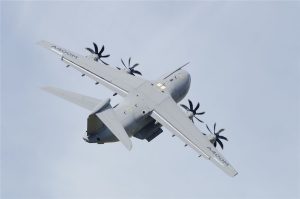
Airbus reported a full-year adjusted profit in its defence and space division, which has previously struggled to achieve profitability. However, the company recorded a further €73 million charge in the fourth quarter of 2025 related to the A400M programme, reflecting long-term cost assumptions, while Töpfer noted the airlifter was cash positive for the year.
The company is seeking additional orders for the A400M and sees stronger prospects amid rising global defence spending. Faury said Airbus is engaged in promising campaigns and sees further European demand, adding: “We are optimistic about the midterm and the long term.”
Uncertainty also surrounds the delayed Eurodrone programme to develop a medium-altitude, long-endurance uncrewed aircraft. Faury said, “There’s an ongoing discussion between customers on the way forward,” but added, “We have the majority of customers who really want this product to continue,” describing that outcome as “likely.”
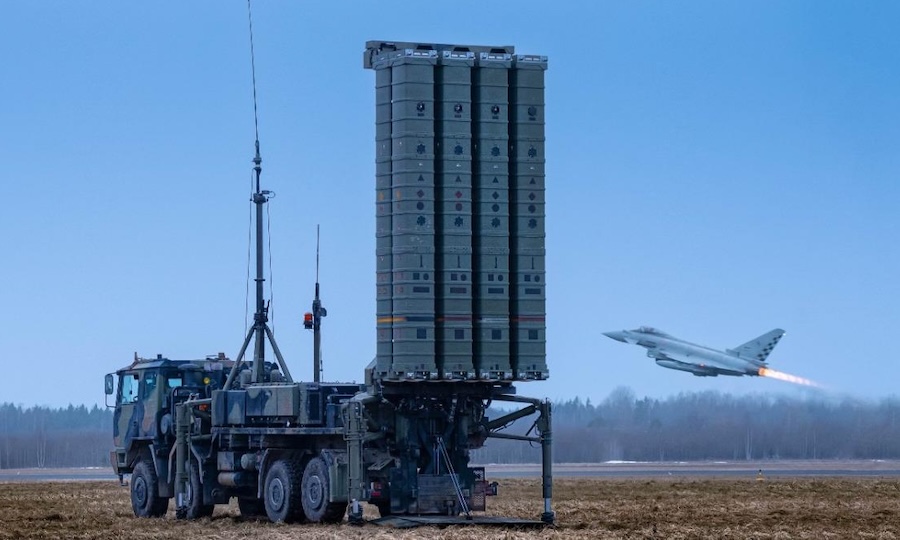
Airbus is also part of the Eurofighter Typhoon consortium, which includes BAE Systems and Leonardo and is increasing production from 14 to 20 aircraft per year in response to demand. The partnership secured additional orders from Italy and Germany last year and won Turkey as a new customer.
Source: Aviation Week.