

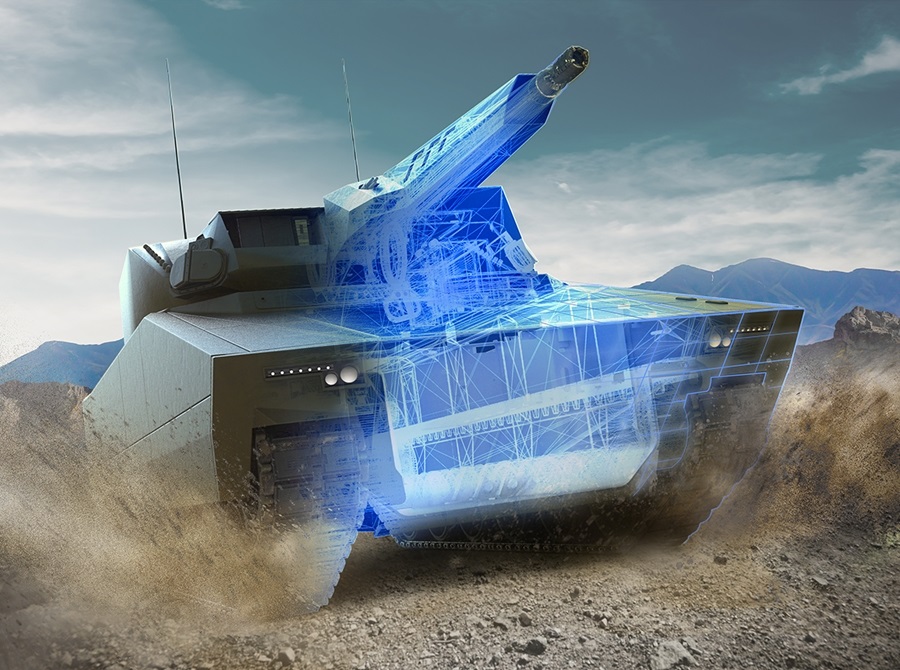
“The digital model has everything. It starts with the requirement, and it goes through the architecture of the vehicle, and it touches all areas, including how the vehicle is actually built,” said Ruben Burgos, American Rheinmetall’s programme director. “We’re designing a flexible platform that can evolve for decades to come.”
The company recently passed a major programme milestone review with one customer, confirming the design is mature and ready for manufacturing. Burgos explained: “Our entire model, from the top-level requirements all the way to the physical build, was laid out and traceable. It was satisfying to see the customer assess it and recognize the maturity of what we’ve built.”
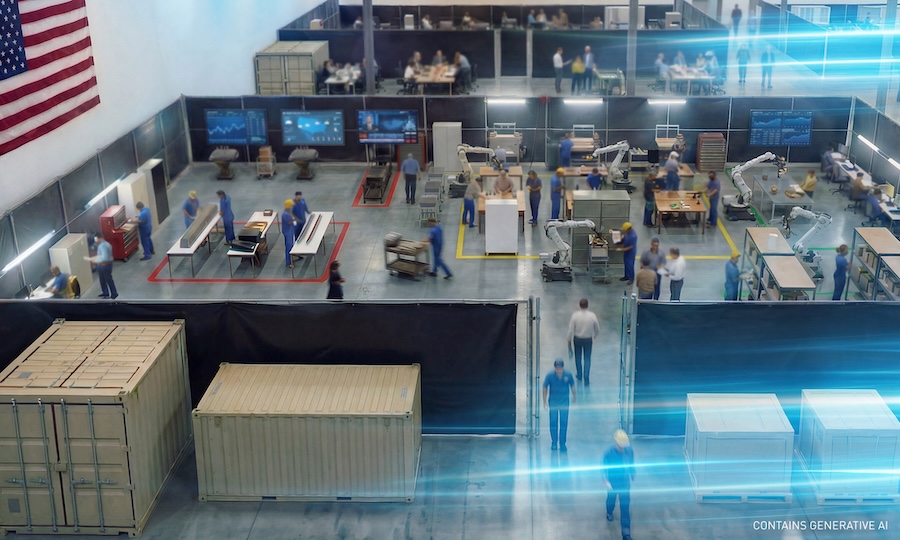
American Rheinmetall’s “digital thread” approach links requirements, engineering, manufacturing and sustainment through three digital twins. The engineering twin models subsystems such as mobility, survivability and lethality, the manufacturing twin translates these into production, and the sustainment twin extends into long-term maintenance and upgrades.
“Feedback loops that used to take months now happen in days,” Burgos said. He added: “That’s game-changing.”
This system allows customers to receive updated models in weeks rather than months, enabling real-time feedback and collaboration. “They can run their own assessments on our model and provide real-time feedback,” Burgos said. “It’s not a ‘gotcha’ process—it’s collaborative. They see how we’re progressing, and we’re aligned every step of the way.”
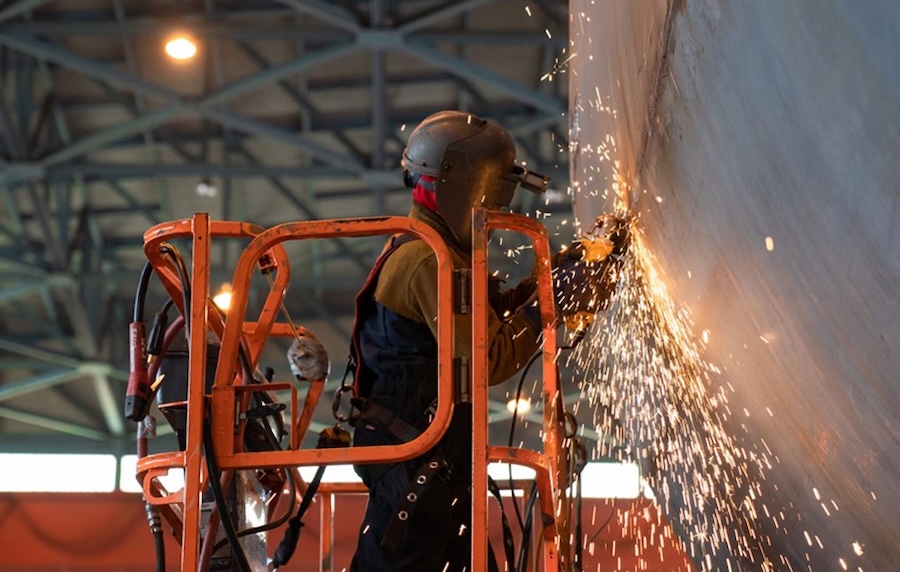
Production is taking place through Textron Systems in Slidell, Louisiana, as well as at American Rheinmetall sites in Michigan, Ohio and Maine. Burgos said: “It’s not just about building vehicles. It’s about making sure the customer has the best tech, made in America, by Americans, in a way that makes sense for long-term readiness.”
The vehicles are designed with SWAP-C growth margins to integrate new technologies quickly and without major redesign. “We account for growth margins across our vehicles,” Burgos explained. “We’ve already thought through future growth—power, compute, physical space. So, when the customer is ready to add something new, they don’t need to redesign the entire vehicle.”
This flexibility reduces upgrade costs and shortens timelines for changes such as sensors or turrets. “The big shift here is that the customer doesn’t have to come back to the OEM for everything,” Burgos added. “In the past, if they wanted to swap out a sensor or turret, it could take up to a year, driving up costs considerably. Now they can look at the model, understand every interface, and make that change in weeks instead of months or years.”
The platform supports semi-autonomous operation at launch, with pathways to full autonomy as technology develops. Burgos emphasised that true modularity means defining how subsystems connect and interact: “Our digital model defines all of that, so when a new sensor, system, or AI module becomes available, the customer knows exactly how it fits and how it performs and can proceed to integration and fielding much faster.”
The company says its blend of defence, commercial and automotive expertise strengthens its approach. “Many of us came here because we saw a better way to serve the Warfighter,” Burgos said. “We wanted to be part of a company that was willing to challenge the old paradigm, one that could work hand-in-hand with the military to design for the future—not just build for today.”
American Rheinmetall believes this method is influencing how the military views modular architecture and digital engineering more widely. “We’re trailblazers with this MOSA approach, which will set the standard for new programs,” Ruben said. “But there’s also discussion about how this method could be tied back into existing programs.”
Burgos concluded that the company’s work is about delivering capability and modernisation in new ways. “We’re proving that you can do this differently,” he said. “That you can have transparency, flexibility, and still deliver high performance. That’s what we’re doing—and that’s what military modernization is about.”