

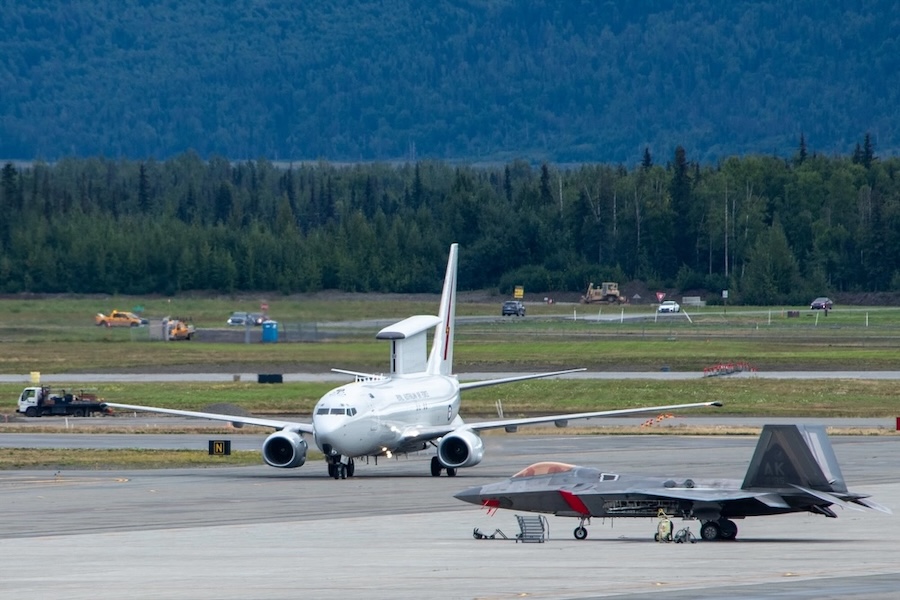
Under the agreements, Boeing will continue work on two prototype E-7A aircraft and begin preparations for serial production of the platform. The contracts also include continued production of components for the MESA radar module that forms the core of the aircraft’s surveillance system.
The work covered by the new contracts is scheduled to continue through August 2032. The program is part of the U.S. Air Force’s effort to replace the aging Boeing E-3 Sentry airborne early warning aircraft currently in service.
Despite criticism from the Secretary of Defense regarding the program, Boeing plans to produce up to 26 E-7A Wedgetail aircraft for the U.S. Air Force. The aircraft are intended to provide advanced airborne early warning and command capabilities for future operations.
The first aircraft destined for the U.S. Air Force is currently in the assembly stage at Boeing’s facility in Renton, Washington. At this stage, the aircraft is built as a baseline Boeing 737-700 before undergoing flight tests and inspection procedures.
After completing these tests, the aircraft will be transferred to a dedicated conversion facility for installation of mission systems and the MESA radar array. The prototype aircraft will undergo this conversion process in the United Kingdom.
The conversion work will take place at the STS Aviation Services facility in Birmingham. The same site is currently performing similar conversion work on three E-7A Wedgetail aircraft ordered by the United Kingdom’s Ministry of Defence.
The E-7A Wedgetail is designed to provide advanced airborne surveillance, battle management and command capabilities. Once operational, the aircraft will play a key role in improving situational awareness and coordination for U.S. and allied air operations.